Quick answer
If pumping hurts, your nipple rubs the tunnel, or milk collects under the flange, your flange size is likely wrong. A breast pump sizing kit is the right next step when the problem is fit, not suction or pump technique.
Why flange fit changes as pumping goes on
Nipple size is not fixed. Early postpartum swelling, changes in milk supply, and even the fit of your bra can shift how your nipple sits in the tunnel from one week to the next. A flange that felt fine in the first month can start pinching later, which is why wrong flange size signs often appear gradually rather than overnight.
That gradual change matters because many pumping comfort tips focus on suction settings. If the tunnel is the wrong diameter, no suction level will fix the friction or the milk that pools under the flange. Checking fit first saves you from chasing the wrong adjustment.
When a sizing kit will not help
A sizing kit addresses diameter, not suction, pump function, or breast health. If you have cracked skin, bleeding, a fever, or a painful lump, stop pumping adjustments and contact a healthcare provider or lactation consultant first.
Similarly, if your pump loses suction, has damaged parts, or is not sealing properly, the issue is equipment rather than flange size. Rule those out before spending on sizing inserts.
Diagnose your flange fit: symptom, cause, and fix
- Nipple rubs or pinches inside the tunnel: Symptom: friction or pain with each pull. Likely cause: flange tunnel too small. Corrective action: size up using the sizing tool and try the next insert set. Stop and see a lactation consultant if pain continues after two sizes. Measure before ordering; do not size up by feel alone.
- Large halo of areola pulled into the tunnel: Symptom: more areola than nipple moving in and out. Likely cause: flange tunnel too large. Corrective action: size down and check that only nipple, not areola, moves freely in the tunnel. A visible areola halo during pumping is a fit signal, not just a comfort issue.
- Milk pools under the flange or output stays low: Symptom: milk collects beneath the flange and breasts still feel full after pumping. Likely cause: poor seal from wrong diameter. Corrective action: recheck fit with the sizing tool, then test a different insert set for two to three sessions before judging output. Give a new size two to three sessions before deciding it is wrong.
- Pain or damage persists after resizing: Symptom: soreness, cracks, or bleeding that does not improve after trying a different insert. Likely cause: not a sizing problem. Corrective action: stop resizing and consult a lactation consultant or healthcare provider. Repeated sizing attempts without improvement mean the cause is elsewhere.
Product facts
-
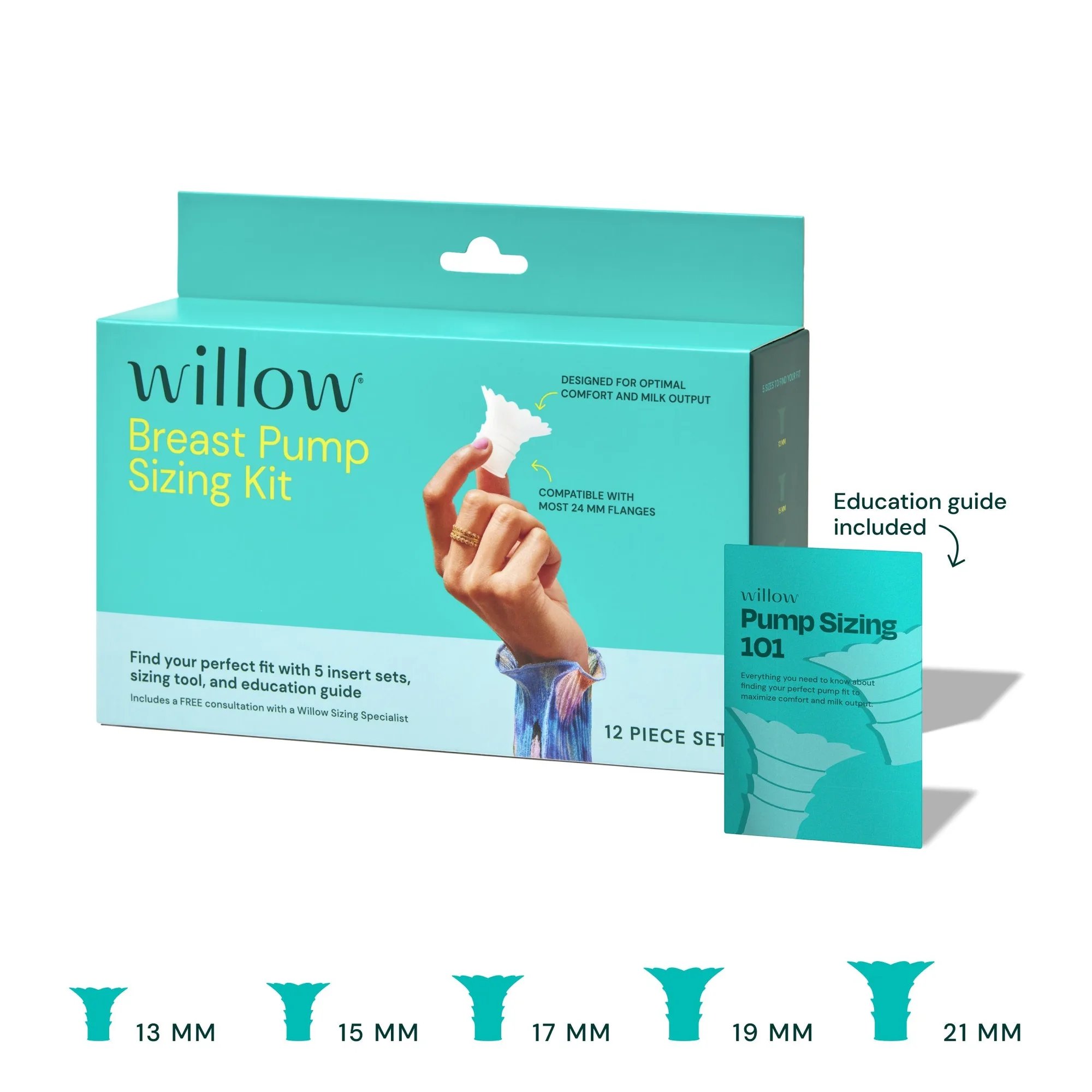
Breast Pump Sizing Kit: The Breast Pump Sizing Kit includes 5 insert sets, a sizing tool, and a Pump Sizing 101 guide, with support from a sizing specialist. Multiple insert sizes let you test fit without buying separate flanges, and the sizing tool plus guide give you a repeatable way to measure rather than guess.
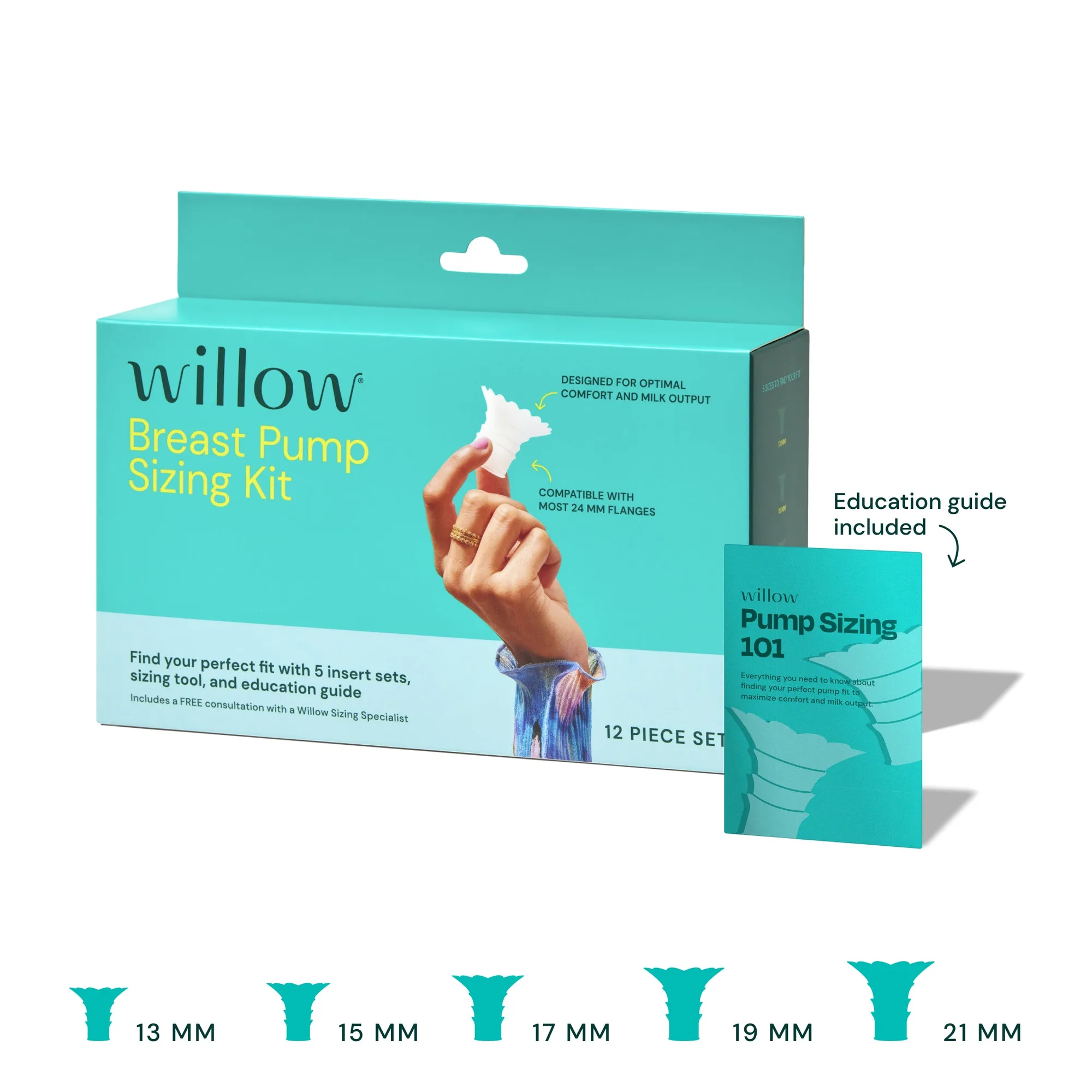
Breast Pump Sizing Kit