Quick answer
Start with your wedding palette, then narrow to shades that flatter a range of skin tones—pink bridesmaid dresses are a versatile choice that suits most guests. Test fabric swatches in natural light before committing.
Why pink works for most bridal parties
Pink is one of the most forgiving colors for a group. It comes in so many depths—from blush to dusty rose to magenta—that you can find a tone that complements both cool and warm undertones. A soft pink reads romantic and light, while a deeper rose adds richness without overpowering the bridal palette.
The trade-off: one shade vs. mix-and-match
Choosing a single color creates a cohesive look but can be less forgiving across different skin tones. A mixed-shade approach—like letting each bridesmaid pick a different pink that flatters her—keeps the palette unified while giving each person more control. If you want a uniform look, pick a shade with medium saturation, which tends to suit the widest range of complexions.
Your bridesmaid color questions, answered
What is the most flattering bridesmaid dress color?
There is no single universal shade. Instead, choose a color family with several tones—like blush pink, dusty rose, or mauve—so each bridesmaid can pick a variation that complements her skin tone. This approach keeps the palette cohesive while letting individual undertones shine. Ask each bridesmaid for her preferred tone within the chosen family before ordering.
How do I match colors to different skin tones?
Cool undertones pop in blush and rose pinks; warm undertones glow in peach or terracotta shades. If your group spans multiple undertones, choose a muted mid-tone pink that sits between warm and cool, like dusty rose, so it reads flattering on most people. When in doubt, pick a muted mid-tone; it flatters the widest range of skin tones.
Should all bridesmaids wear the same color?
Not necessarily. Many brides allow different shades of the same color family or mix textures. For a cohesive look, keep the saturation level similar across dresses, even if the exact hue varies. If mixing shades, choose tones with the same undertone (warm or cool) to keep the palette harmonious.
How do I match the color to the wedding theme?
Start with the season and venue. Soft pastels like pink suit garden and spring weddings, while deeper jewel tones work for fall or evening events. If the palette is flexible, a versatile shade like blush pink fits most themes and skin tones. Order fabric swatches and view them in the ceremony lighting before committing.
What if my bridesmaids have different skin tones?
Choose a color with a wide flattering range, such as dusty rose or blush. Avoid extremely pale or neon shades that can wash out lighter skin or clash with deeper tones. Let each bridesmaid try the gown in natural light. Ask for photos in natural light before finalizing the order.
How do I coordinate without making everyone match exactly?
Pick one color family and let bridesmaids choose different silhouettes in that shade. This keeps the palette cohesive while respecting individual body types and comfort. Confirm the fabric and dye lot so all dresses appear consistent.
A pink option to consider
-
Leonie Gown — Pink: The Léonie gown is a floor-length satin dress with a ruffled plunging V neckline, flounce ruffles at the seams, and statement rosettes at the back skirt. Its soft pink tone works as a flattering neutral that suits many skin tones, while the rosette detail adds visual interest without overwhelming the overall look.
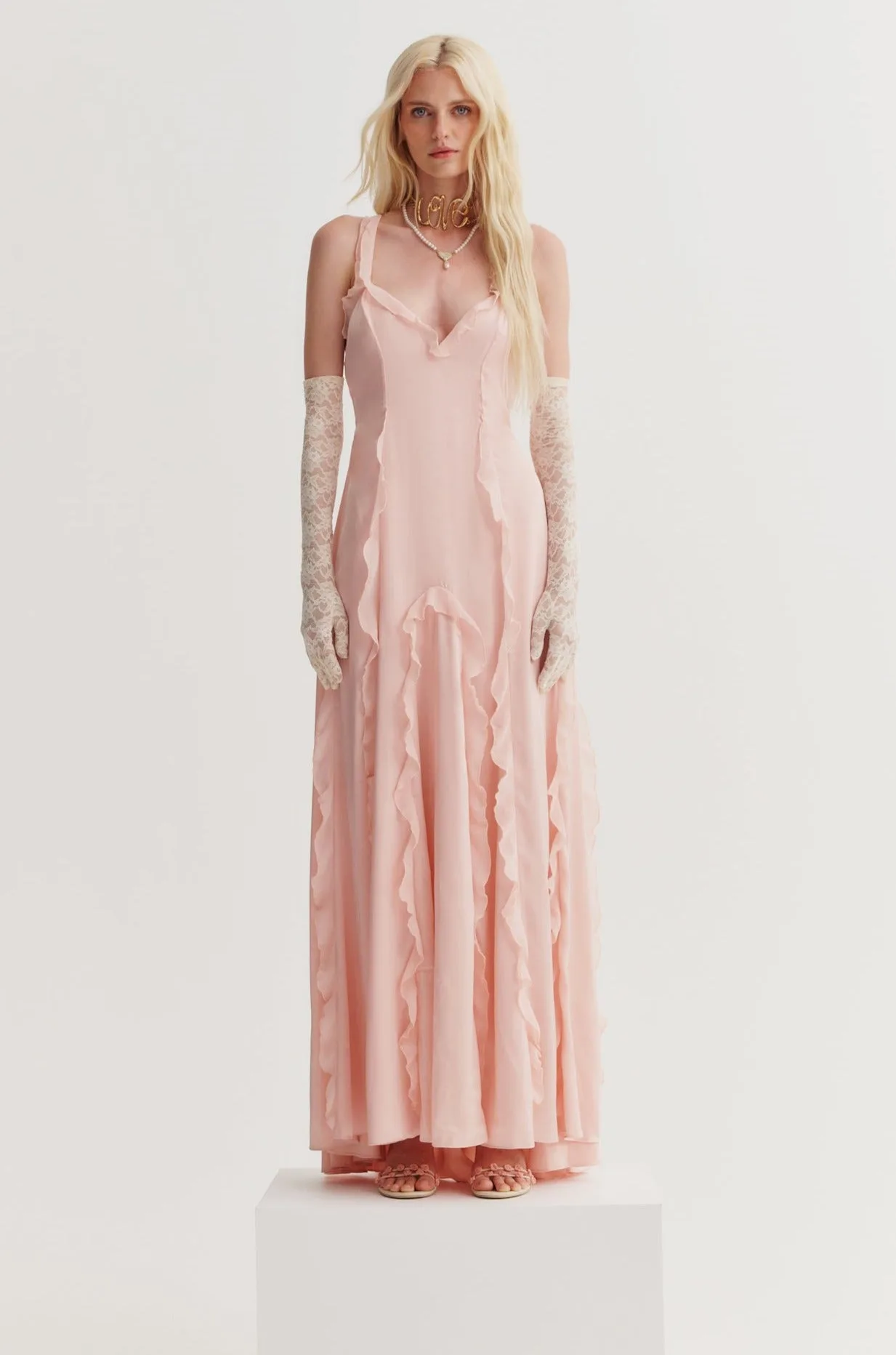
Leonie Gown — Pink