Quick Answer
Bridge tallies and score cards serve different purposes at the table. Tallies track rotations, partnerships, and seating, while score cards record the points each hand produces. For most social games, you'll want both: a tally to keep the movement organized and a score card to track the final result.
If you're new to bridge or setting up a regular game night, you might wonder whether you need bridge tallies, score cards, or both. The two look similar at a glance, but they solve different problems. Understanding that difference keeps your game moving and your scores accurate.
This guide compares the two bridge scoring supplies, explains when each earns its place on the table, and helps you pick the right tools for your next session.
What Is a Bridge Tally?
A bridge tally is a small card that tracks the movement of players and boards during a bridge session. In duplicate bridge, where multiple tables compare scores on the same hands, the tally shows which direction to rotate, who partners with whom, and where each pair sits. It keeps the game organized so everyone plays the right boards against the right opponents.
The bridge tally definition also covers simpler uses. In a social game, a tally can remind players of the rotation order and who has partnered with whom over several rounds. It is not primarily a scoring sheet, though some designs include a small area for notes. Its main job is structure, not arithmetic.
- Look for tallies that are pre-printed for rubber or duplicate bridge formats to match your game type.
What Is a Score Card?
A score card is where you record the points each hand produces. It captures the contract, the result, and the running total. In rubber bridge, you track part scores, games, and rubbers. In duplicate bridge, you record the score for each board, which is later compared to other tables.
Score cards come in many formats. Some are simple pads with lines for names and totals, while others include columns for individual round scores and cumulative totals. The right one depends on the variant you play and how detailed you want your records to be.
- For a two-player game like gin rummy, a dedicated score pad with spaces for names and cumulative totals keeps things tidy.
Key Differences at a Glance
The main difference between tallies and score cards is their purpose. A tally manages the flow of the game, especially in duplicate bridge. A score card records the outcome. You might use a tally all evening and never write a point on it, while a score card fills up quickly with numbers.
Another difference is format. Tallies are often small and designed to fit in a bridge board or pocket. Score cards are usually larger, with room for multiple hands. Some products combine both functions, but most tables benefit from having each dedicated tool available.
- Keep a tally on the table for rotation guidance and a score card nearby for recording results.
Tradeoffs to Consider
- Tally vs. Score Card: A tally keeps the game organized but doesn't record points. A score card records points but doesn't manage rotations or partnerships. For most bridge games, you need both.
- Rubber vs. Duplicate Bridge: Rubber bridge focuses on accumulating points across hands, so a score card is essential. Duplicate bridge emphasizes comparing results, so a tally that tracks movements and boards is more critical. Choose your supplies based on the format you play most.
- Single-Purpose vs. Combined Tools: Some products combine tally and score functions, which can save space but may be less detailed than dedicated tools. If you play frequently, dedicated tallies and score cards are easier to use.
Bridge Scoring Supplies from KEM
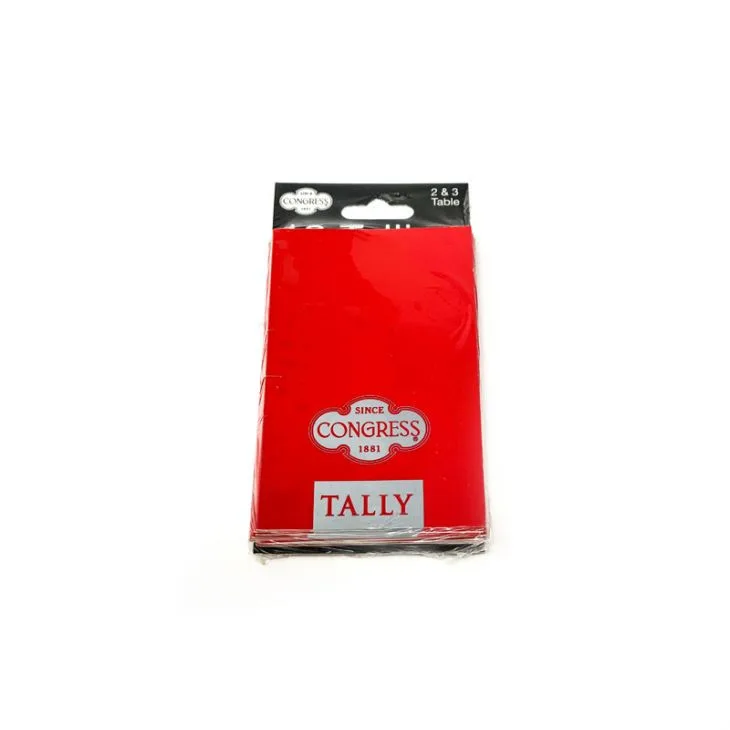
- Bridge Accessories: Solid Color Bridge Tallies in Packs of 12: Congress Bridge Tallies. Each tally easily tracks rotations, partnerships, and scores and features a clear layout, making it simple to follow game progress and seating arrangements. Pre-printed for Rubber or Duplicate Bridge formats. These tallies cover both rubber and duplicate bridge, so you can use the same pack for a casual home game or a more structured club session.
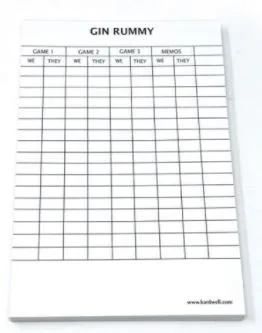
- Score Pads: Gin Rummy, 50 Sheets Per Pad: Each sheet features a clean layout with spaces for players' names, individual round scores, cumulative totals, and bonus points. While designed for gin rummy, the clear layout works well for any game where you need to track multiple rounds and totals without confusion.
Which Should You Choose?
Best for
- Bridge tallies are best for duplicate bridge sessions where rotations and board movements need to stay organized.
- Score cards are best for rubber bridge and social games where tracking points and totals is the priority.
Not for
- Bridge tallies are not for detailed point tracking or long-term scorekeeping.
- Score cards are not for managing table movements or partnership rotations.
Bridge tallies and score cards each have a clear job at the table. If you play duplicate bridge, a tally keeps the session organized. If you play rubber bridge or a casual game, a score card records the results. For most players, keeping both in your bridge supplies means you're ready for any format.