Quick Answer
Iced is the better default for Bubblegum tea: the strawberry-hibiscus base stays bright and the candy pieces become a chewy garnish rather than a steeping ingredient. Hot brewing works only if you keep the steep short and treat it as a dessert tea.
Why iced usually wins with this blend
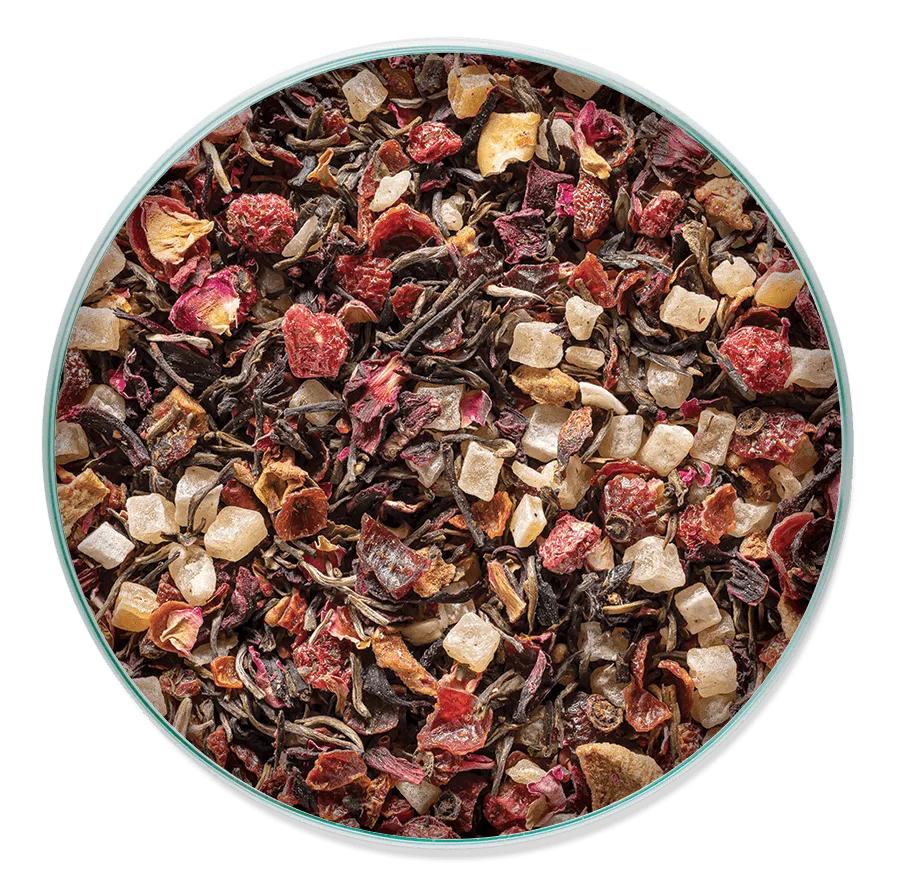
The catalog lists apple, rose hip, orange peel, hibiscus, calendula, bubblegum, and cornflower petals. Hibiscus turns sharp and throat-coating when it stews, and that sharpness is more noticeable in a hot cup. Chilling the liquor softens the tartness and lets the strawberry note read as juicy rather than medicinal.
Iced also solves the candy problem. The bubblegum pieces are for chewing, not steeping, so you can fish them out after brewing and add them to the glass as a sweet finish. In a hot cup they simply sink and clutter the bottom.
When hot brewing makes sense
Hot brewing is the right call when you want a fast, warming dessert cup on a cold evening or when you are pairing the tea with something plain, like shortbread or buttered toast. The heat pushes the rose hip and orange peel forward, so the cup tastes more like a fruit compote than a candy shop.
The tradeoff is control. A long hot steep pulls out more hibiscus astringency, and the candy pieces can begin to soften and stick to the infuser. If you go hot, plan to stop the steep early and remove the candy before serving.
The mistake that makes either version taste flat
Overloading the leaf is the usual culprit. This blend is heavy on hibiscus and rose hip, which are assertive ingredients; a heaped tablespoon per cup can drown the strawberry and bubblegum notes. Start with a level teaspoon per 8 ounces of water and adjust after tasting.
Water temperature matters too. Boiling water extracts tartness quickly from hibiscus. For a softer cup, let the water cool for a minute or two after boiling before pouring it over the leaves.
Diagnose Your Cup: Symptom, Cause, Fix
- Cup tastes harsh or drying: Symptom: a sharp, sandpapery finish. Likely cause: hibiscus and rose hip were steeped too long or in water that was too hot. Corrective action: steep 3–4 minutes in water just off the boil, then remove the leaves immediately. Stop if the tartness persists after a second, shorter steep. Set a timer; hibiscus turns bitter fast.
- Candy pieces turn sticky or gluey: Symptom: the bubblegum pieces clump in the infuser or stick to the cup. Likely cause: they were left in hot water during the full steep. Corrective action: pull the candy out before adding water, or fish it out with a spoon as soon as the tea is done. Stop if the pieces have already dissolved; the tea will still be drinkable but loses its garnish. Treat candy as a topping, not a tea ingredient.
- Iced version tastes watery: Symptom: the chilled tea lacks flavor. Likely cause: ice melted in the glass and diluted the brew. Corrective action: brew a stronger concentrate (1½ teaspoons per 8 ounces), chill it in the fridge first, then pour over plenty of ice. Stop if you prefer a lighter drink; in that case, brew at normal strength and skip the ice. Chill the liquid before it meets the ice.
- Hot cup feels too tart for dessert: Symptom: the tea overwhelms a sweet treat. Likely cause: the natural hibiscus tartness clashes with sugary food. Corrective action: serve the tea iced instead, or add a slice of orange to the hot cup to round out the edges. Stop if you want a rich, creamy dessert tea; this blend is fruit-forward, not creamy. Pair hot Bubblegum tea with plain, buttery foods rather than frosted desserts.
Product Facts
-
Bubblegum: Bubblegum pieces are for chewing, not steeping. Remove them before or after brewing so they garnish the cup instead of turning mushy in the infuser.

Bubblegum
-
Bubblegum: The blend combines strawberry, hibiscus, and citrus with apple, rose hip, and orange peel. Expect a tart, fruity base rather than a creamy candy flavor; the bubblegum note comes mainly from the chewy pieces.