Quick answer
For most babies and toddlers, a bucket hat is the better everyday choice: the downward brim shades the face, ears, and neck without a rigid wide brim, and it packs flat. Choose a true sun hat when you need maximum coverage for long outdoor stretches, and always look for a chin strap or adjustable fit so the hat stays on. If your child pulls hats off, start with a soft bucket hat and size up only when the head measurement crosses into the next size.
What actually differs between a bucket hat and a sun hat
A bucket hat has a soft, downward-sloping brim that circles the head. It shades the face, ears, and the back of the neck, and because the brim is floppy it folds into a diaper bag without losing shape. A sun hat usually has a wider, stiffer brim, sometimes with a neck flap, and is built for extended time outdoors. The trade-off is bulk: a wide sun hat offers more coverage but can be heavier, catch the wind, and feel awkward in a stroller or carrier.
For daily errands, a bucket hat is easier to live with. For a full morning at the park or a beach day, a sun hat with a chin strap earns its place. Many families keep one of each and switch by outing length rather than by season.
Sun protection: coverage versus convenience
Neither style replaces sunscreen on exposed skin, but the shape changes where shade lands. A bucket brim shades the face and neck evenly; a wide sun hat brim casts a larger shadow and often adds a neck flap for the ears and nape. If your baby rides in a stroller with the canopy up, a bucket hat is usually enough. If they sit upright in a wagon or carrier with direct sun overhead, the wider brim does more work.
Fabric matters as much as shape. Look for tightly woven or UPF-rated material, and avoid open crochet or mesh crowns that let light through. A hat that stays put protects better than a technically superior hat that ends up on the ground.
Chin straps, adjustability, and keeping the hat on
A baby sun hat with chin strap is the single most useful feature for children under two, because they cannot yet re-seat a slipping hat. A soft strap under the chin prevents the hat from tipping back or flying off in a breeze. Check that the strap is wide and soft rather than a thin cord, and that it releases easily if it catches on something.
Adjustable toggles or hook-and-loop tabs at the back let a hat grow with your child, which is helpful when sizing falls between two sizes. For bucket hats, an elastic or drawstring inner band does the same job. Whichever you choose, test the fit by having your child look down, then shake their head gently: the hat should stay level without pressing on the forehead.
How to measure a baby's head for a hat
Use a soft measuring tape around the widest part of the head, just above the eyebrows and around the back bump. Keep the tape snug but not tight, and measure in centimeters for the most accurate size match. If you do not have a tape, wrap a strip of paper or a piece of string, mark it, and lay it against a ruler.
Measure once when calm, and again a week later if the first reading seems off, since babies move and cry during measuring. Between sizes, size up for a bucket hat with an adjustable band, but stay with the smaller size for a wide sun hat, because an oversized stiff brim can slide down over the eyes. Re-measure every two to three months, as head growth slows after the first year but still changes fit.
Style, outfits, and everyday practicality
Bucket hats read casual and pair easily with overalls, rompers, and sleepers for a coordinated look. A baby bucket hat for boys and girls works in solid colors, stripes, or prints, so one hat can move between siblings. Sun hats tend to look more sporty and are often chosen in bright colors for visibility at the beach or playground.
For a put-together summer outfit, match the hat to a woven overall and booties rather than buying a separate set. That keeps the rotation small and means fewer items to lose. If you already own a neutral bucket hat, a second sun hat in a light color is the more useful addition than a third bucket in another print.
Trade-offs to weigh before you buy
- Coverage vs. portability: A wide sun hat shades more of the face, ears, and neck, but it is bulkier to pack and can catch the wind. A bucket hat covers less area but folds flat and stays out of the way in a diaper bag. Choose the sun hat for long outdoor blocks; choose the bucket hat for errands and travel.
- Chin strap vs. no strap: A chin strap keeps a baby sun hat in place and is close to essential for children under two. The trade-off is one more thing to fasten and check, and a strap that is too thin can be uncomfortable. Prioritize a soft, wide chin strap if your child cannot yet adjust their own hat.
- Adjustable fit vs. exact size: Adjustable bands and toggles extend the usable range and help between sizes. A fixed-size hat looks cleaner and sits more predictably, but it will be outgrown sooner. For a bucket hat, adjustability is worth it. For a stiff wide-brim sun hat, a closer fixed fit is safer.
Pehr pieces that work with either hat
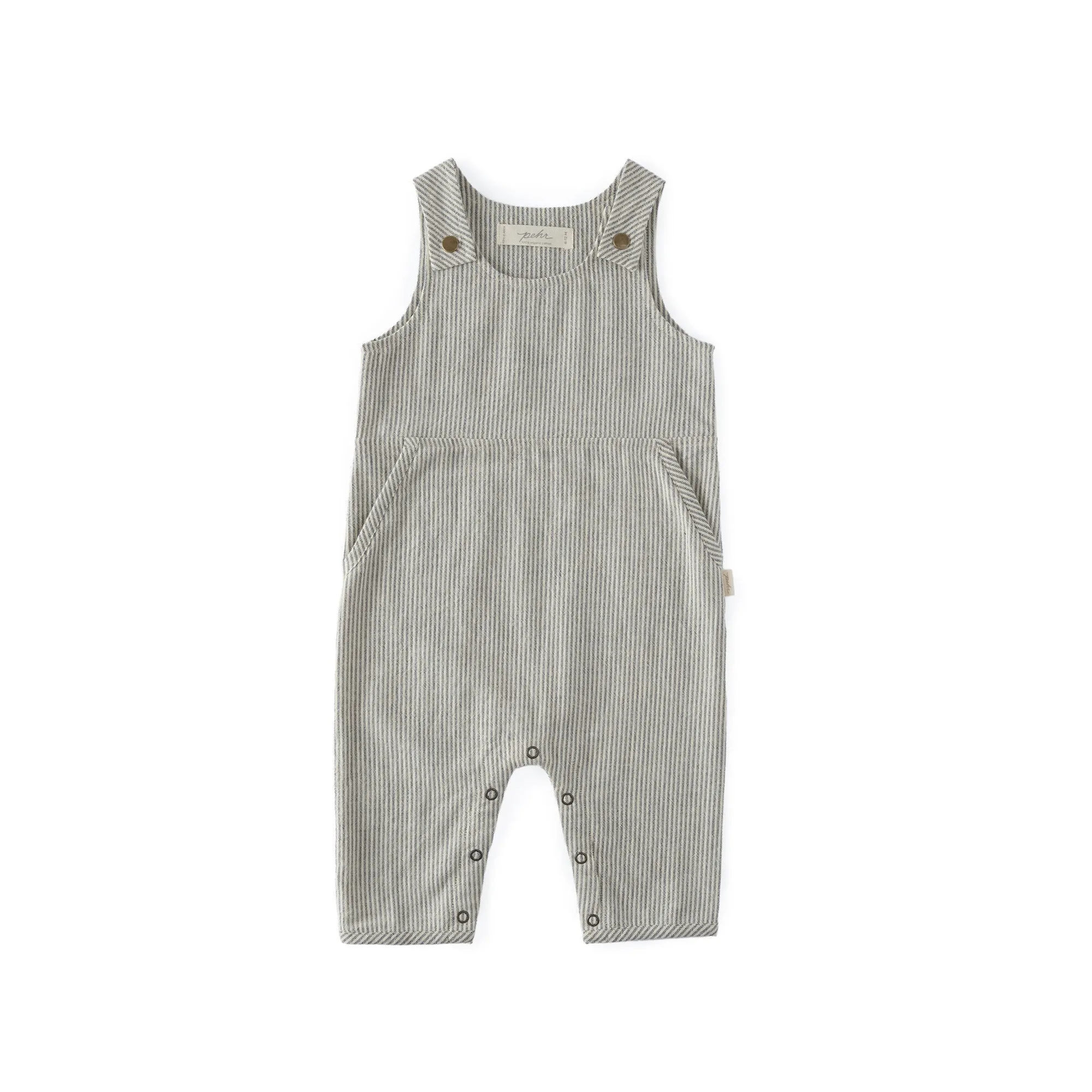
- Railroad Baby Overall - Railroad Stripe: Crafted from GOTS certified organic cotton in a lightweight woven railway stripe and washed for extra softness, with snaps at the straps and inseam for quick changes and side patch pockets. A lightweight overall layers comfortably under a bucket hat or sun hat and makes diaper changes faster on hot days.
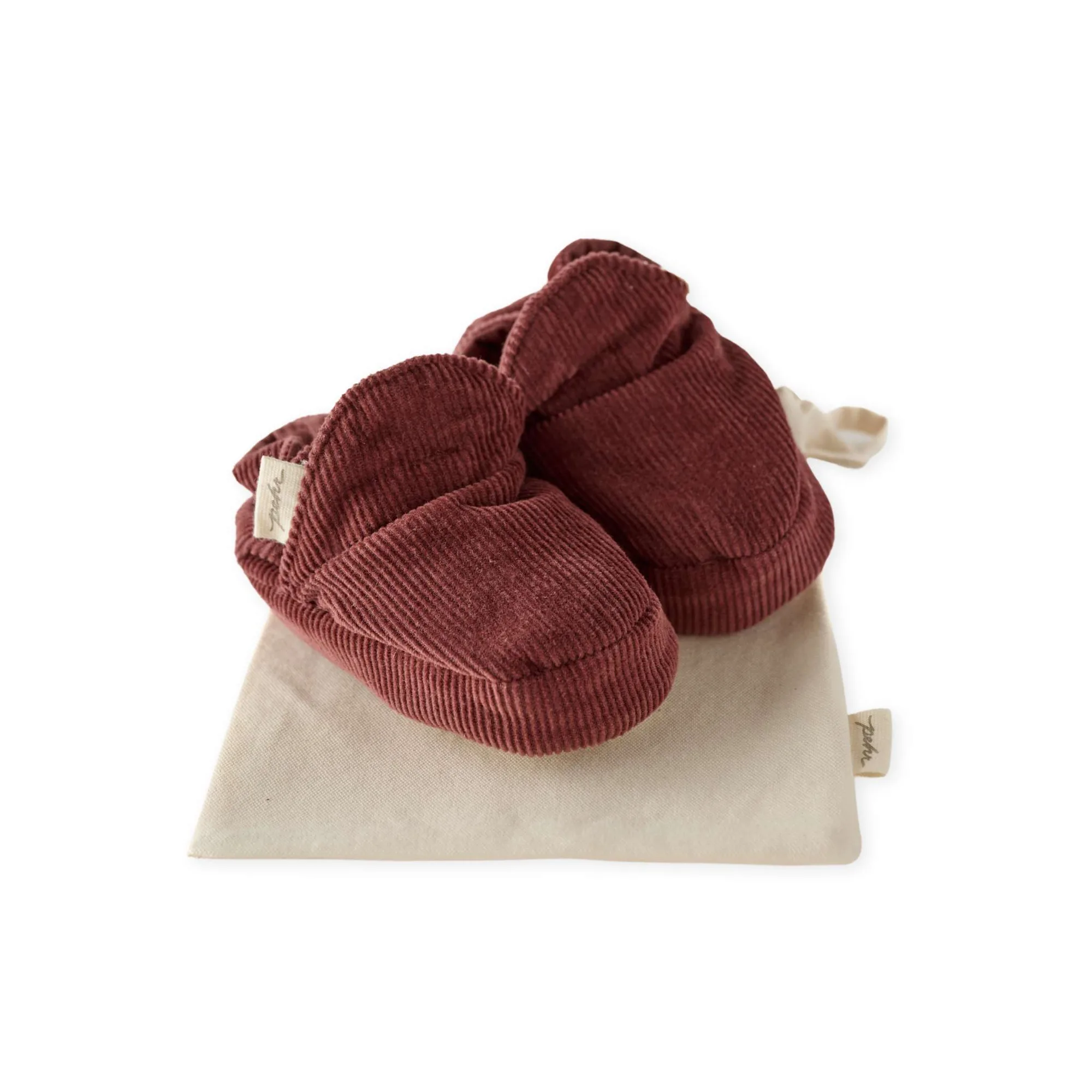
- Corduroy Bootie - Mulberry: Corduroy booties made from 100% organic cotton with a durable canvas sole, a soft lining, and an elastic pull-on opening. The pull-on opening and canvas sole keep feet covered for stroller walks and park outings, completing a coordinated summer look without socks that slip off.
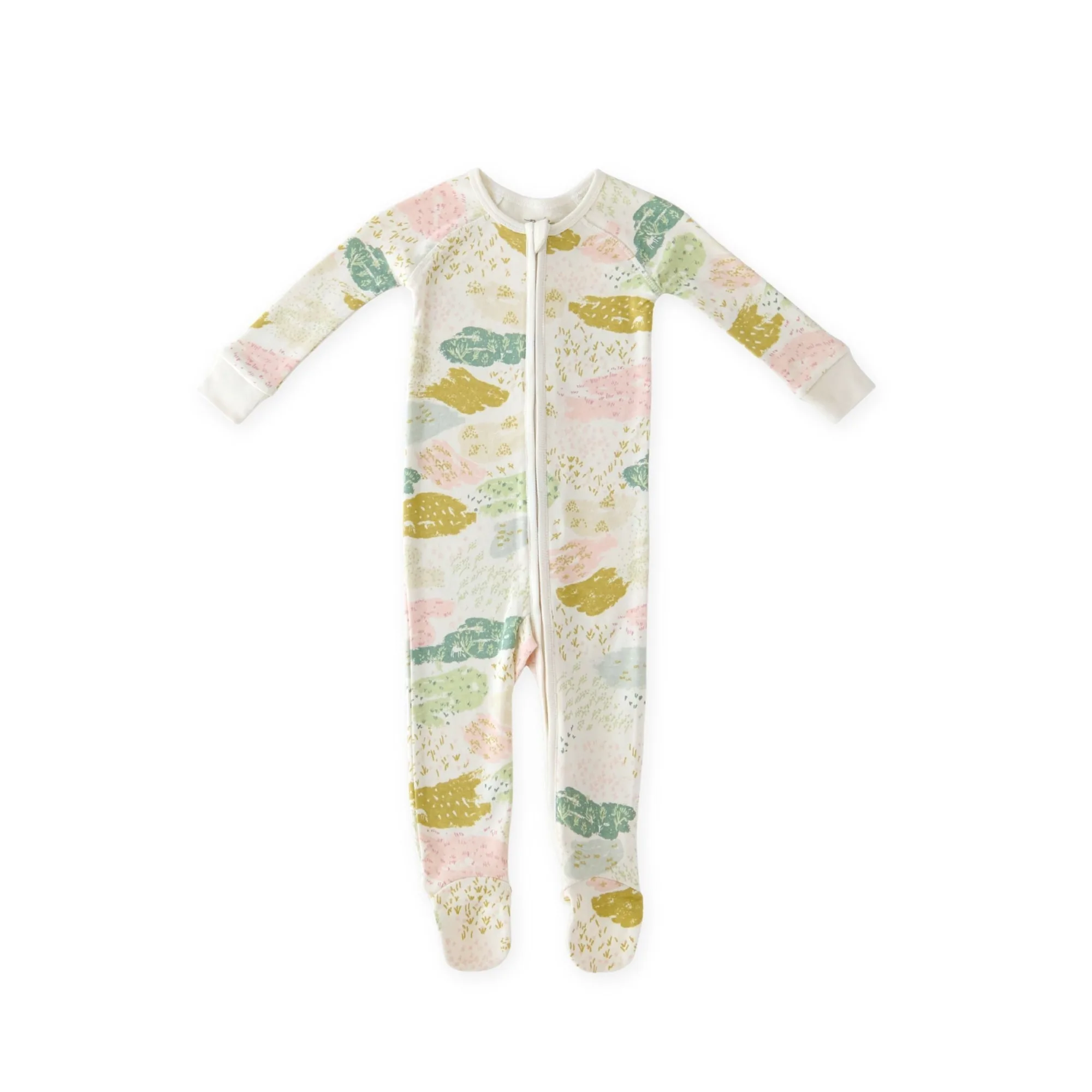
- Ribbed Baby Sleeper - Happy Valley: Ribbed sleeper with footies in GOTS certified organic cotton rib knit, with a full-length zipper and built-in footies. A good option for cooler mornings when a hat is still needed but the day has not warmed up, and the full-length zipper simplifies changes.
Which hat fits your situation
Best for
- Babies and toddlers who need everyday sun shade on stroller walks and quick errands
- Families who want a packable hat that works for boys and girls and pairs with overalls or sleepers
- Children under two who need a chin strap or adjustable band to keep the hat on
Not for
- Full beach or all-day park sessions where maximum face, ear, and neck coverage matters more than packability
- Children who tolerate wide, stiff brims well and need the extra shade a sun hat provides
- Anyone shopping for a hat without checking the current head measurement first