Quick answer
Build a kitchen tower daily routine by anchoring it to one predictable meal prep slot, setting the tower up before your toddler arrives, and assigning one real helper task they can finish. Keep the tower in the same spot, fold it away after use, and treat safety checks as part of the routine rather than a one-time setup.
Why a fixed time slot matters more than a long activity
A kitchen tower works best when it becomes part of the rhythm of the day, not a special event. Pick one recurring slot—usually the meal your family prepares together most consistently—and use the tower only then for the first two weeks. Predictability helps toddlers know what to expect, and it keeps the tower from becoming a place to climb when you are not actively supervising.
Avoid adding the tower to rushed mornings or moments when you are handling hot pans and sharp tools. The routine should start during a low-pressure prep session so both you and your child can learn the flow without time pressure.
Set up the tower and the task zone before your toddler arrives
Place the tower at a stable counter section away from the stove, and clear the counter area your child will use. Put only the tools for that day's task within reach—a bowl, a child-safe cutter, or a cloth—and move everything else back. This reduces the number of times you have to redirect your child mid-task.
Check the tower's position and stability each time you set it up. If your tower has a foldable or adjustable frame, confirm it is fully open and locked before your child climbs in.
Choose one real helper task your toddler can own
The routine holds together when your child has a job that genuinely contributes to the meal. Good starter tasks include tearing lettuce, stirring a cold mixture, wiping the counter, or transferring pre-cut ingredients from one bowl to another. Rotate tasks weekly so the routine stays interesting without becoming complicated.
Resist the urge to invent elaborate activities. A single real task gives your toddler the feeling of being a helper and keeps your attention on safety.
Use a short opening and closing ritual
A simple opening cue—like washing hands together and saying what you are making—signals that tower time has started. A closing cue—like wiping the counter and folding the tower away—signals that it is over. These small rituals make the routine easier to repeat and reduce protests when tower time ends.
If your kitchen layout allows, store the tower in the same place every day. Consistency helps your child associate the tower with helper time rather than free play.
Keep safety checks inside the routine
Learning tower kitchen safety is not a separate checklist you do once; it is part of the daily flow. Before your child climbs in, confirm the tower is stable, the counter zone is clear of hazards, and your child is wearing a non-slip sole or bare feet. During the task, stay within arm's reach and keep hot items on a different counter.
After the task, fold or move the tower out of the traffic path so it does not become a climbing structure during unsupervised moments. If your child is tall enough to climb in independently, set a clear rule that the tower is only for helper time.
Daily kitchen tower routine: 6 steps
- Pick one recurring prep slot: Choose the meal you prepare most consistently and reserve the tower for that slot only for the first two weeks. Checkpoint: the slot should be low-pressure, not a rushed morning.
- Set up the tower and clear the counter zone: Position the tower away from the stove, clear the child's counter area, and place only the day's tools within reach. Common mistake: leaving sharp or hot items on the same counter.
- Run a 30-second stability check: Confirm the tower is fully open, locked, and stable before your child climbs in. Checkpoint: if the tower wobbles, stop and reset it.
- Assign one real helper task: Give your child a job that contributes to the meal, such as tearing greens, stirring a cold mixture, or wiping the counter. Common mistake: too many tasks, which turns helper time into a craft session.
- Stay within arm's reach during the task: Keep your attention on your child and the task, and keep hot pans and knives on a separate counter. Checkpoint: if you need to leave the kitchen, take your child out of the tower first.
- Close with a cleanup ritual and fold the tower away: Wipe the counter together, then fold or move the tower out of the traffic path. Common mistake: leaving the tower out, where it becomes an unsupervised climbing structure.
Products that support the routine
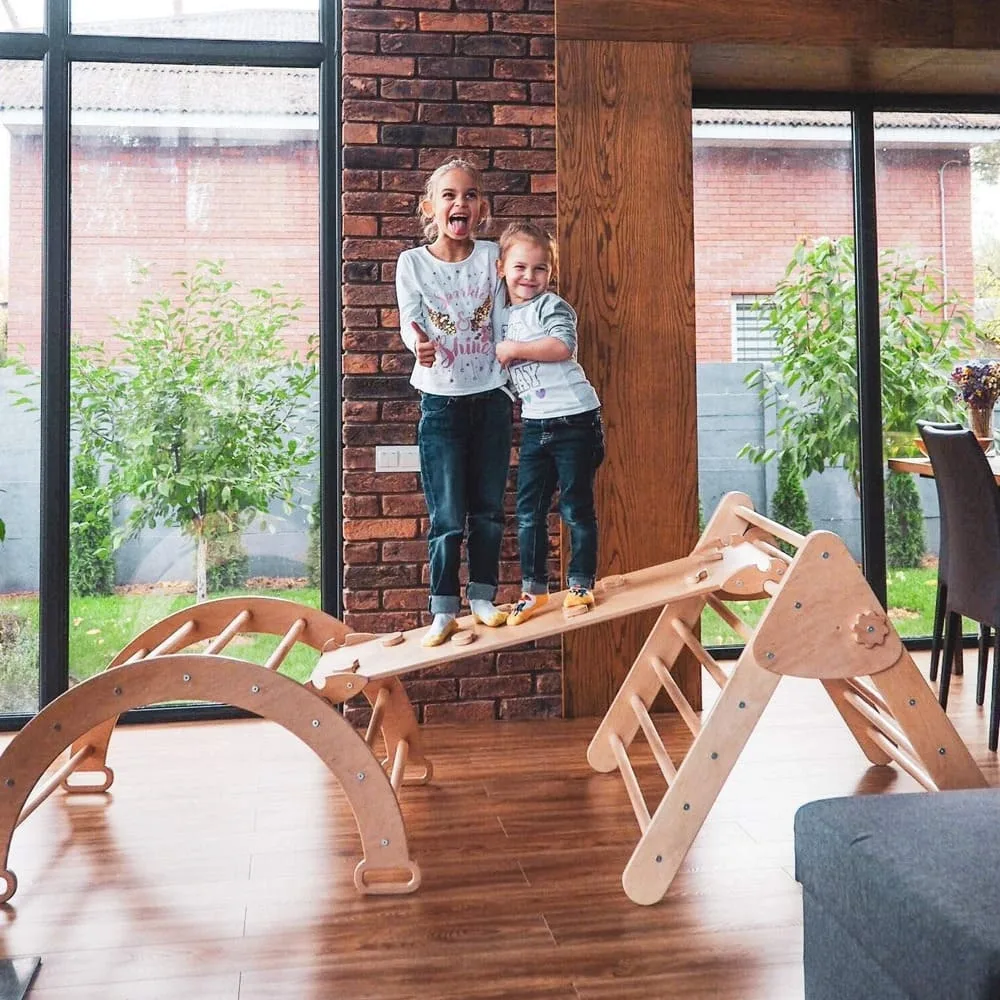
- Montessori Climbing Set of 3: Montessori Climbing Set of 3 includes a foldable triangle, climbing arch, and rocker board, available in Large size for ages 2 to 8. A foldable design makes it practical to store the set out of the kitchen traffic path after helper time, and the age range means the routine can grow with your child.
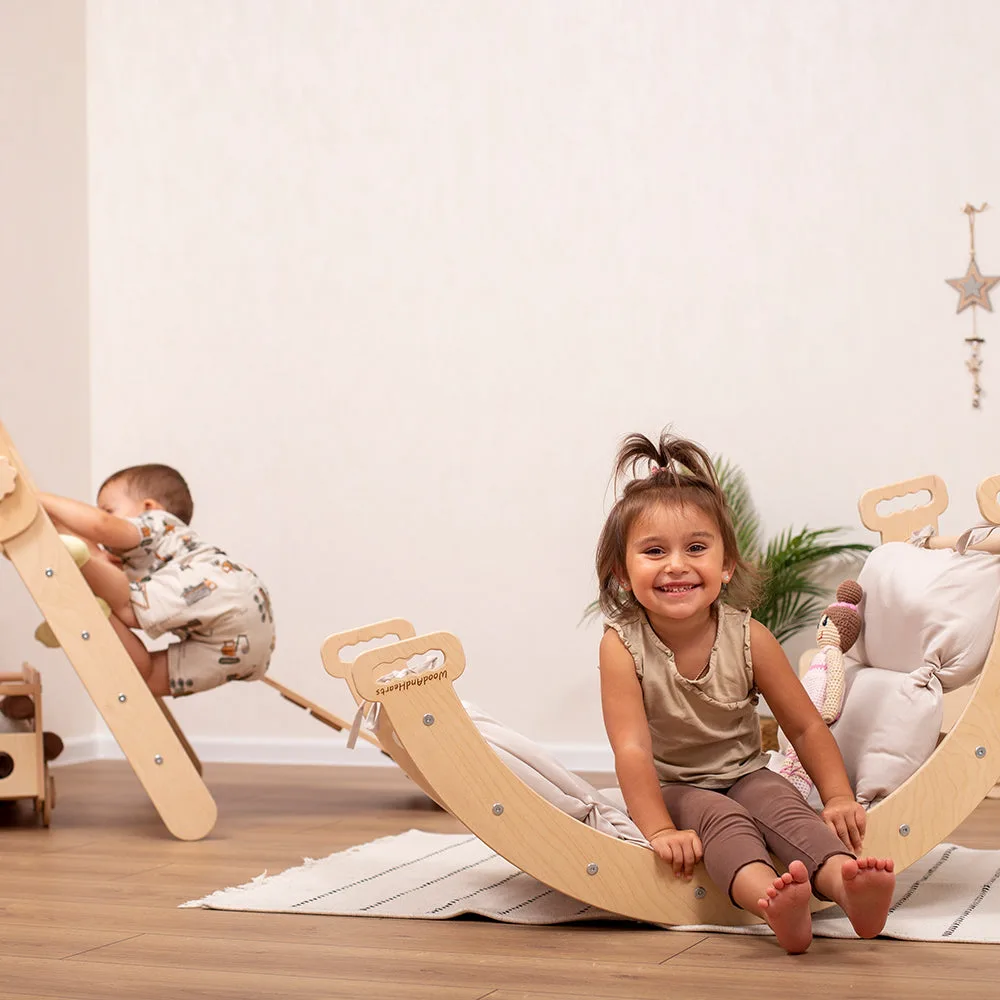
- Montessori Climbing Gym with Cushion: Montessori Climbing Gym with Cushion includes a triangle ladder, climbing arch, slide, and a cushion for the arch, in Large size, made from premium birch plywood. If your child needs a dedicated movement outlet before or after kitchen time, this set provides a clear physical transition; the cushion adds a comfortable rest spot for the arch.