Quick Answer
Choose board games if you want structured, sit-down family game night ideas with clear rules and a definite end. Choose building sets if your family prefers open-ended, quiet focus time that can be paused and resumed. Many families keep both: a game for togetherness, a build for independent play.
How Setup and Space Change the Decision
Board games need a flat surface, good lighting, and enough table space for a board plus player areas. Setup is usually quick—open the box, deal cards or place tokens—but cleanup means sorting pieces back into the box so nothing goes missing before the next game night.
Building sets need a dedicated build zone that can stay out for hours or days. A coffee table or floor mat works, but pieces scatter easily and small parts demand a tray or bowl. If your family eats at the dining table, building sets compete with meals in a way board games rarely do.
Replay Value and Skill Growth
Board games reward repeated play: strategies shift, rules become second nature, and younger players grow into more complex games. The trade-off is that a game can feel stale after too many rounds, and player count matters—some games need three or four people to work well.
Building sets trade rule-based replay for creative replay. A finished model can be displayed, rebuilt, or modified, and the same pieces support different builds over time. The trade-off is that once a set is built and displayed, it may sit untouched unless your family enjoys rebuilding or designing original models.
Age Mixing and Attention Spans
Board games handle mixed ages best when they include cooperative rules or simple turn structures. A five-year-old and a ten-year-old can play the same game if turns are short and luck balances skill. Competitive games with heavy reading or math can exclude younger players and cause frustration.
Building sets let different ages work side by side at their own pace. A younger child can sort pieces or place large parts while an older child follows instructions. The trade-off is that complex sets may need adult help for fragile connections, and a child who wants a finished model fast may lose interest during a long build.
Collecting and Storage Habits
Board games stack neatly on shelves and are easy to inventory. Building sets take more room once assembled, and loose pieces need bins or bags to stay usable. If your family moves often or has limited storage, board games are simpler to pack and protect.
Building sets can become a collection—new sets add pieces and display pieces—but that also means more shelf space and more sorting. Decide whether your family enjoys the organizing as much as the playing. If not, a smaller set or a game might serve you better.
Trade-Offs at a Glance
- Structured vs. open-ended play: Board games provide rules and a clear end point; building sets provide open-ended creation with no fixed finish line. Pick board games for togetherness on a schedule; pick building sets for flexible, self-directed play.
- Setup and cleanup effort: Board games set up fast but require piece sorting after play; building sets need a dedicated space and piece management during the build. If your family dislikes cleanup, choose a game with few pieces or a building set with a storage bin.
- Replay and longevity: Board games reward repeated play with strategy shifts; building sets reward rebuilding and modification but may sit displayed once finished. Match the choice to whether your family replays or rebuilds more often.
Product Facts to Compare
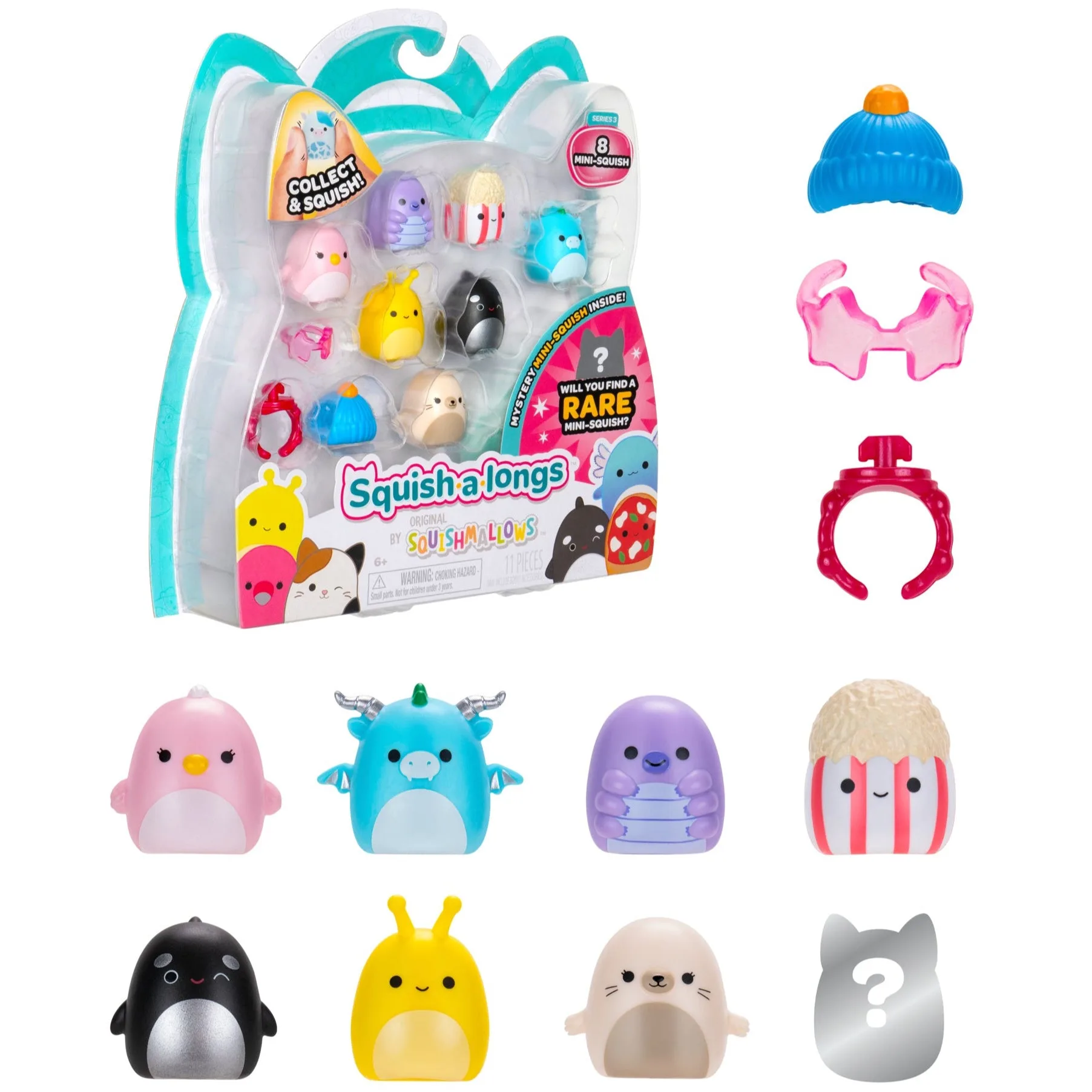
- Squish-a-longs Mini-Squish 8-Pack Style 2: Squish-a-longs Mini-Squish 8-Pack Style 2 includes a Mini-Squish ring attachment for on-the-go styling and features squeezable plastic collectibles in a small size. This is a compact, portable option that works like a collectible toy rather than a full building set or board game, so it fits travel and quiet play better than table-based activities.
- Shutter Shades Stella: Shutter Shades Stella is a large plush from the RetroBumz collection made with soft fabric and available in size options. Plush offers comfort and display value without setup or rules, making it a low-commitment alternative when your family wants a toy that is always ready to play.
Which Fits Your Family?
Best for
- Families who want a shared activity with clear rules and a definite end time
- Households with limited storage that need toys to pack away neatly
- Mixed-age groups that can use cooperative or simple-turn games
Not for
- Families who prefer open-ended, quiet building without competition
- Homes without a table or floor space that can stay occupied during a build
- Children who lose interest in long instructions and want immediate play