Quick answer
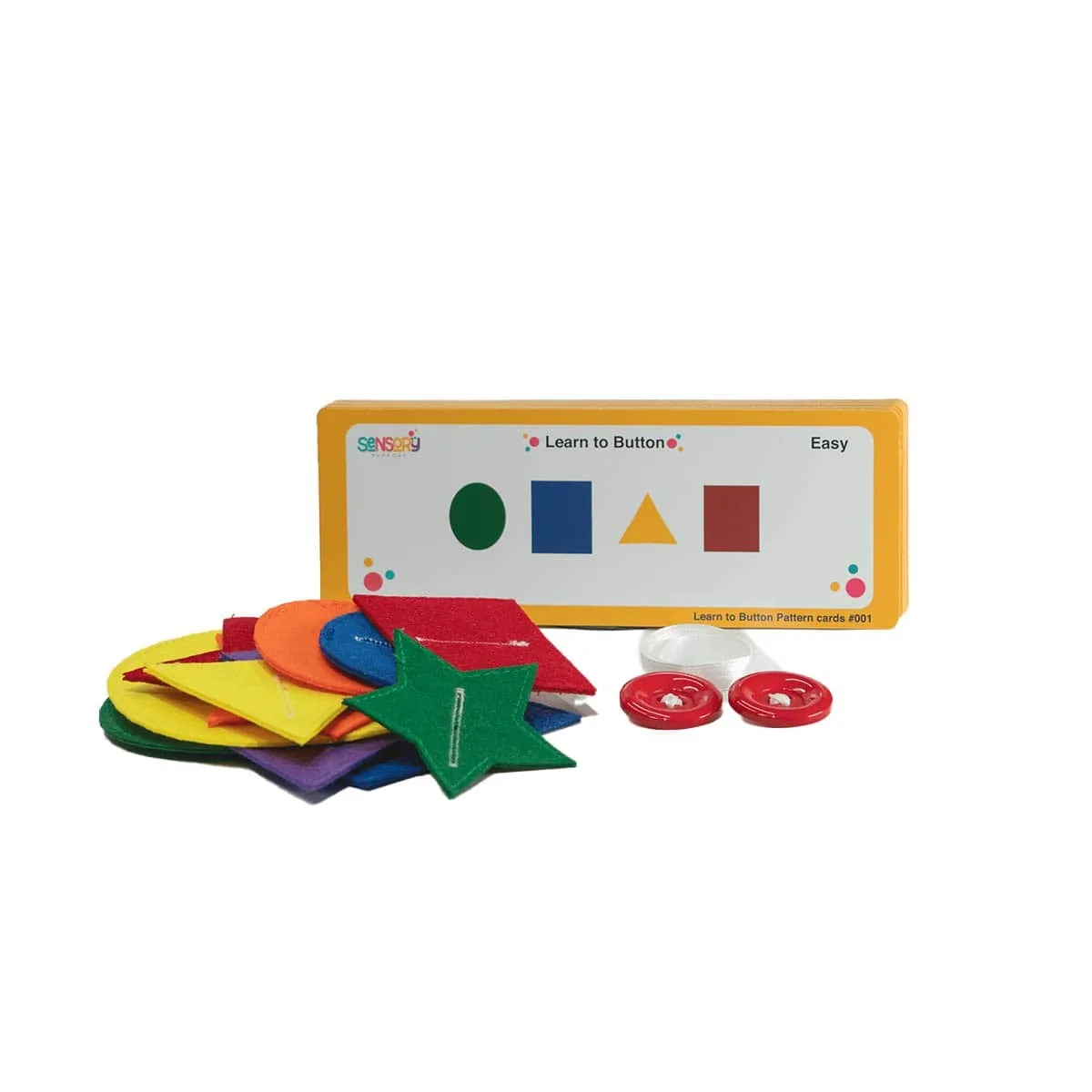
Button Pizzazz uses chunky buttons and easy-to-grip cards to turn buttoning practice into a sensory play activity that builds fine motor skills and dressing confidence.
Why sensory play helps with buttoning
Many children struggle with buttoning because it requires precise finger movements, bilateral coordination, and visual attention. Adding a sensory element—like the bright colors and tactile cards of Button Pizzazz—can reduce frustration and keep kids engaged longer. The hands-on feedback helps the brain map the motor sequence more naturally than a plain shirt or practice board.
Who benefits most from this tool
Button Pizzazz is especially helpful for children with fine motor delays, sensory processing differences, or those who avoid dressing tasks. It also works well as a warm-up activity before trying buttons on real clothing. Keep in mind that it uses larger, chunky buttons, so the skill may not transfer perfectly to tiny shirt buttons right away—but it builds the foundational hand strength and coordination needed.
How to use Button Pizzazz for buttoning practice
- Set up a comfortable workspace: Place the Button Pizzazz cards on a flat surface or a slightly tilted board. Have your child sit with their feet flat and elbows at a 90-degree angle so they can reach the cards without straining. Check that the child's wrists are straight, not bent up or down, to avoid fatigue.
- Start with one card and one button: Show your child how to hold the card with one hand and push the button through the slot with the other. Let them try it slowly, focusing on the feeling of the button sliding through the fabric opening. Common mistake: rushing. Let the child repeat the same button several times until the motion feels smooth.
- Add a second card for sequencing: Once your child can button one card independently, place two cards side by side. Have them button the first, then the second, to practice the two-step rhythm of real dressing. If they skip a card or lose focus, go back to one card and add verbal cues like 'push and pull'.
- Practice unbuttoning too: Unbuttoning is a separate skill that requires different finger pressure. Show your child how to pinch the button and tilt it sideways to slide it back out. Alternate between buttoning and unbuttoning on the same card. Many children find unbuttoning harder—expect more frustration and offer extra encouragement.
- Transfer the skill to a real shirt: After several sessions with Button Pizzazz, try a loose-fitting shirt with large buttons. Place the shirt flat on a table first, then gradually practice while the child wears it. Use the same verbal cues from the card practice. Don't expect instant transfer. The angle and fabric tension are different, so be patient and celebrate small wins.
Product facts
-
Button Pizzazz Learn to Button: Button Pizzazz features chunky buttons and easy-to-grip cards that turn buttoning into a hands-on, enjoyable experience. The larger buttons and textured cards provide clear tactile feedback, making it easier for children to grasp and manipulate without frustration.
Button Pizzazz Learn to Button