Quick answer
A calcium magnesium vitamin D supplement can support bone health, muscle function, and calcium absorption, but it's not for everyone. Consider it if you have a known deficiency, a high-risk lifestyle, or specific dietary restrictions.
Why combine calcium, magnesium, and vitamin D?
Calcium is essential for strong bones and teeth, but your body needs vitamin D to absorb it effectively. Magnesium helps convert vitamin D into its active form, making the trio work together. Without enough magnesium, calcium may not be properly utilized and could even contribute to soft tissue calcification.
A combined supplement simplifies your routine, but it also means you're getting a fixed ratio. If your diet already provides enough of one mineral, you might end up with more than you need.
Who benefits most?
Older adults often have reduced calcium absorption and lower vitamin D synthesis from sunlight. People with dairy-free, vegan, or gluten-free diets may struggle to get enough calcium and magnesium from food alone. Those who take proton pump inhibitors or other acid-reducing medications may also absorb less calcium and magnesium.
However, if you already eat a balanced diet rich in leafy greens, nuts, seeds, and fortified foods, or if you spend time outdoors daily, you may not need a triple supplement.
Decision rules for choosing a calcium magnesium vitamin D supplement
- Check your diet first: Track your typical daily intake of calcium, magnesium, and vitamin D from food. If you regularly eat dairy, leafy greens, nuts, seeds, and fortified foods, you may already meet your needs. A food-first approach is always best; supplements fill gaps, not replace a balanced diet.
- Consider your life stage and health conditions: If you are over 50, postmenopausal, or have a condition like osteoporosis or a malabsorption issue, this combo can help maintain bone density and muscle function. Consult your healthcare provider for a blood test to confirm deficiencies before supplementing.
- Watch for medication interactions: Certain medications, such as proton pump inhibitors, diuretics, or antibiotics, can affect mineral absorption or excretion. Taking a combined supplement may help counterbalance these effects. Always tell your doctor about any supplements you plan to take, especially if you are on prescription meds.
Product spotlight
-
Country Life Calcium Magnesium with Vitamin D Complex: Country Life Calcium Magnesium with Vitamin D Complex is designed to enhance calcium absorption. This means you get the synergistic benefit of three nutrients in one serving, which can be more convenient than taking separate supplements.
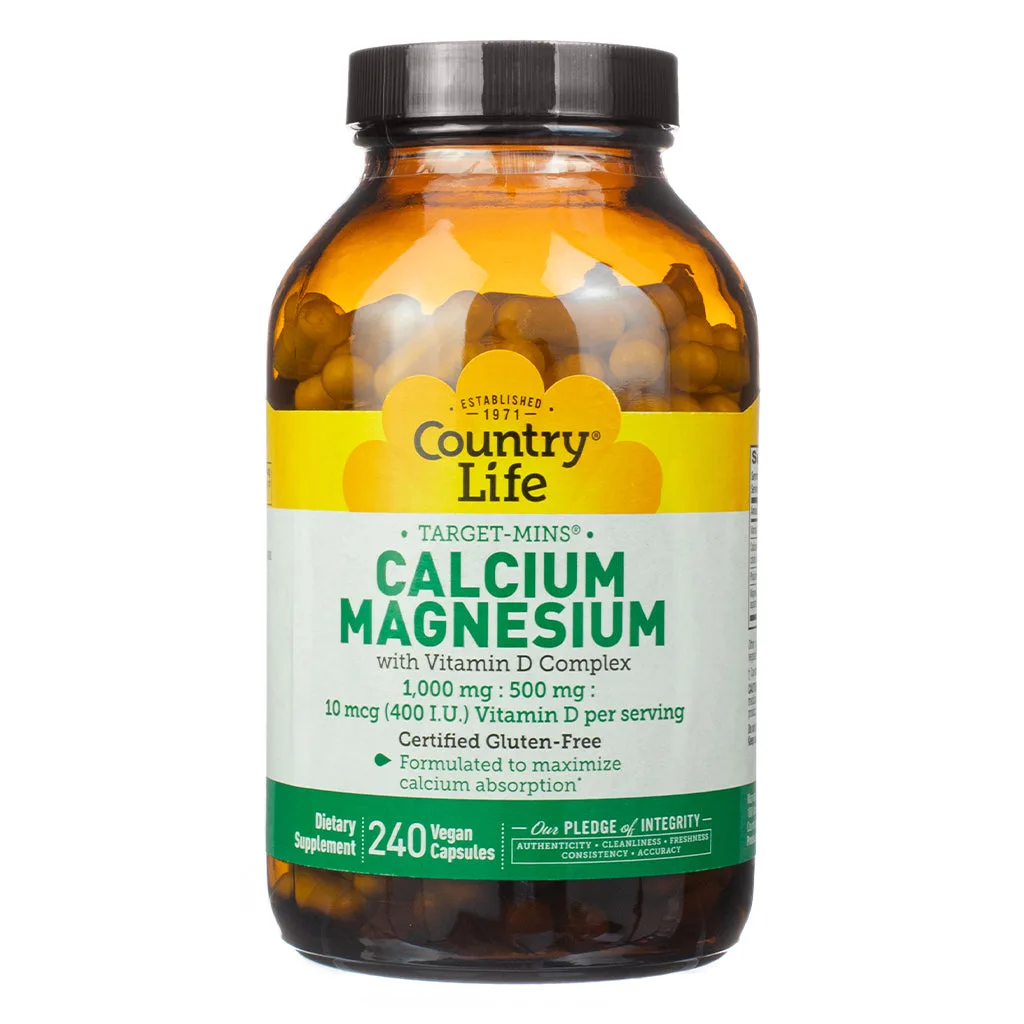
Country Life Calcium Magnesium with Vitamin D Complex
Who should and shouldn't use this supplement
Best for
- Adults over 50 who want to support bone health and calcium absorption
- People with limited sun exposure or dairy-free diets who need a convenient way to get all three nutrients
Not for
- Anyone already getting adequate amounts from food and sunlight—extra supplementation may lead to imbalances
- People with kidney disease or hypercalcemia, as excess calcium can be harmful