Quick answer
For most students, the best satchel for university is one that carries a laptop, a notebook, and daily essentials without losing its shape. Prioritise a structured leather bag with a secure closure, a comfortable strap, and enough internal organisation for campus life. If you need a laptop satchel for students, check the internal dimensions and weight before you buy.
A student leather bag has to do more than look good in a seminar room. It needs to survive a commute, protect a laptop, and still feel comfortable after a long day on campus. That is why choosing a Cambridge Satchel for students comes down to a few practical checks rather than chasing the biggest or most expensive option.
This guide walks through the decisions that matter most: what you carry, how you carry it, and which Cambridge Satchel styles suit different student routines. You will also find honest trade-offs, because a bag that is perfect for a lecture-heavy week may not be the right choice for a design studio or a part-time job.
Start with what you actually carry
Before you compare styles, list your daily load. A laptop, charger, notebook, water bottle, and lunch add up quickly. If your course requires a 15-inch laptop or large folders, you need a bag with a generous main compartment and a flat base that keeps contents stable. If you mostly carry a tablet, a paperback, and a few small items, a compact satchel will be lighter and easier to manage on crowded transport.
The biggest mistake students make is buying for the heaviest day only. A bag that swallows everything can feel empty and awkward on lighter days. The better approach is to choose a size that fits your typical day, then accept that one heavy day a week may need a tote or backpack as backup.
- Measure your laptop before you shop, including any protective sleeve.
- Count your regular items, not your occasional ones.
- If you carry a water bottle, check whether the bag has a flat base or side pockets.
Laptop fit: what to check on a satchel
A laptop satchel for students only works if the laptop actually fits and stays protected. Look for a main compartment that is wide enough for the device plus a slim sleeve, and a closure that does not press down on the screen. Structured leather helps here because it holds its shape and keeps the laptop from sliding around. Soft, unstructured bags can collapse and put pressure on the corners.
Also think about access. You will open and close this bag many times a day, so a closure that is quick but secure matters. Magnetic closures are fast and convenient, while buckle-based designs feel more traditional and secure but take longer. If you are often rushing between lectures, a magnetic closure is usually the more practical choice.
- Check the internal width against your laptop's width, not just the screen size.
- A flat base helps the bag stand upright and protects the laptop when you set it down.
- If you cycle, a detachable crossbody strap is easier to adjust than a fixed one.
Leather, weight and weather
Leather is durable, but not all leather feels the same on a student budget or a student schedule. Saffiano leather has a cross-hatch texture that resists scratches and marks, which makes it a strong choice for daily campus use. Smoother leathers look more relaxed and soften over time, but they show scuffs more easily. Neither is better in every way; the right pick depends on how careful you are and how much you value a broken-in look.
Weight is the other honest trade-off. Leather bags are generally heavier than nylon or canvas, so a large leather satchel can feel heavy before you add a laptop. If you walk long distances or carry a lot, consider a mid-size bag and pack only what you need. A protective dust bag is useful for storage, but it will not make a heavy bag lighter.
- Saffiano leather is a practical choice if you want a bag that hides everyday marks.
- Smooth leather develops character but needs more careful handling.
- A detachable strap lets you switch between hand-carry and crossbody.
Organisation and quick access
Campus life involves constant small items: student card, phone, keys, headphones, pens. A bag with organised storage compartments saves you from digging around. Side pockets are useful for a travel card or a small bottle, while an internal slip pocket keeps a phone or notebook separate from a laptop. If the bag has no internal pockets, you can add a slim pouch, but built-in organisation is easier to live with.
Security also matters in libraries, cafes, and shared studios. A secure closure and a strap you can wear across your body reduce the risk of items spilling or being taken. If you often carry your bag on one shoulder, look for a strap that is wide enough to stay comfortable.
- Prioritise a secure closure if you commute on public transport.
- A crossbody strap keeps your hands free and the bag close to your body.
- Side pockets are best for items you need without opening the main compartment.
Decision rules for student satchel shopping
- If you carry a 15-inch laptop daily: Choose a structured bag with a wide main compartment and a flat base, such as a briefcase-style satchel. Check the internal width before buying. Structure and width matter more than brand or colour.
- If you commute by bike or public transport: Prioritise a detachable crossbody strap and a secure closure. Magnetic closures are faster; buckles feel more traditional but slower. Hands-free carrying and quick access reduce daily friction.
- If you want one bag for campus and evenings: A mid-size satchel with a top handle and a detachable strap works in both settings. Avoid very large bags if you want to carry it socially. Versatility comes from the strap and size, not extra compartments.
- If you are hard on your bags: Choose a textured leather such as Saffiano that resists scratches and marks. Smooth leather looks better with age but shows wear sooner. Match the leather finish to your habits, not just the colour.
Cambridge Satchel styles that suit student life
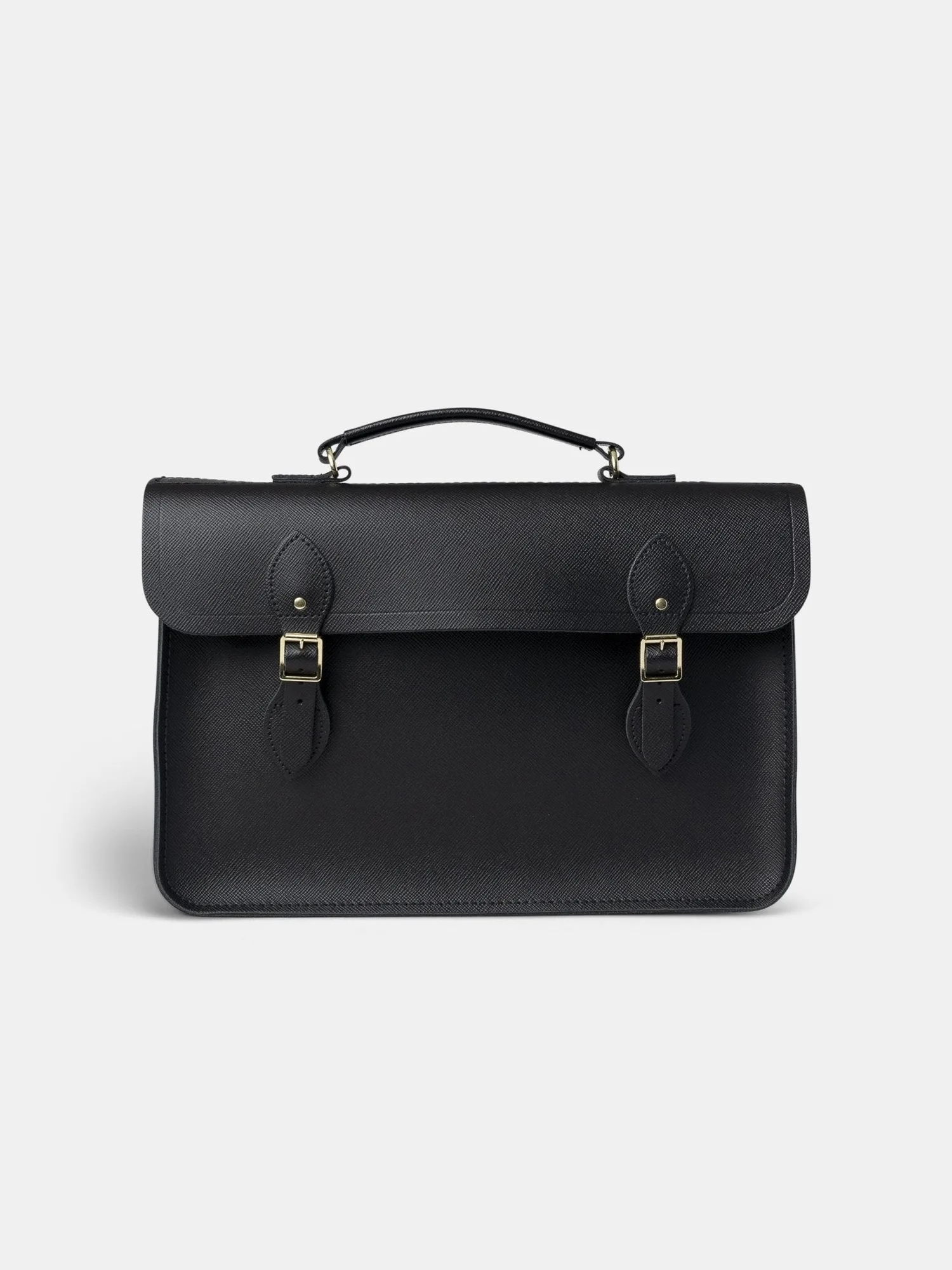
- The Briefcase - Black Saffiano: Black Saffiano leather with a distinctive cross hatch texture, designed as a classic bag for work with a long history in the legal profession and plenty of space for several items. The structured shape and scratch-resistant texture make it a strong laptop satchel for students who want a professional look that holds up to daily use.
- The Traveller - Clay, Oxblood & Navy: Designed for organised storage with magnetic closures, side pockets for essentials, versatile carrying options, and includes a protective dust bag. The organised compartments and side pockets suit students who carry a mix of tech and small essentials, while the magnetic closure is quick to open between lectures.
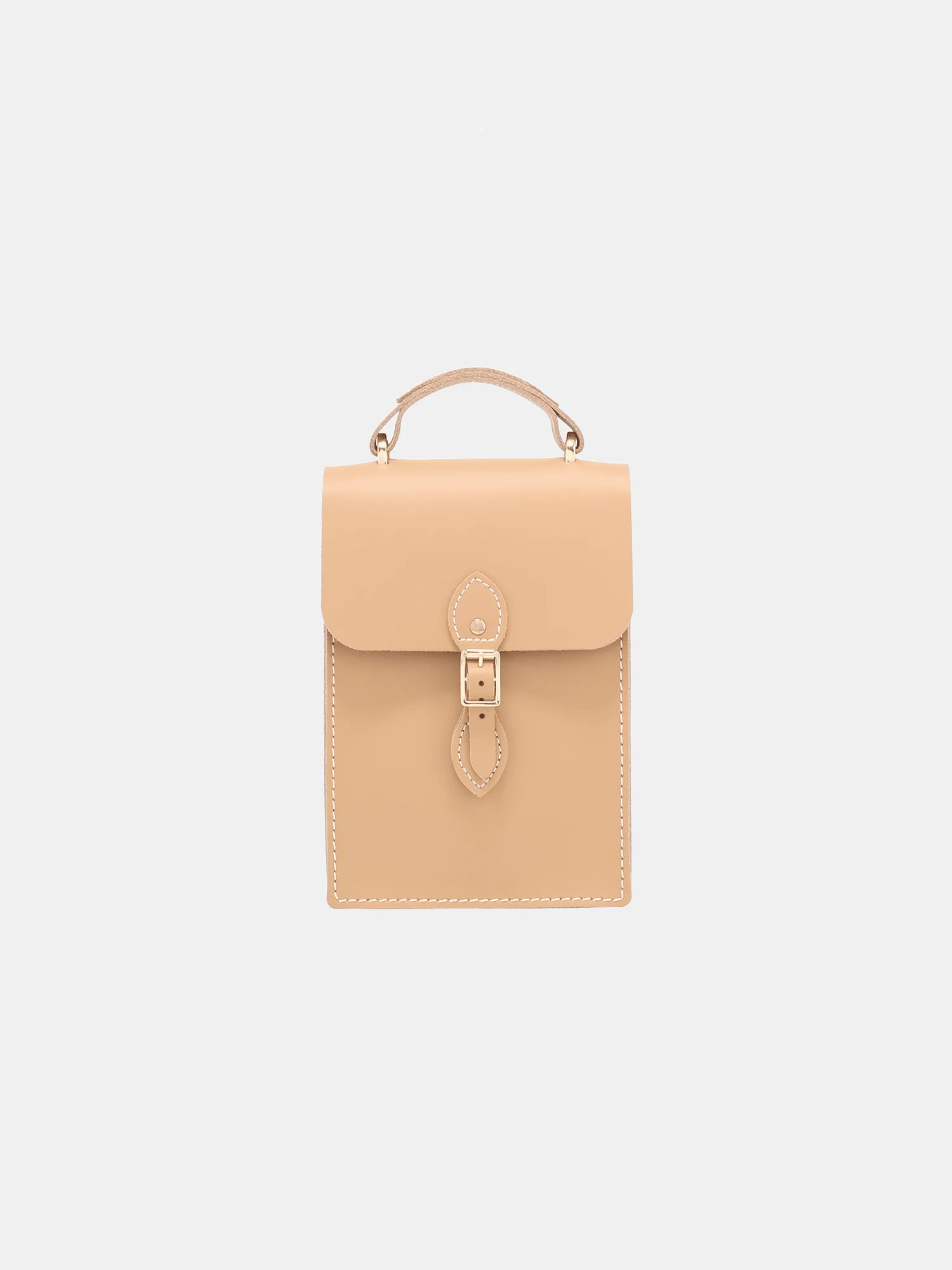
- The Flâneur Binocular Bag - Iced Coffee: A smaller structured portrait shape with a flat base for stability, a concealed magnetic closure, a top handle, and a detachable adjustable strap. A good choice for students who carry a tablet and notebook rather than a large laptop, and who want a lighter bag with a stable base.
Who this guide is for
Best for
- Students who need a leather bag for school, university, or a placement
- Anyone looking for a laptop satchel for students that also works for work or travel
- Buyers who want a structured bag that keeps its shape over time
Not for
- Students who need to carry heavy textbooks or a full art portfolio every day
- Buyers who want the lightest possible bag regardless of material
- Anyone looking for a bag with a padded laptop compartment, which is not a feature of these styles
A student leather bag should fit your real routine, not an idealised one. Measure your laptop, count your daily items, and choose a Cambridge Satchel style with the structure, closure, and carrying options that match how you move through campus. If you are unsure, start with a mid-size structured satchel and add a separate tote only for your heaviest days.