Quick answer
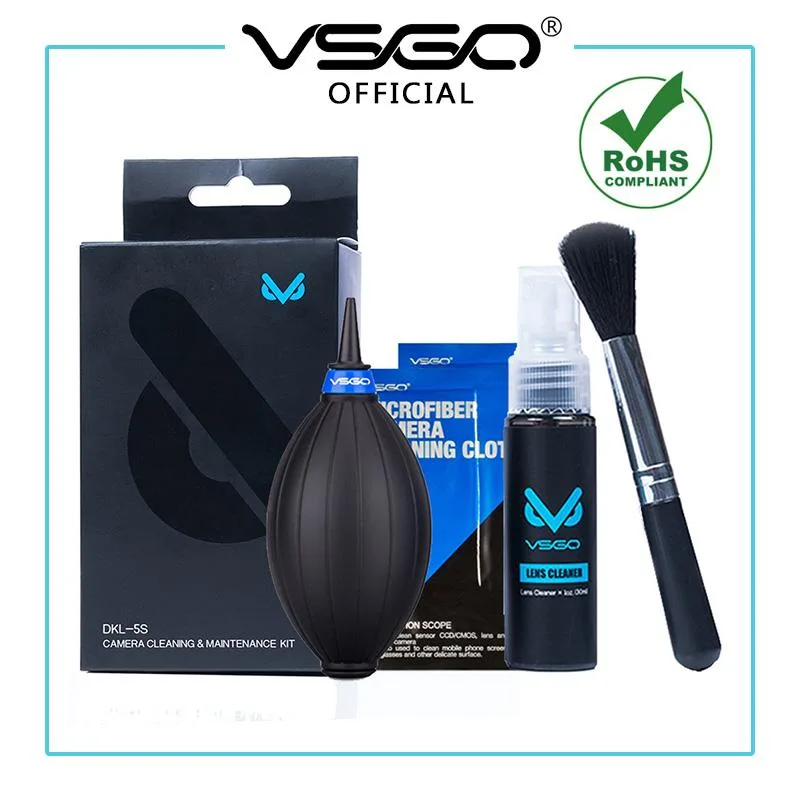
Clean a camera lens by first blowing off loose dust, then brushing or wiping gently with a microfiber cloth or lens tissue, using a cleaning solution only when needed. Work from the center outward and stop as soon as the glass is clear. A basic camera lens cleaning kit like the VSGO DKL-5S gives you the core tools without harsh steps.
Why lens cleaning order matters more than the tools
Most lens damage during cleaning comes from dragging abrasive dust across the glass, not from the cloth itself. That is why the first step is always to remove loose particles without touching the surface. Once grit is gone, you can wipe smudges with far less risk. Keep the same order every time: air, brush, then cloth or tissue, then solution only if a mark remains.
What a basic camera lens cleaning kit should include
A practical kit covers four jobs: blowing off dust, brushing away stuck particles, wiping the glass, and applying a small amount of cleaning fluid when needed. The VSGO DKL-5S Basic Cleaning Kit is designed for camera lenses and delicate optics and includes the core components for routine cleaning. It is formulated to be gentle on coatings and glass, which matters because anti-reflective coatings are softer than the glass underneath. You do not need a large kit for everyday care; you need tools you will actually use correctly.
Lens care versus sensor care: keep them separate
Lens cleaning and camera sensor and lens care are related but not the same job. A lens sits outside the camera and can be cleaned with air, a brush, and a microfiber cloth. A sensor sits behind the shutter or mirror and is far more delicate; most manufacturers recommend specific swabs or professional service. Do not use a lens cloth or household fluid on a sensor. If you see dust spots in every image at small apertures, have the sensor inspected or cleaned by a qualified technician rather than improvising.
Step-by-step lens cleaning process
- Step 1: Blow off loose dust: Use a blower or air bulb to puff air across the lens at an angle, not directly into the barrel. Keep the tip a few centimeters away and squeeze in short bursts. Checkpoint: hold the lens up to a light. If you still see particles, repeat before touching the glass.
- Step 2: Brush away stuck particles: Use a clean lens brush with light strokes from the center outward. Do not press hard, and never use a brush that has been stored loose in a bag. Common mistake: brushing before blowing, which can drag grit across the coating.
- Step 3: Wipe smudges with a microfiber cloth: Breathe gently on the lens if needed, then wipe in a circular motion from the center outward with a clean microfiber cloth. Use a fresh section of the cloth for the final pass. Checkpoint: if the cloth looks dirty, stop and use a clean one. A dirty cloth is the most common cause of fine scratches.
- Step 4: Use cleaning solution only when necessary: Apply a small amount of lens cleaning solution to a cloth or lens tissue, never directly to the lens. Wipe gently, then use a dry part of the cloth to remove residue. Common mistake: soaking the lens. Excess fluid can seep into the barrel and leave streaks.
- Step 5: Inspect and stop: Look at the lens from an angle under good light. A faint coating tint or a tiny speck that does not affect images is normal. Stop cleaning once the glass is clear. Checkpoint: repeated wiping does more harm than a harmless speck. If a mark remains after two attempts, leave it or seek service.
Product facts
- VSGO DKL-5S Basic Cleaning Kit for Camera Lens and Delicate Optics: The VSGO DKL-5S Basic Cleaning Kit offers a reliable solution for maintaining camera lenses and other delicate optical surfaces, and includes the core components required for routine cleaning. Having the basic tools in one place makes it easier to follow the air-first, cloth-second order without skipping steps or using improvised materials.
- VSGO DKL-5S Basic Cleaning Kit for Camera Lens and Delicate Optics: The kit is specifically formulated for camera lenses and delicate optics and is gentle on coatings and glass. Lens coatings are easily damaged by harsh cleaners, so a kit made for optical surfaces reduces the risk of hazing or scratching during routine wiping.