Quick answer
Use a lens hood whenever you shoot toward a light source, in bright sun, or in crowds where the front element could get bumped. It blocks stray light that causes flare and haze, and it adds a physical bumper. Attach it by aligning the index marks and twisting until it clicks; reverse it for storage. If you shoot indoors with controlled lighting and no risk of impact, leaving it off is fine.
Match the hood shape to your lens
Petal hoods have cutouts that follow the rectangular shape of the image sensor, so they block more light from the top and bottom without vignetting the corners. They are common on wide-angle and standard zooms. Round hoods are symmetrical and work well on telephoto lenses, where the field of view is narrow and corner shading is less of a concern. Using the wrong shape can cause dark corners, so check that the hood is designed for your exact focal length range. If you use a zoom, the hood must be wide enough for the widest setting; otherwise you will see vignetting when you zoom out.
When to leave the hood on and when to take it off
Keep the hood on for outdoor portraits, landscapes, and any time the sun is in front of or beside you. It also helps in rain or dusty environments by keeping drops and grit off the front element. Take it off when you use a pop-up flash, because the hood can cast a shadow at the bottom of the frame. Also remove it if you use a filter that rotates, such as a polarizer, because the hood can block your fingers. For indoor studio work with softboxes and no risk of bumps, the hood is optional.
How to attach and store a lens hood without damage
Most bayonet hoods have a white or red index mark on the hood and a matching mark on the lens barrel. Line them up, push the hood straight on, then twist until it stops with a soft click. Do not force it. If it feels tight, check that you are not cross-threading. To store, reverse the hood and twist it on backward; it takes less space in your bag. Some round hoods screw into the filter thread instead of bayoneting, so they stay on the lens but can be slower to remove. Always check that the hood is secure before you lift the camera by the body; a loose hood can fall off.
Step-by-step: using a lens hood correctly
- Check the hood type and orientation: Identify whether your hood is petal or round. Petal hoods have two small cutouts that must align with the top and bottom of the lens. Round hoods are symmetrical. If you put a petal hood on rotated 90 degrees, you will see dark corners in the final image. Checkpoint: Look through the viewfinder at the widest focal length to confirm no vignetting.
- Align the index marks and twist: Find the alignment dot on the hood and the matching dot on the lens barrel. Push the hood straight onto the lens, then rotate it clockwise until it clicks. Do not over-tighten. If it does not click, remove it and try again without force. Mistake to avoid: Forcing a bayonet hood can crack the plastic mount or scratch the lens barrel.
- Test for flare and vignetting: Take a test shot with the light source just outside the frame. Then zoom to your widest setting and check the corners for darkening. If you see vignetting, the hood is too narrow for that focal length. Switch to a wider hood or remove it when shooting wide. Checkpoint: Review the test shot on the LCD at 100% to spot flare or dark corners.
- Store the hood reversed: When you pack up, remove the hood, flip it around, and twist it onto the lens backward. This saves space and keeps the hood with the lens. Do not store it reversed while shooting, because it blocks the focus ring and can interfere with zoom. Next step: Keep a small microfiber cloth in your bag to wipe the hood and lens front element before you reverse it.
Lenses that pair well with a hood
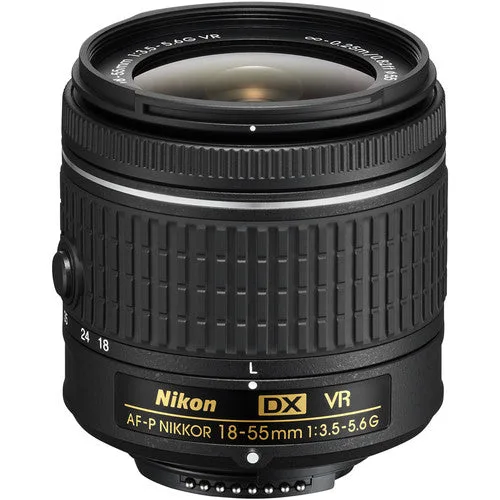
- Nikon AF-P 18-55mm f/3.5-5.6G NIKKOR DX VR Lens: Nikon AF-P 18-55mm f/3.5-5.6G NIKKOR DX VR Lens uses a 27-82.5mm equivalent zoom range and a pulse stepping motor for quiet autofocus. A petal hood designed for this DX zoom will block flare at 18mm without vignetting, and the quiet AF means you can shoot video without the hood adding noise.
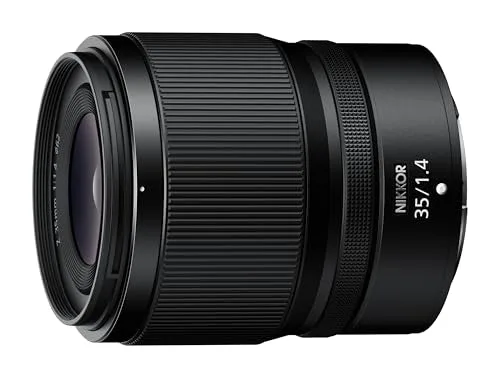
- Nikon NIKKOR Z 35mm f/1.4 Lens - Nikon Z Mount: Nikon NIKKOR Z 35mm f/1.4 Lens is a full-frame prime with a fast f/1.4 aperture and a customizable clickless control ring. A round or petal hood for this prime protects the front element and reduces flare when shooting wide open, and the clickless ring lets you adjust aperture smoothly while the hood stays on.