Quick answer
For a one-body, one-or-two-lens mirrorless kit and all-day walking, a sling is the faster daily carry because you swing it forward and reach in from the top. For a body plus drone, laptop, or several lenses, a backpack carries the same weight with less shoulder strain. Match the bag to your heaviest typical load, not your lightest.
Access speed: top-down sling vs. set-down backpack
A sling's main advantage is that you never take it off to shoot. Swing it from back to front, open the top, and your camera is in your hands while you stay standing. That matters on a crowded street or a trail where there is nowhere clean to rest a bag.
A backpack usually asks you to remove it, set it down, and open a panel or top lid. That is fine at a viewpoint or a cafe, but it is slow for grab shots. If your day is mostly walking between a few deliberate shooting spots, the slower access costs you little. If you shoot constantly, it costs you shots.
Capacity and load: what each shape actually holds
A sling concentrates volume in one curved compartment, so it fits a mirrorless body with a lens mounted plus one or two spare lenses, batteries, and a phone. It is a poor choice for a laptop and camera together, because the flat laptop sleeve and the padded camera cube compete for the same space.
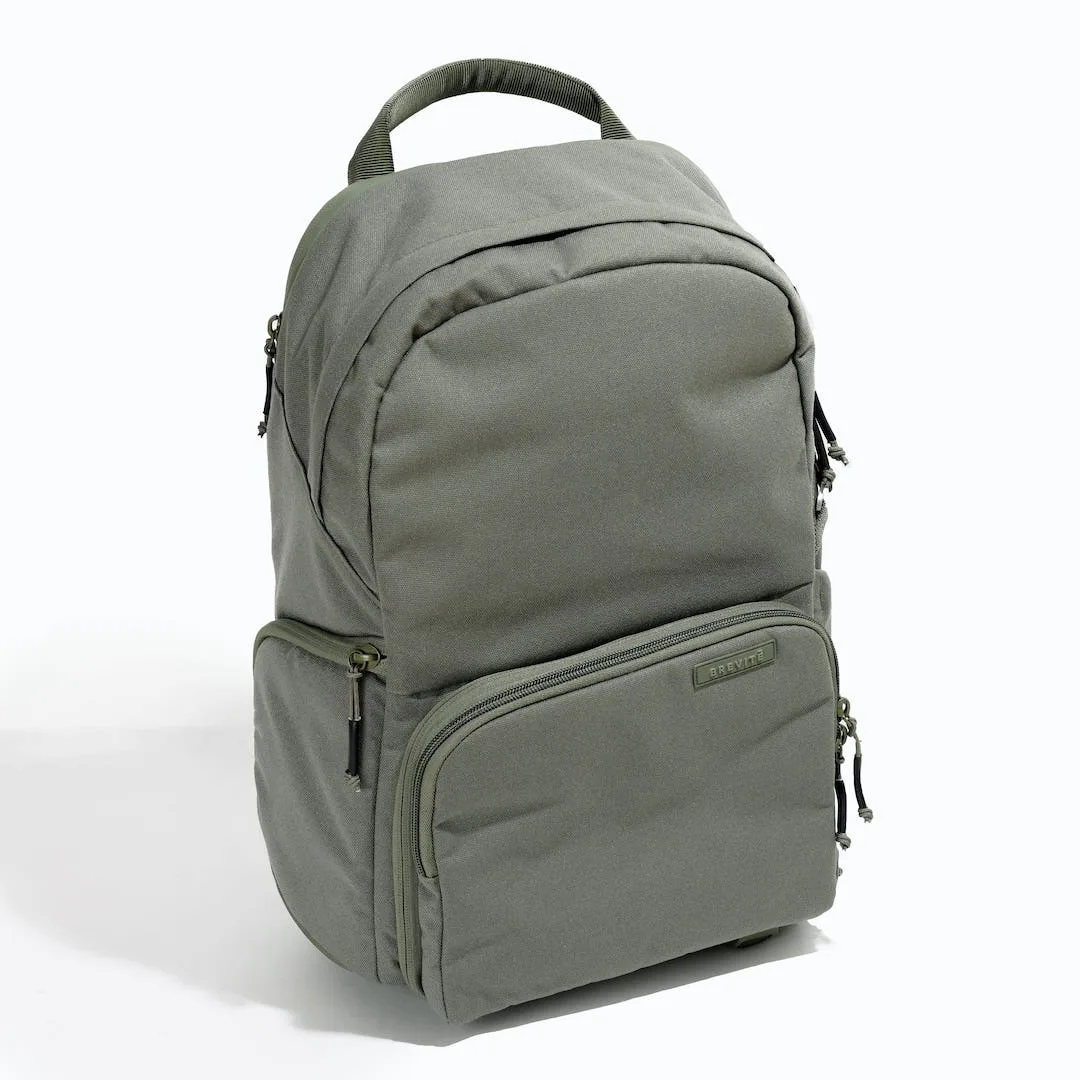
A backpack separates those zones. The Brevitē Jumper Photo Backpack is designed for carrying DSLR gear, a drone, or a laptop, so it can absorb a camera kit plus a computer and still have room for a layer or snacks. The trade-off is bulk: a loaded backpack is wider and taller, which makes it awkward in tight transit and impossible to keep on your lap.
Weather and durability: what the materials tell you
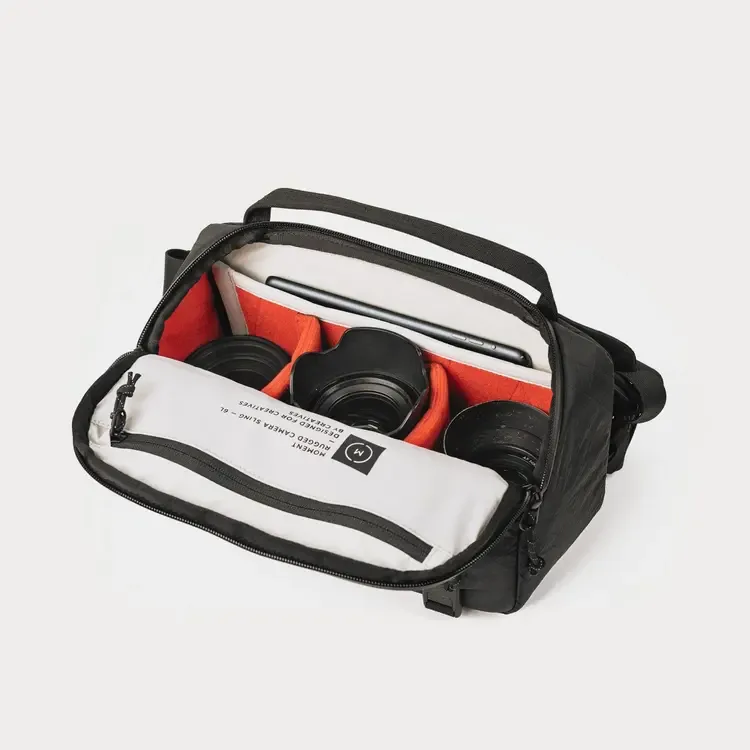
The Moment Rugged Camera Sling uses durable waterproof materials, which is a meaningful difference for a bag that rides on your back in rain or on a wet ferry deck. A backpack's protection depends on its shell and zippers, and the Jumper is positioned around interior camera protection rather than claiming a waterproof exterior.
Neither bag is a substitute for a rain cover in sustained downpours, and no catalog here states a waterproof rating for the backpack. Treat waterproof materials as a buffer for splashes and short exposure, and pack a cover if you expect hours of rain.
How to test a bag before a trip
Load the bag with your heaviest realistic kit, not an empty body. Walk for twenty minutes with the sling on one shoulder and note whether the strap digs in; then load the backpack with the same kit plus a laptop and check whether the hip and shoulder straps carry the weight or whether it hangs off your shoulders.
Also rehearse the access motion. With the sling, confirm you can open the top, pull the camera, and close it without setting the bag down. With the backpack, confirm you can reach your most-used lens without unpacking the whole main compartment.
Trade-offs to weigh before you buy
- Access vs. stability: A sling gives you fast top-down access without removing the bag, but it hangs on one shoulder and shifts as you move. A backpack stays balanced and stable, but you usually set it down to open it. Choose the sling if you shoot in motion; choose the backpack if you shoot in stops.
- Footprint vs. capacity: A sling keeps a small mirrorless kit close to your body and is easy to manage in crowds or on transit. A backpack holds a camera plus laptop or drone, but its larger footprint is harder to stow under a seat or keep on your lap. Pack your heaviest realistic load and see which shape still feels manageable.
- Weather exposure vs. interior protection: The Moment Rugged Camera Sling lists durable waterproof materials, which helps when the bag is exposed on your back. The Brevitē Jumper emphasizes interior camera protection and a laptop-friendly layout rather than a waterproof shell. If rain is likely and you carry one camera, the sling's materials are the simpler answer; if you carry a laptop, add a rain cover to the backpack.
Two bags, two carry philosophies
- Moment Rugged Camera Sling: The Moment Rugged Camera Sling is designed for mirrorless setups, drone kits, and mobile filmmaking, with fast top-down access, customizable dividers, and durable waterproof materials. The top-down opening and movable dividers let you tune the interior to one body plus a couple of lenses, and the waterproof materials suit unpredictable weather on a daily walk.
- Brevitē Jumper Photo Backpack: The Brevitē Jumper Photo Backpack blends minimal city style with interior camera protection and is designed for carrying DSLR gear, a drone, or a laptop, with 10 vibrant colors. If your daily carry includes a laptop or drone alongside the camera, this backpack's interior layout and color range make it a commuter-friendly option that does not look like camera gear.
Which daily carry fits you?
Best for
- Mirrorless shooters who carry one body and one or two lenses and want fast access without stopping
- Street, event, and travel days where you keep moving and cannot set a bag down
- Mobile filmmakers and drone pilots who need a compact, weather-resistant kit on the hip
Not for
- Photographers who need to carry a laptop, drone, and multiple lenses at once
- Long days where the full kit weight needs to be spread across both shoulders and hips
- Anyone who wants a bag that stands open on the ground for lens changes