Start with the right tools and a clean workspace
Before you touch the blade, set yourself up for safe, effective care. You’ll need a mild dish soap, warm water, a soft sponge or cloth, a clean towel, and a honing rod or sharpener appropriate for stainless steel. A stable, well-lit surface—like a camp table or kitchen counter—keeps the knife from slipping while you work.
The UCO Camp Chef Knife is made with high-quality stainless steel, which resists corrosion and holds an edge well. That doesn’t mean it’s indestructible: the goal is to remove food residue and moisture without scratching the blade or dulling the edge.
How to clean a camp chef knife without dulling it
Clean your knife soon after each use—especially after cutting acidic foods or meats—to prevent stains and buildup.
- Rinse and wipe: Rinse the blade under warm water to remove loose food. Use a soft sponge or cloth with a drop of mild dish soap. Avoid abrasive scrubbers, steel wool, or bleach-based cleaners, which can scratch the stainless steel or damage the handle.
- Wash the handle: The ergonomic, non-slip handle can be wiped with the same soapy cloth. Do not submerge the knife for long periods or put it in a dishwasher; handwashing preserves the handle’s grip and the blade’s edge.
- Dry immediately: Dry the blade and handle thoroughly with a clean towel. Letting water air-dry on stainless steel can leave water spots, and moisture trapped near the handle can cause issues over time.
- Store it dry: Once dry, return the knife to its protective sheath. The sheath keeps the blade safe during transport and prevents accidental cuts.
Keep the edge sharp with light, regular honing
A sharp knife is safer and easier to use than a dull one because it requires less pressure. The UCO Camp Chef Knife is designed to keep its edge meal after meal, but regular honing—not aggressive sharpening—will maintain that performance. Hone the blade before each major cooking session: hold the honing rod upright on a stable surface, match the blade’s existing angle, and draw the knife down the rod in smooth, light strokes. A few passes per side are enough to realign the edge.
If the knife starts tearing rather than slicing, a proper sharpening session is due. Use a sharpener suited for stainless steel and follow its instructions. Avoid pulling the blade through carbide pull-through sharpeners more than necessary, as they remove more metal than honing. The supplied information does not specify a recommended sharpening angle or frequency, so rely on the sharpener’s guidance and the knife’s performance as your cue.
Rust prevention for a camp knife
Stainless steel resists corrosion, but it isn’t rust-proof—especially when exposed to moisture, salt, or acidic foods for long periods. A few habits make a big difference:
- Dry before sheathing: Never put a wet knife into its sheath. Moisture trapped against the blade is a common cause of spots and corrosion.
- Clean after acidic or salty foods: Tomatoes, citrus, and cured meats can leave residue that attacks the steel. Rinse and dry promptly.
- Store in a dry place: Keep the sheathed knife in a dry compartment or bag, away from damp gear. If you camp in humid conditions, air-dry the knife fully before packing.
What the UCO Camp Chef Knife is built for
-
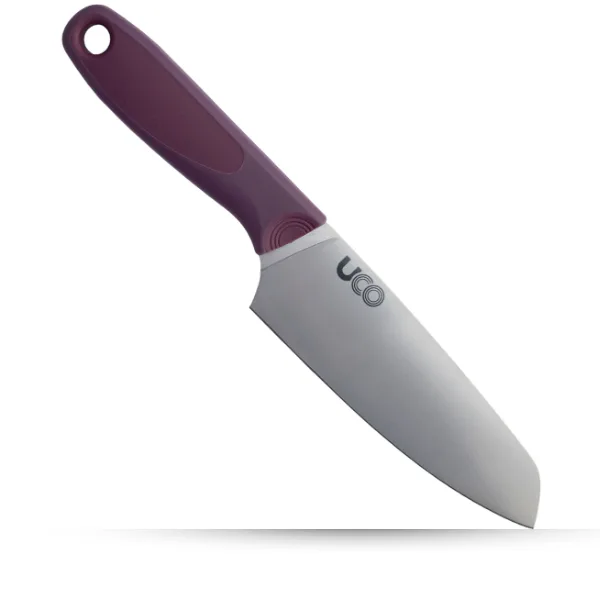
Camp Chef Knife: Made with high-quality stainless steel, these knives are razor sharp, corrosion-resistant, and built to keep their edge meal after meal. Stainless steel gives you a head start on rust prevention and edge retention, but routine cleaning and honing are still needed to keep it performing.
Camp Chef Knife
-
Camp Chef Knife: The ergonomic, non-slip handles give you confident control in any conditions, while the included protective sheath keeps blades safe for packing and transport. The sheath is part of your storage routine—use it every time to protect both the blade and your fingers.
Camp knife storage tips for home and trail
How you store the knife between trips affects its edge and its lifespan. A few simple habits:
- Use the sheath: The included protective sheath is the best place for the knife during transport and when it’s not in use. It prevents the blade from knocking against other gear.
- Avoid loose storage: Don’t toss the knife into a drawer or bin where the edge can contact metal or hard objects. If the sheath is unavailable, wrap the blade in a towel or place it in a dedicated knife roll.
- Keep it dry and cool: Store the knife in a dry environment. Avoid leaving it in a damp pack, near a campfire, or in direct sun for long periods.
A simple care routine for every camping trip
Before you leave: check the edge with a light hone if needed, and make sure the sheath is clean and dry. During the trip: rinse and dry the knife after each meal, and hone lightly before heavy prep. After the trip: give it a thorough handwash, dry it completely, and store it sheathed in a dry place. This routine takes only a few minutes but keeps your UCO Camp Chef Knife ready for everything from chopping vegetables to slicing steak—and it’s available in Plum Purple or Ocean Blue if you want to match your camp kit.