Start with the blade you have
The Detour Stainless Steel Kitchen Knife is built for camp cooking: a cast stainless steel blade with an ideal degree of flex, a balanced feel and a molded cover for safe handling. The supplied information confirms rust, corrosion and stain resistance, but it does not include a cleaning, sharpening or storage procedure. This guide sticks to what the product record supports and flags where you need to make your own call.
That distinction matters. Stainless steel resists rust better than carbon steel, but it is not maintenance-free. The steps below focus on keeping the edge protected, the blade clean and the knife packed so it arrives ready to use.
What the Detour knife record confirms
-
Detour Stainless Steel Kitchen Knife (Like New): Made of high-strength cast stainless steel to deliver a sharper edge longer. The blade material is the reason you can clean and store this knife with less rust worry than a carbon steel blade, but the edge still needs protection.
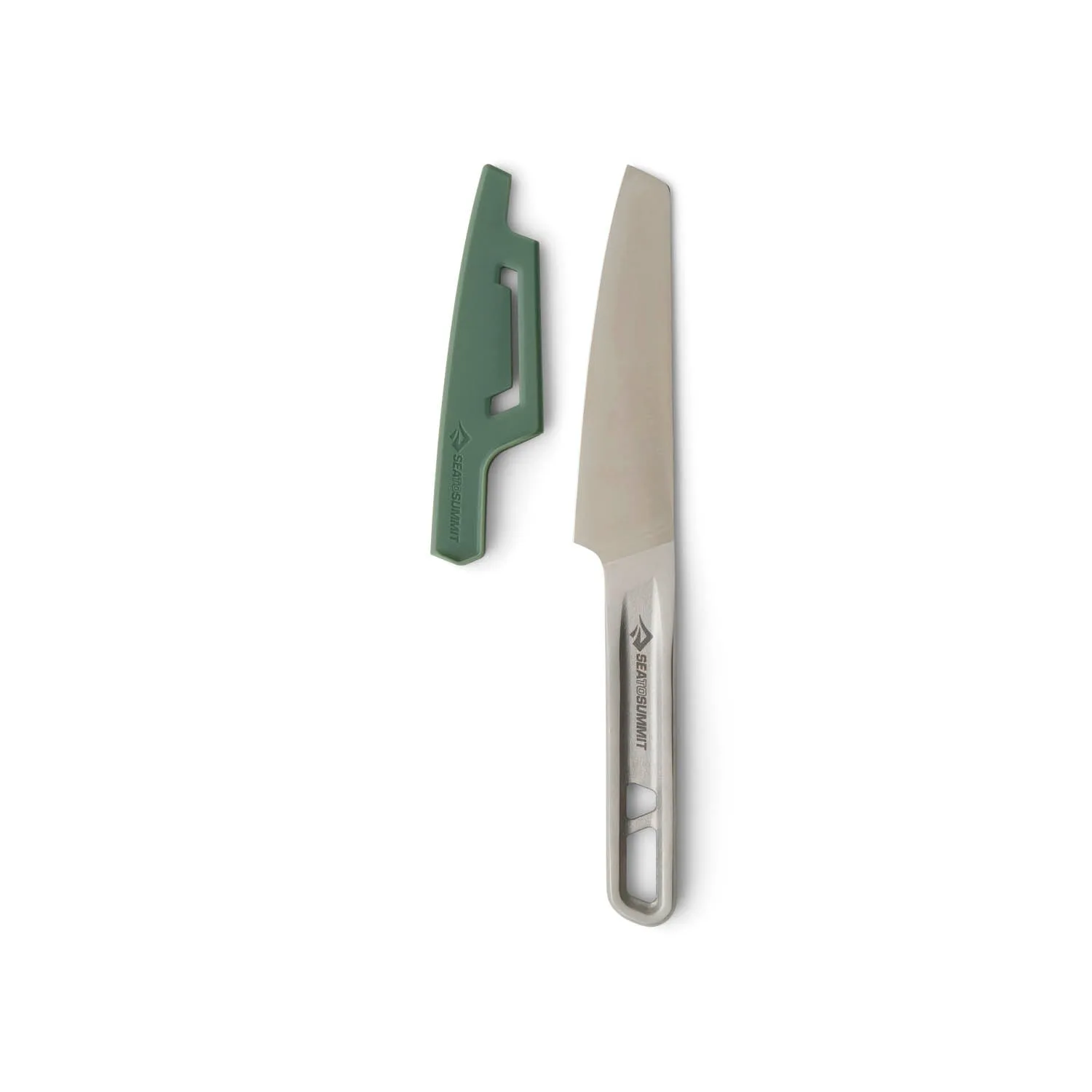
Detour Stainless Steel Kitchen Knife (Like New)
-
Detour Stainless Steel Kitchen Knife (Like New): Rust, corrosion and stain-resistant. This supports a simple wash-and-dry routine at camp, but it does not mean the knife should stay wet or dirty between trips.
-
Detour Stainless Steel Kitchen Knife (Like New): Perfectly balanced cast construction with an ideal degree of flex in the blade for precise cutting. Flex helps with food prep, but it also means you should avoid twisting or prying with the blade when cleaning or packing.
-
Detour Stainless Steel Kitchen Knife (Like New): Includes molded blade cover for added safe handling and to protect the sharp edge. The cover is your main storage and transport tool; use it whenever the knife is not in your hand.
How to clean a camp kitchen knife without dulling it
The product record does not list a specific cleaning method, so these are general best practices for a stainless steel camp knife. Adjust them to your camp water supply and dishwashing setup.
- Wipe food residue promptly: Clean the blade soon after use so acidic or salty food does not sit on the steel. A quick wipe with a damp cloth is often enough before a full wash.
- Wash by hand, away from the edge: Use a soft cloth or sponge and mild soap. Keep your fingers away from the sharp edge and avoid scrubbing the edge itself with an abrasive pad.
- Rinse and dry immediately: Even rust-resistant stainless steel should be dried right away. A dry cloth followed by air drying in a ventilated spot helps prevent water spots and surface rust.
- Clean the cover separately: The molded blade cover can trap moisture and food bits. Rinse and dry it before putting the knife away.
Stainless steel knife rust prevention at camp
The Detour knife is described as rust, corrosion and stain-resistant, which gives you more flexibility than a high-carbon blade. Still, resistance is not immunity. Three habits make the biggest difference: dry the knife before it goes into the cover, avoid leaving it in a wet sink or damp pack, and store it away from wet clothing or a leaking water bottle.
If you camp in humid or coastal conditions, dry the blade extra carefully and let the cover air out before closing it. The supplied record does not specify a rust-prevention coating or oil, so do not assume one is needed or included.
Sharpening at camp: what you can and cannot confirm
The product record says the cast stainless steel is made to deliver a sharper edge longer, but it does not include a sharpening angle, grit recommendation or manufacturer sharpening method. That means any sharpening advice here would be guesswork.
A practical approach is to protect the edge so it needs sharpening less often: use a cutting board rather than a plate or rock, avoid chopping through bones or frozen food, and keep the blade in its cover when not in use. When the edge does need attention, follow the sharpener manufacturer's instructions for stainless steel kitchen knives and test carefully on a scrap piece first. If you are unsure, a professional sharpening service is the safer route.
Packing a camp knife safely for travel
The molded blade cover is designed for safe handling and edge protection. Use it as the core of your packing routine, not an afterthought.
- Dry before covering: Make sure the blade and cover are completely dry before storage to reduce the chance of moisture being trapped against the steel.
- Keep the cover on: The cover protects the edge and reduces the risk of cutting yourself or other gear. Leave it on until you are ready to cook.
- Separate from loose gear: Pack the covered knife where it will not rattle against pots, stoves or other hard items that could damage the edge or the cover.
- Check local rules: Knife carry and transport rules vary by location and activity. The supplied record does not address legal restrictions, so check before you travel.
What Like New condition means for this knife
The Detour Stainless Steel Kitchen Knife is offered here as a Like New item. The supplied record does not define the condition standard or list what has been checked, so inspect the knife when it arrives. Look at the edge for chips or rolls, check the cover for cracks, and confirm the blade sits securely in the handle. If something looks off, contact the seller before use.
Like New can be a good value if the knife is sound, but it is not a substitute for inspecting the actual item you receive. The product record also mentions a Sea to Summit Guarantee for the lifetime of the product; the exact terms are not included in the supplied information, so keep your order details and ask the seller if you need clarity.
A simple between-trip routine
After each camp trip, unpack the knife, remove the cover and check for moisture or food residue. Wash and dry both parts, then store them loosely covered or with the cover off until fully dry. A quick inspection of the edge and cover now saves a dull or damaged knife on the next trip.
The Detour knife is a capable all-round camp kitchen tool, and a little care keeps it that way. Use the cover, dry it thoroughly and avoid shortcuts that put the edge at risk.