Quick answer
Treat carbon stainless steel knives like cast iron: keep them dry, clean them by hand right after use, and store them where blades cannot touch each other. Wash in warm soapy water, dry immediately, and sharpen only when the edge feels dull. This routine prevents most rust and staining and keeps edges ready for daily prep.
Why carbon stainless steel still needs attention
Carbon stainless steel adds carbon for edge retention and chromium for stain resistance, so it is tougher than plain carbon steel but not fully rust-proof. Acidic foods, salty marinades, and sitting in a wet sink can still leave spots or dull the edge over time. The fix is not complicated: clean and dry promptly, then store blades so they stay dry and separated.
How to wash and dry without damaging the edge
Hand washing is the safest default for carbon stainless steel. Fill a sink or basin with warm water and a small amount of dish soap, then wash one knife at a time with a sponge or soft cloth, keeping the sharp edge away from your fingers. Do not soak knives or leave them in the sink; standing water is the main cause of spotting and handle damage. Rinse quickly, then dry immediately with a clean towel, working from spine to edge. Letting a knife air-dry on a rack leaves water on the blade and around the rivets, so dry it by hand even if you are in a hurry.
Sharpening and honing: when and how often
Hone often, sharpen rarely. A honing rod realigns the edge before each use; a sharpener removes metal and should be used only when honing no longer restores a clean cut. For serrated edges, such as a tomato knife, use a tapered rod or the manufacturer's recommended method and avoid pulling the serrations through a standard V-slot sharpener, which can flatten the teeth. For a bird's beak paring knife, a small rod or fine stone works better than a large sharpener because the curved blade needs a controlled angle. If you are unsure of the angle, follow the manufacturer's guidance rather than guessing.
Storage that prevents rust, chips, and clutter
Store knives dry and separated. A magnetic knife block, in-drawer tray, or wall strip keeps edges from knocking against each other and lets air reach the blades. Before placing a knife on a magnetic strip or block, confirm the blade is completely dry; moisture trapped between steel and a magnetic surface is a common cause of rust spots. If you use a drawer, choose a slot or guard that holds each knife in place so the edge never touches another blade. Never store a wet knife in a sheath or block, even overnight.
What to do when spots or stains appear
Surface spots are usually removable. Try a paste of baking soda and water or a small amount of white vinegar on a soft cloth, rubbing gently along the blade, then wash and dry thoroughly. Avoid abrasive pads and harsh chlorine cleaners, which can scratch the finish and make future staining more likely. If a spot does not lift with gentle cleaning, it may be a stain rather than active rust; keep the blade dry and monitor it. Deep pitting or a loose handle is a sign to replace the knife rather than keep scrubbing.
Your 5-step carbon stainless knife care routine
- Wash by hand right after use: Use warm water, mild dish soap, and a soft sponge. Keep the edge away from your fingers and do not soak the knife or leave it in the sink. Checkpoint: no standing water, no food residue left on the blade or in the rivets.
- Dry immediately with a clean towel: Dry from spine to edge, then check the handle and rivets. Do not let the knife air-dry on a rack. Checkpoint: the blade feels completely dry before it goes back into storage.
- Hone before each use, sharpen only when needed: Use a honing rod to realign the edge. For serrated knives, use a tapered rod or the maker's method; for curved paring knives, use a small rod or fine stone. Checkpoint: if honing no longer restores a clean cut, it is time to sharpen.
- Store dry and separated: Use a magnetic block, wall strip, or in-drawer tray. Confirm the knife is dry before it touches a magnetic surface, and never store a wet knife in a sheath. Checkpoint: no blade touches another blade, and air can reach the steel.
- Treat spots early: For light spots, use a baking soda paste or a little white vinegar on a soft cloth, then wash and dry. Skip abrasive pads and chlorine cleaners. Checkpoint: if spots do not lift or the handle is loose, replace the knife instead of scrubbing harder.
Products built for this care routine
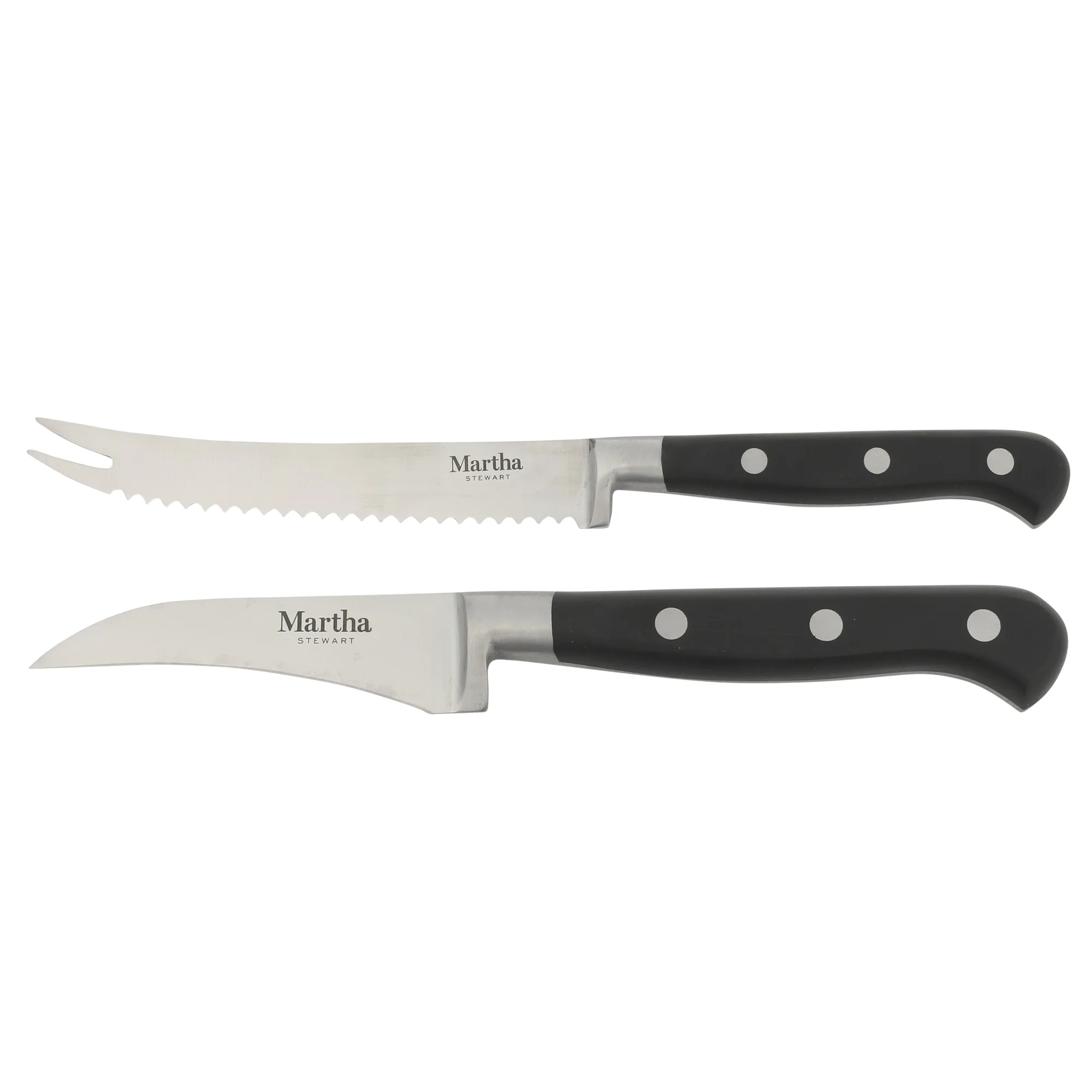
- Martha Stewart Carverton 2 Piece Set 5" Tomato Knife and 3" Bird's Beak Knife Set, Bread Carbon Stainless Steel Kitchen Knive W/ Black Triple Rivet Handle: Martha Stewart Carverton 2-Piece Set includes a 5" Tomato Knife with a serrated edge and a 3" Bird's Beak Paring Knife, both made from high-carbon stainless steel with black triple-riveted handles. The serrated tomato knife and curved bird's beak knife are the two shapes most likely to be damaged by the wrong sharpening method, so this set is a good reason to learn the honing and storage steps above.
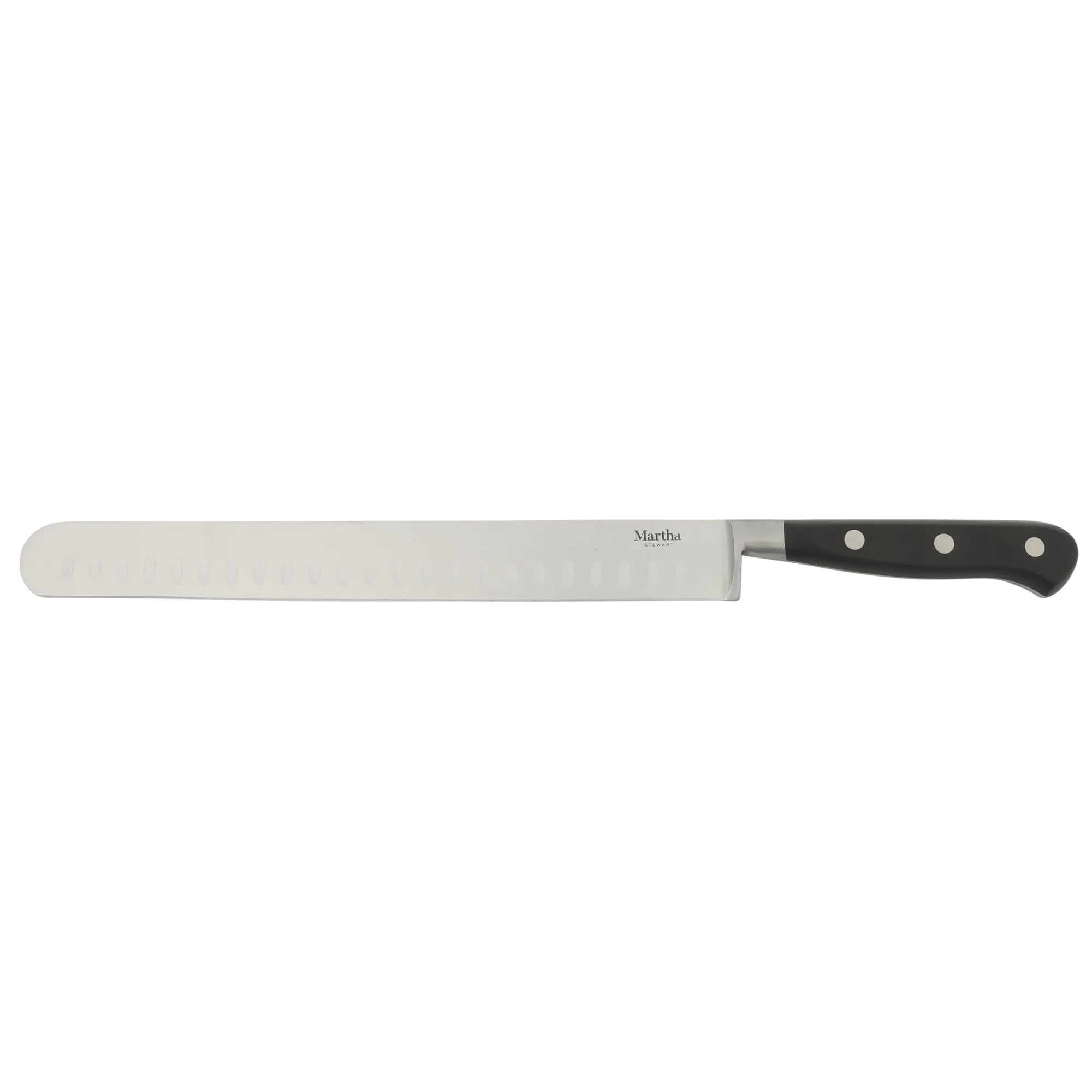
- Martha Stewart Carverton 10" Hollow Edge Slicer Knife, High Carbon Stainless Steel Kitchen Knive W/ Black Triple Rivet Handle: Martha Stewart Carverton 10" Hollow Edge Slicer Knife has a high-carbon stainless steel blade with a hollow edge that reduces friction, plus an ergonomic black triple-riveted handle. The hollow edge and long blade make this knife a candidate for a magnetic strip or block where the blade can stay dry and separated from other tools.