Quick answer
Side sleepers need a taller, firmer loft to fill the gap between shoulder and ear, while back sleepers do best with a lower, flatter pillow that keeps the neck neutral. If you sleep in both positions, choose a medium-height pillow you can compress or add a pillowcase to fine-tune. The HEST Camp Pillow and HEST Pro Travel Pillow both cover a practical middle range, but you should test loft against your shoulder width before you commit.
Most camping pillows are sold as one-size-fits-all, but your sleep position decides whether that size works. A pillow that feels plush on your back can leave your neck craned when you roll onto your side, and a tall pillow that supports side sleeping can push a back sleeper's chin toward the chest. Getting the height right is the difference between waking up rested and waking up stiff.
This guide gives you concrete rules for matching camping pillow height to how you sleep, how wide your shoulders are, and what kind of pad you use. You will also see how specific HEST pillows fit into those rules so you can choose with confidence instead of guessing.
Why pillow height matters more outdoors
At home you can stack, fold, or swap pillows until something feels right. In a tent you usually have one pillow, a thin pad, and limited space. That makes loft, or the compressed height of the pillow under your head, the single most important fit variable. If the loft is too low, your neck bends sideways or drops backward. If it is too high, your chin tilts down and your upper back rounds.
Camping pillows also compress differently than bed pillows. Memory foam and contoured designs may start tall but settle as they warm up, while inflatable pillows hold their height until you adjust the valve. Knowing which type you own helps you predict how it will feel after ten minutes, not just on the first touch.
- Measure your shoulder-to-ear gap while lying on your side; that gap is your target loft.
- Test a new pillow for at least fifteen minutes before deciding it is too tall or too low.
How to set height for side sleepers
Side sleepers need the most loft because the pillow has to fill the space between the mattress and the side of the head. A good rule of thumb is to choose a pillow that holds your head level with your spine, with no downward tilt and no upward craning. If your ear feels pressed or your top shoulder rolls forward, the pillow is too low. If your chin points down, it is too high.
Shoulder width changes the number. Broader shoulders need more height, while narrower shoulders need less. Backpackers who sleep on a thin pad often need slightly less loft than car campers on a thicker mattress, because the body sinks less. Adjust by adding a folded fleece or a pillowcase rather than buying a second pillow.
- Side sleepers: aim for a medium to tall loft that keeps the nose in line with the breastbone.
- If you wake with a numb arm, your pillow is probably too low for your shoulder width.
How to set height for back sleepers
Back sleepers need less height. The pillow should support the curve of the neck and cradle the head without lifting the chin. A pillow that is too tall pushes the head forward and can cause morning neck stiffness. A pillow that is too flat lets the head drop back, which can lead to snoring and a dry throat.
If you switch between back and side sleeping during the night, choose a medium loft and keep a compressible layer nearby. A fleece pillowcase can add a little height for side sleeping, and you can push the pillow flatter when you roll onto your back. That single adjustment covers most combination sleepers without extra gear.
- Back sleepers: choose a low to medium loft and check that your chin stays level.
- Combination sleepers: pick medium and use a pillowcase or stuff sack to fine-tune.
Match loft to your sleeping pad and tent
Your mattress pad changes how much pillow height you actually need. A thick memory foam pad raises your torso, so your head needs more support to stay level. A thin inflatable pad lets you sink closer to the ground, so a lower pillow may feel better. If you recently changed pads, retest your pillow before assuming it is the problem.
Tent floors and campsite surfaces matter too. On a slight slope, a taller pillow can slide or feel unstable, while a lower, grippier pillow stays put. If you sleep on your side on a thick pad, plan for the tallest loft in your kit. If you sleep on your back on a thin pad, a compact low-loft pillow is usually enough.
- Thick pad plus side sleeping equals more loft; thin pad plus back sleeping equals less.
- Bring a pillowcase or stuff sack so you can add or remove height without a second pillow.
Adjustable and multi-use options that change height
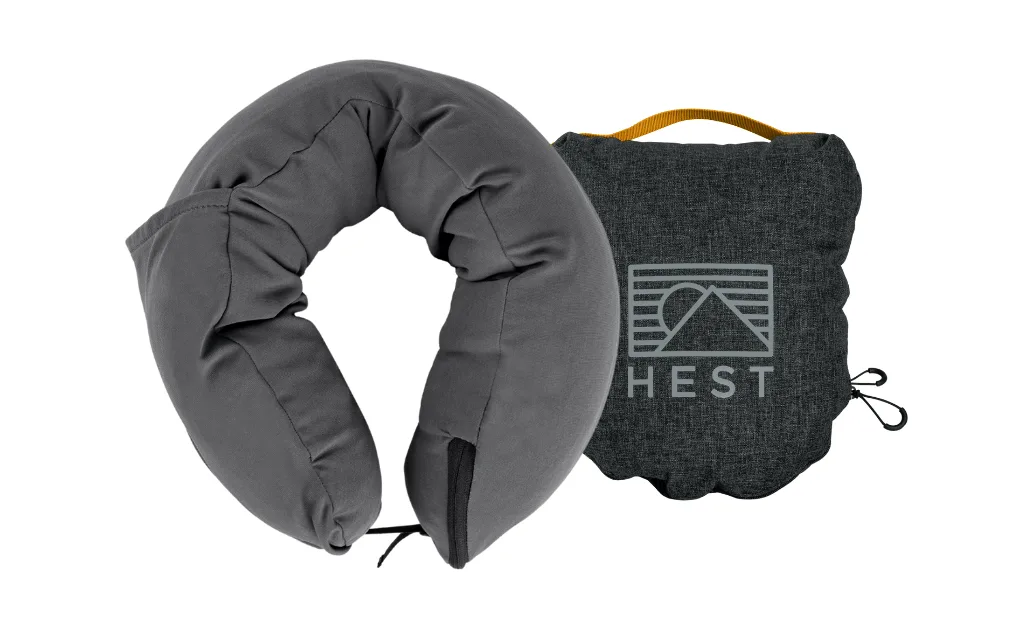
Some camping pillows let you change height on the fly. The HEST Pro Travel Pillow uses a 3-in-1 design that transforms from a neck pillow to a body pillow to a small travel companion, and it packs into itself. That flexibility helps if your sleep position changes or if you use the same pillow on a plane and in a tent.
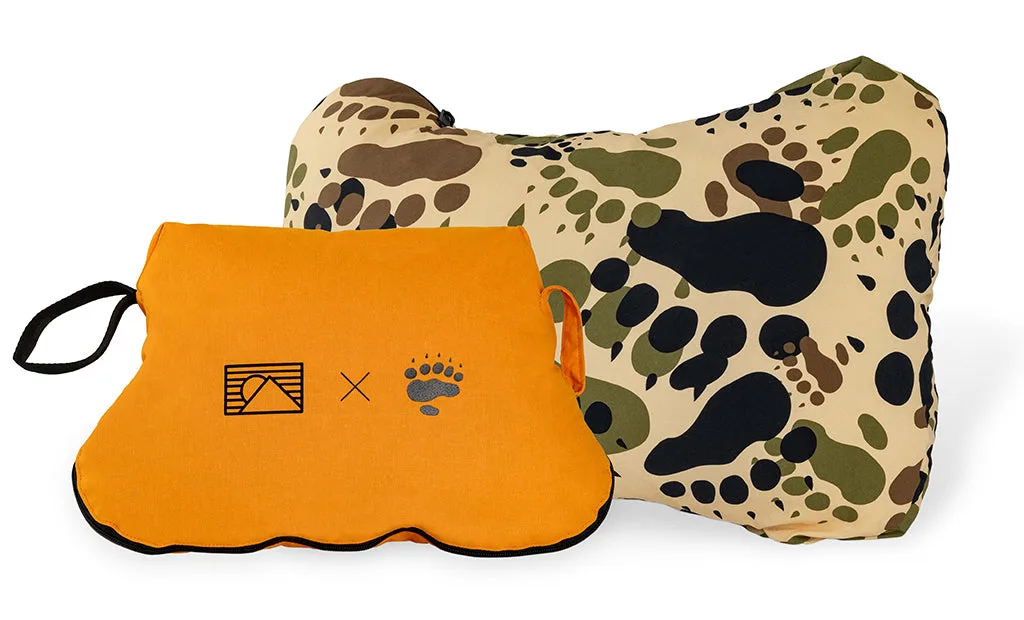
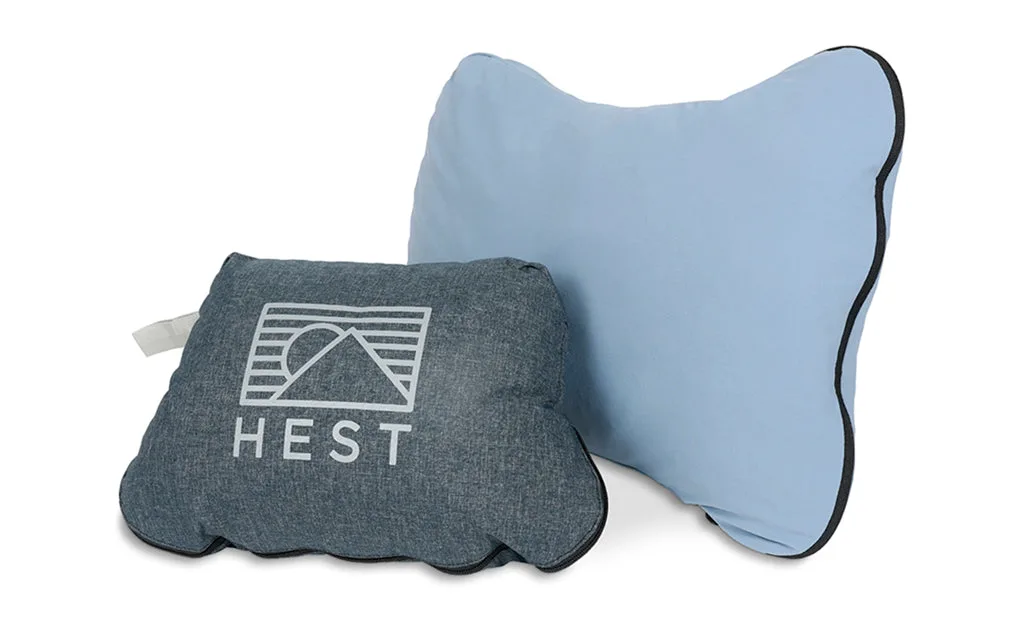
The HEST X BHA Camp Pillow is a contoured pillow that stuffs into its own cover for compact transport. Its shape is designed to support the neck, but because it is a fixed-loft design, you should match it to your primary sleep position rather than expecting it to adapt. If you need to switch heights often, pair a fixed pillow with a fleece pillowcase that adds warmth and a little extra loft on cold nights.
- Adjustable or multi-use pillows suit travelers who sleep in different positions.
- Fixed contoured pillows reward an honest read of your main sleep position.
Decision rules for choosing your camping pillow height
- If you sleep mostly on your side: Choose a medium to tall loft that fills the gap between your shoulder and ear, and test it while lying on your actual camping pad. If your ear feels compressed or your top shoulder rolls forward, add height with a pillowcase or choose a taller pillow. Target a level head and neutral neck, not maximum height.
- If you sleep mostly on your back: Choose a low to medium loft that supports the neck curve without lifting the chin. If your chin tilts down or your throat feels compressed, the pillow is too tall. If your head drops back, it is too low. A flatter pillow is usually better for back sleeping.
- If you switch positions during the night: Start with a medium loft and keep an adjustable layer, such as a fleece pillowcase or a stuff sack, within reach. Adjust once when you roll over rather than buying two pillows. One medium pillow plus one adjustable layer covers most combination sleepers.
- If you use a thick memory foam pad: Your torso sits higher, so you may need more loft than you did on a thin inflatable pad. Retest your pillow after any pad change before deciding the pillow is wrong. Pad thickness changes the height your neck actually needs.
- If you are unsure: Test at home for fifteen minutes in your normal sleep position on a firm surface. If you cannot get comfortable, adjust with a pillowcase before returning or replacing the pillow. A short home test prevents a bad night in the tent.
HEST pillows and bedding that affect height
- HEST X BHA Camp Pillow: A limited-edition Hunter Blaze Orange and BHA Camo design on the best-selling Camp Pillow, described as a highly engineered contoured pillow that stuffs into its own cover for compact transport. The contoured shape supports the neck, and the stuff-into-its-own-cover design saves pack space, but the loft is fixed, so choose it if your primary sleep position is already dialed in.
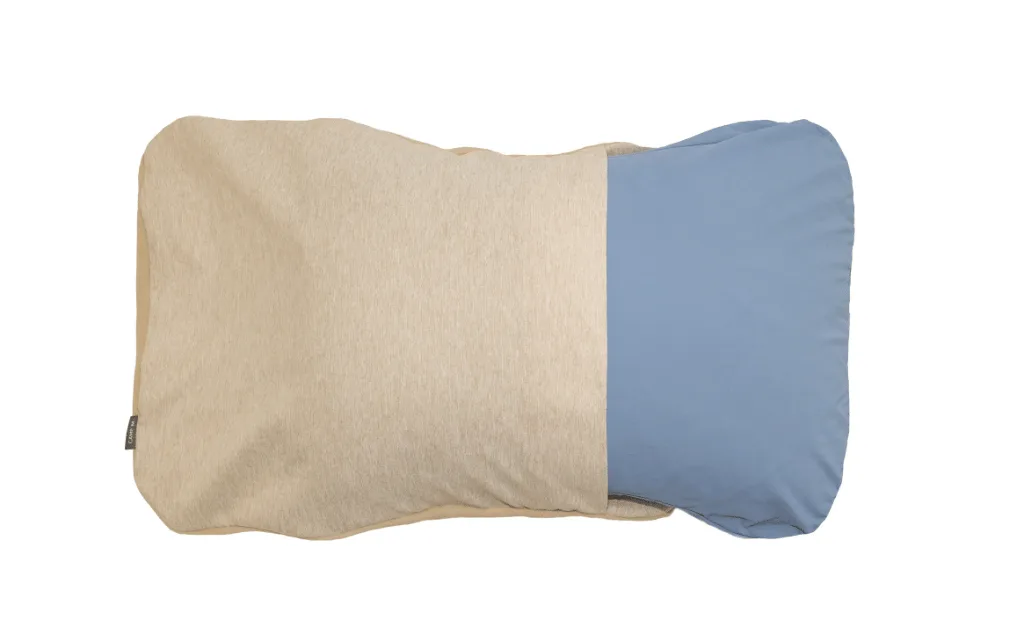
- Pillowcase Fleece: Designed to fit the exact shape of the HEST Camp Pillow, with plush fleece on one side for warmth and a smooth, breathable fabric on the other; machine washable. The fleece side adds a small amount of height and warmth on cold nights, giving you a low-cost way to fine-tune loft without buying a second pillow.
- Pro Travel Pillow: A 3-in-1 design that transforms from a luxurious neck pillow to a simple body pillow to a small travel companion, and packs into itself. The multi-use shape lets you change support through the night, which helps combination sleepers who need different heights for back and side positions.
Who should choose which height
Best for
- Side sleepers who need a taller, contoured pillow to keep the neck neutral
- Back sleepers who want a lower, flatter pillow that supports the neck curve
- Combination sleepers who will adjust height with a pillowcase or stuff sack
- Campers who recently switched to a thicker pad and need more loft
Not for
- Sleepers who want one pillow to work perfectly in every position without adjustment
- Campers who refuse to test loft before buying and expect the first pillow to fit
- Backpackers who prioritize the absolute lightest pillow over height options
Pick your pillow height by your dominant sleep position and shoulder width, then adjust with a pillowcase or stuff sack instead of buying multiple pillows. Side sleepers should lean taller, back sleepers should lean lower, and combination sleepers should start at medium. Test before you pack, and your neck will thank you on the first morning.