Quick Answer
Match pillow width to your shoulder width, then pick the smallest size that still supports your sleeping position. Back sleepers can size down; side sleepers should size up. If you share a tent or want one pillow for car camping and travel, a larger size with a compact packed footprint is the safer buy.
Most camping pillow advice focuses on fill or fabric, but size is the decision that actually determines whether you sleep well. A pillow that is too small leaves your neck unsupported; one that is too big wastes pack space and can push your head out of alignment. The right size depends on three things: your shoulder width, your sleep position, and how much room you have in your bag or vehicle.
This guide gives you concrete rules instead of vague suggestions. You will learn how to measure for a camping pillow, when a small pillow is enough, and when a larger size earns its space. We will also look at how HEST sizes its Camp Pillow and how pillowcases and bundles change the math.
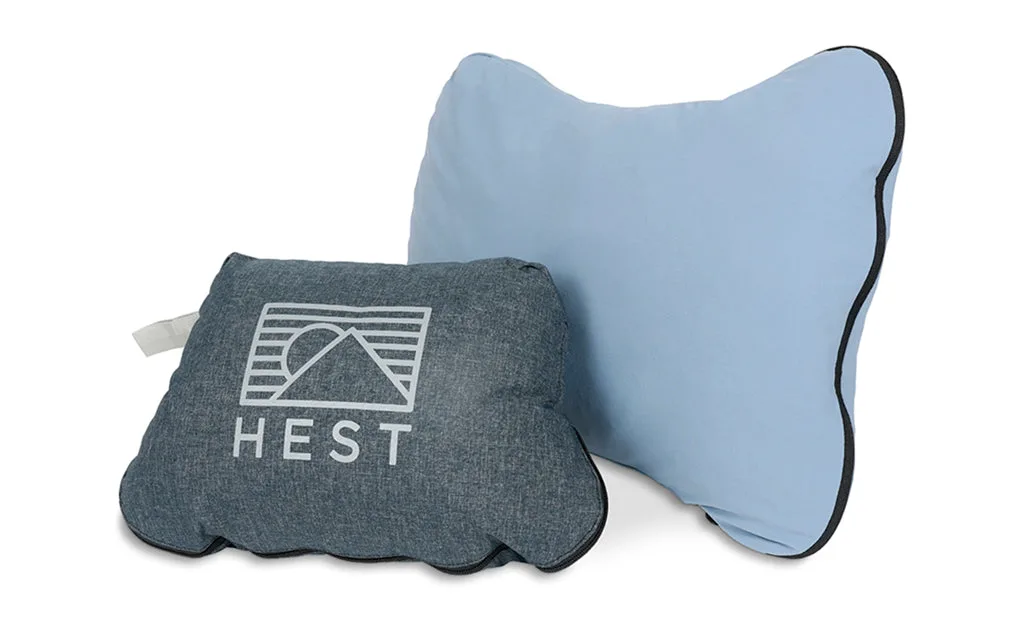
Camp Pillow
Measure Your Shoulder Width First
Stand relaxed and measure from the outside edge of one shoulder to the other. That number is your minimum pillow width for side sleeping. If you sleep on your back, you can subtract roughly two inches because your head does not need to bridge the gap between your neck and the mattress. If you sleep on your stomach, you need the least width but the most loft control.
A pillow that is narrower than your shoulder width forces your head to tilt down or your shoulder to roll forward. Both positions strain your neck over a full night. Width matters more than length for most campers, because length mainly affects how much you can move around without repositioning the pillow.
- Side sleepers: choose a pillow at least as wide as your shoulder measurement.
- Back sleepers: shoulder width minus two inches is a comfortable minimum.
- Stomach sleepers: prioritize a low-profile or adjustable pillow over a wide one.
Small vs Large Camping Pillow: The Real Trade-Offs
Small pillows win on packability and weight. They fit inside a backpack lid, stuff sack, or seat pocket, and they are easy to bring on flights or overnight hikes. The trade-off is support: a small pillow may not fill the space between your neck and the ground, especially if you sleep on your side or use a thick mattress pad.
Large pillows win on comfort and versatility. They work for side sleepers, couples who want to share a sleep surface, and car campers who have room to spare. The trade-off is bulk. A large pillow takes up more space in a duffel or tote, and it can feel excessive on a minimalist backpacking trip. If you are torn, choose the size that matches your most common trip, not your most extreme one.
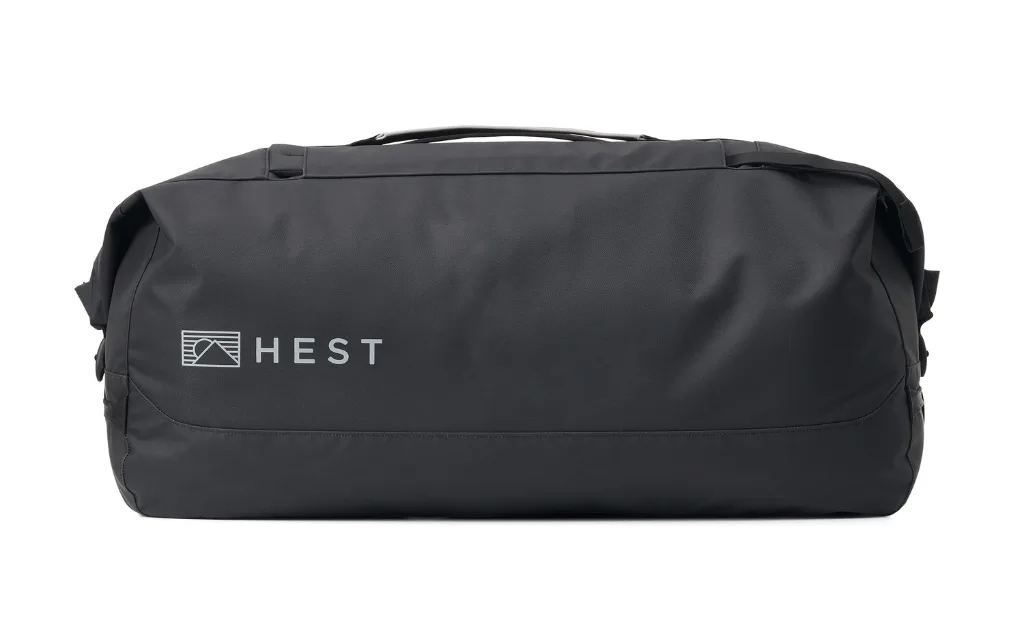
duffel
- Backpacking or bike touring: start with a small size and test it at home.
- Car camping, overlanding, or RVing: a larger size is usually worth the space.
- If you fly often, check whether the pillow packs into itself or a compact case.
How Sleep Position Changes Your Size Choice
Side sleepers need the most loft and width because the pillow must fill the distance from the mattress to the side of the head. A pillow that is too thin lets the head drop, which twists the neck. A pillow that is too wide is rarely a problem for side sleepers, but it can be overkill for travel.
Back sleepers need moderate loft and enough width to support the curve of the neck without pushing the chin forward. Stomach sleepers need the least loft; a thick pillow forces the head up and back. For stomach sleepers, an adjustable pillow or one that lets you remove fill is often a better choice than a fixed large pillow.
- Side sleeper: size up in width and loft.
- Back sleeper: medium width, medium loft.
- Stomach sleeper: small to medium width, low loft.
Check Fit With Your Mattress and Tent
Your pillow does not exist in isolation. A thick memory foam mattress pad raises your head height, which means you may need more loft to keep your neck neutral. A narrow sleeping pad or a tent with sloped walls may limit how wide your pillow can be before it presses against the side.
Measure your sleep surface width and leave at least a few inches on each side. If you use a fitted sheet, check that the pillow still fits inside the sleep area without bunching. For couples, two smaller pillows often fit better than one large pillow, and they let each person choose their own loft.
- Thick mattress pad: add loft or choose an adjustable pillow.
- Narrow tent: measure the usable width at head height, not the floor.
- Couples: two small or medium pillows usually beat one large pillow.
Pillowcases, Bundles, and Size Compatibility
A pillowcase sized for your pillow keeps the memory foam clean and adds a layer of stretch and comfort. If you buy a pillowcase separately, match it to the pillow size. A case that is too small will compress the foam; one that is too large will bunch and slide.
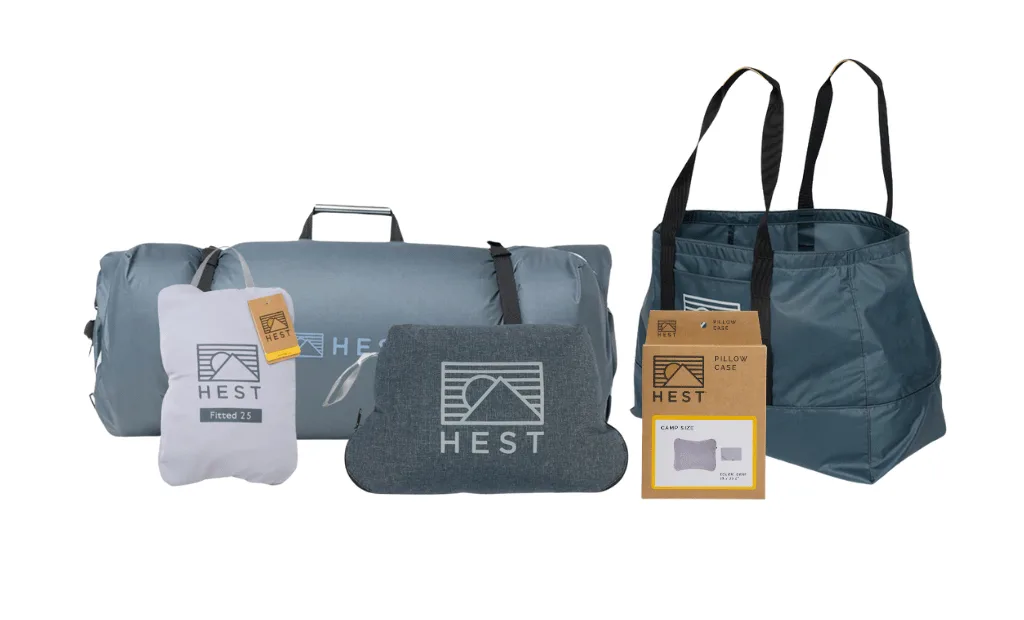
Bundles can simplify the decision because the sizes are already paired. For example, the FOAMY PACK includes a Camp Medium Pillow and a Medium Pillowcase along with a mattress, sheet, and tote. That is a useful shortcut if you want a coordinated setup without measuring every piece. If you already own a pillow, buy the case that matches its size.
- Match pillowcase size to pillow size for the best fit.
- Bundles are a good shortcut when you are building a full sleep system.
- If you are between sizes, choose the larger case only if the pillow is adjustable.
Decision Rules for Choosing Your Camping Pillow Size
- Rule 1: Shoulder width sets the minimum: Measure shoulder width and use that number as your minimum pillow width for side sleeping. Subtract about two inches for back sleeping. Do not guess based on height or body weight. If the pillow is narrower than your shoulder width, size up.
- Rule 2: Sleep position sets the loft: Side sleepers need more loft and width; back sleepers need medium; stomach sleepers need low. If you change positions during the night, choose an adjustable pillow or a medium size that can be fine-tuned. Match loft to your dominant sleep position, not your occasional one.
- Rule 3: Trip type sets the maximum size: Backpacking and flights favor small, packable sizes. Car camping, overlanding, and RVing can accommodate larger sizes. If you do both, buy for the trip you take most often and use a compression stuff sack for the rest. The best size is the one you will actually carry and use, not the one with the most features.
- Rule 4: Check compatibility with your mattress and case: A thick mattress pad may require more loft. A fitted sheet or pillowcase should match the pillow size. If you buy a bundle, verify that the included pillow and case sizes fit your sleep surface. Measure your sleep area and match the case to the pillow before you buy.
HEST Sizing and Fit Facts
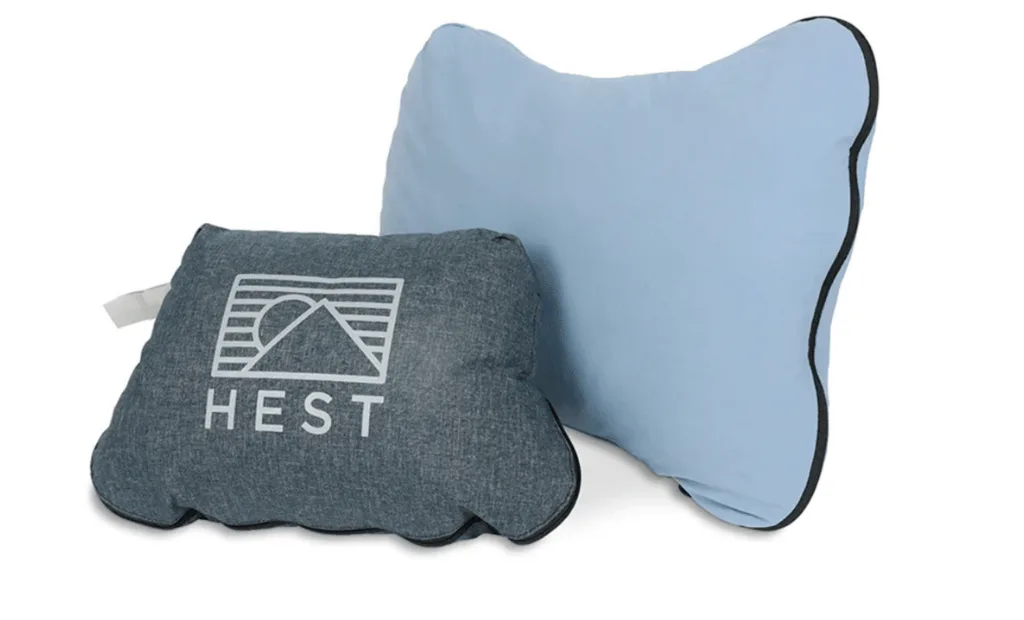
- Camp Pillow: The HEST Camp Pillow is designed with memory foam in a compact, portable package that packs into itself to protect the sleeping surface during travel. It is available in multiple sizes. Because it packs into itself, you can choose a larger size for comfort without adding a separate stuff sack. The size options let you match the pillow to your shoulder width and sleep position.
- Pillowcase: The HEST Pillowcase is designed for best use with a HEST Pillow. Its performance stretch nylon is designed to contour and move with your memory foam pillow. A case that moves with the foam keeps the pillow comfortable and protected. Choose the size that matches your Camp Pillow so the foam is not compressed.
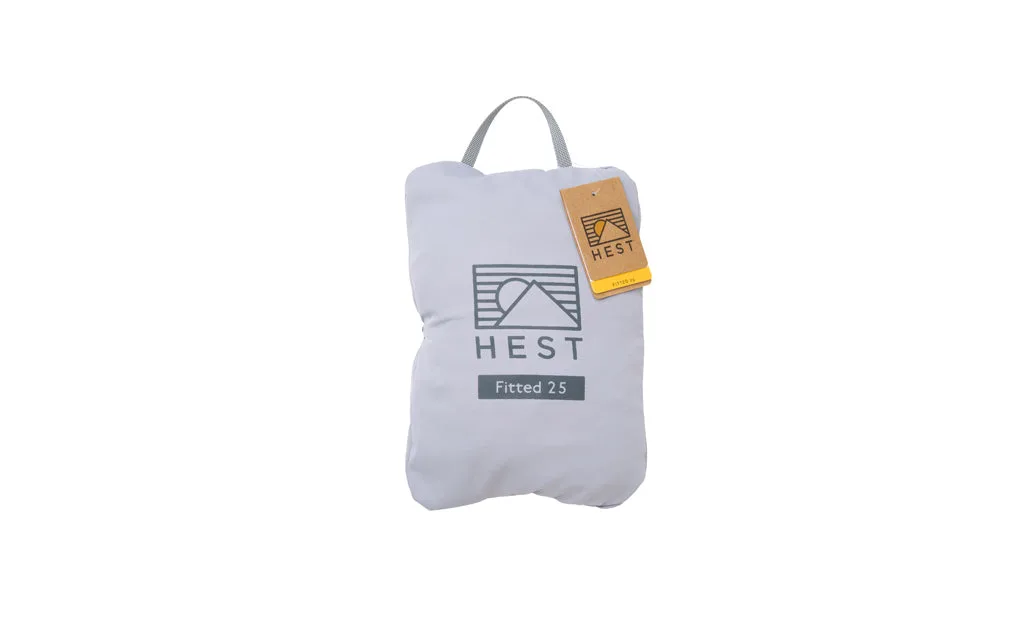
- FOAMY PACK: This bundle includes 1 Foamy mattress, 1 fitted 25-inch sheet, 1 Camp Medium Pillow, 1 Medium Pillowcase, and 1 tote. If you are unsure which pillow size to buy, this bundle pairs a medium pillow with a matching case and mattress so the sizing decision is already made for you.
Who Should Choose Which Size
Best for
- Side sleepers who need shoulder-width support and more loft
- Car campers, overlanders, and RVers with room for a larger pillow
- Couples who want two pillows that fit side by side on a wide mattress
Not for
- Ultralight backpackers who count every ounce and need the smallest packed size
- Stomach sleepers who need a very low profile and minimal loft
- Travelers who only need a neck pillow for upright sitting, not sleeping flat
Pick your camping pillow size by measuring your shoulder width, matching loft to your sleep position, and checking the space in your tent or bag. If you want a coordinated setup, the HEST Camp Pillow and Pillowcase come in sizes that work together, and bundles like the FOAMY PACK remove the guesswork. Choose the size you will actually use on your next trip, not the one that sounds best on paper.