Quick answer
Choose your tarp by the number of people and sleep setups it must cover, not by the biggest number on the spec sheet. For two people under a simple A-frame, a medium tarp is usually enough; for a group, a dining zone, or storm coverage, go large. Pitch height, pole count, and whether you need a floor also change the effective coverage.
Tarp shopping goes wrong in one predictable way: buying by headline dimensions instead of by the space you actually need to keep dry. A tarp that is too small forces you into cramped, low pitches that drip on your sleeping bag. One that is too large is heavier, needs more poles and guylines, and can be awkward on small campsites.
This guide walks through the decisions in the order that matters: how many people and setups you are covering, what weather you expect, how you plan to pitch, and what accessories the shelter requires. DOD Outdoors has been making Japanese camping gear since 1997, and the catalog below gives concrete examples of how tarp and shelter choices connect.
Start with people and sleep setups, not square footage
The first question is not how big the tarp is, but what sits underneath it. Count sleeping pads or bags, add a gear zone, and add a cooking or sitting area if you want one. Two sleep setups plus packs need noticeably less coverage than two sleep setups plus chairs and a table. If you camp with kids or a dog, add a buffer zone so nobody sleeps against a wet edge.
Then decide whether the tarp is your only shelter or a supplement. A tarp over a tent is mainly a rain and sun shield, so it needs to overhang the tent on all sides. A tarp used as a standalone shelter must cover the full footprint plus a dry entry. Those are different jobs, and they often point to different sizes.
- Sketch your footprint on paper: sleep zone, gear zone, living zone.
- Add at least one pole-length of overhang on every side if the tarp protects a tent.
Match tarp dimensions to your pitch style
A low A-frame sheds wind and rain well but wastes area at the edges because the walls slope steeply. A raised lean-to gives you headroom and a view but exposes more of the interior to sideways rain. A flat or slightly angled roof over a table is a third style with its own footprint. The same tarp feels generous in one pitch and cramped in another, so choose dimensions for the pitch you will actually use most.
Height matters as much as length and width. Pitching higher increases usable standing and sitting room but also increases wind load and the chance of rain blowing in. If you plan to cook or stand under the tarp, budget extra size for the height you need. If you mostly sleep under it, a lower pitch lets a smaller tarp do more work.
- Decide your default pitch before comparing sizes.
- Taller pitches need larger tarps to keep the same dry floor area.
Weather and season change the math
Summer shade and light rain call for a modest tarp with good airflow. Storm coverage, cold-weather camping, and long trips push you toward more coverage, more tie-out points, and a more robust pitch. Wind is the variable people underestimate: a large tarp acts like a sail, so if your sites are exposed, a smaller tarp pitched low is often more comfortable than a big one you cannot stabilize.
Think about where water goes, too. A tarp that is large enough to extend past your sleep area lets you store gear and shoes under cover and keeps splash-back away from your bag. If the tarp only covers the sleep zone exactly, every edge becomes a wet zone.
- Exposed, windy sites: prioritize a low pitch and a manageable size.
- Rainy trips: prioritize overhang and a dry entry area.
Check what the shelter needs before you buy
Tarps rarely work alone. You need poles or trees, guylines, and stakes, and some pitches need a connector to join the tarp to a tent. If you already own a tent, check how a tarp would attach or overlap before choosing a size. If you are building a shelter from scratch, decide whether the tarp is the roof, the wall, or both.
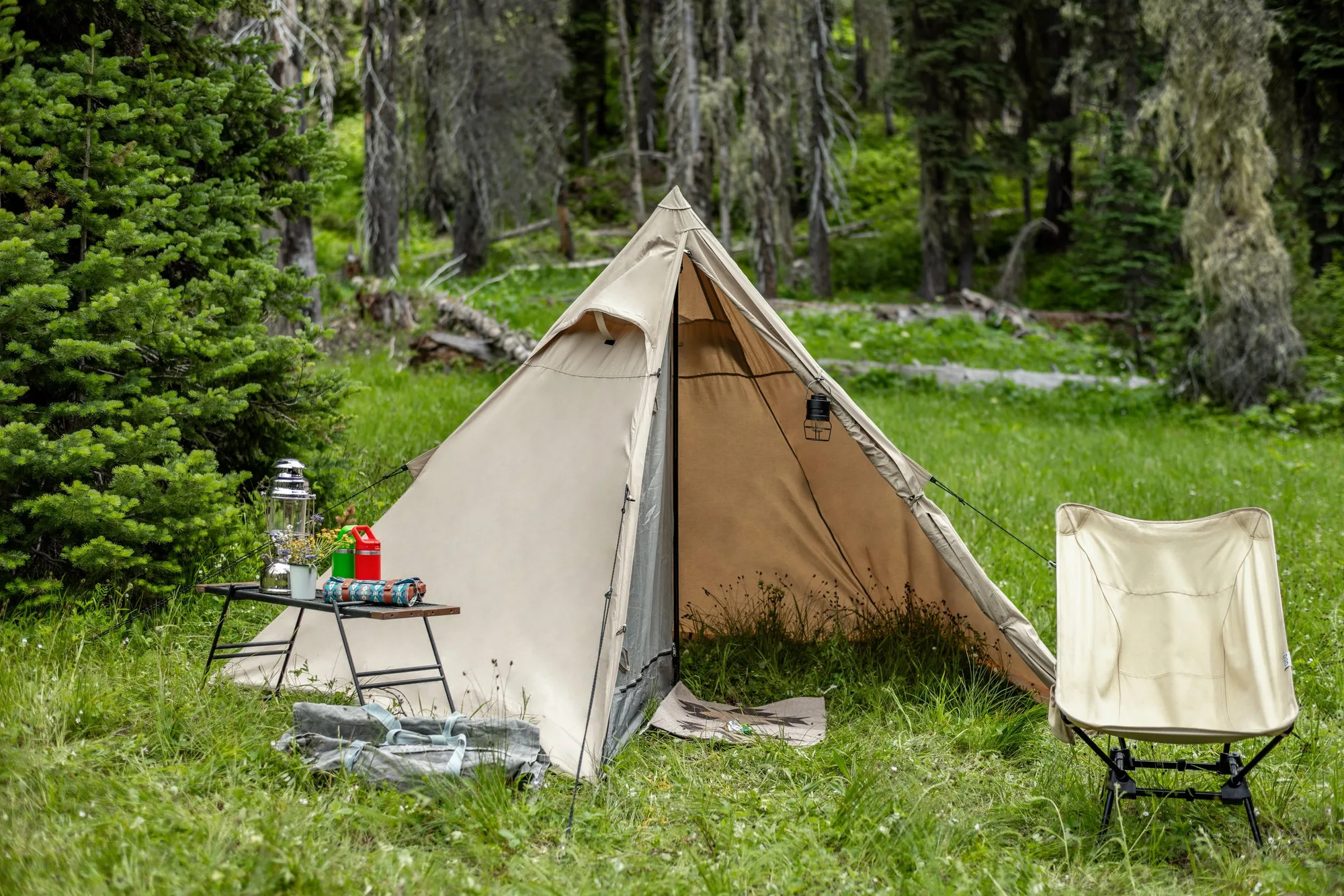
This is also where a paired shelter can simplify things. The Musha 1Pole Tent uses a canopy door that functions as a vertical awning, acting as a sunshade, blind, or windbreak, so a solo camper may need less separate tarp coverage. The RX Pyramid Tent (M) can be set up with its included inner tent or without it for a floorless space, which changes how much extra cover you want over the entrance.
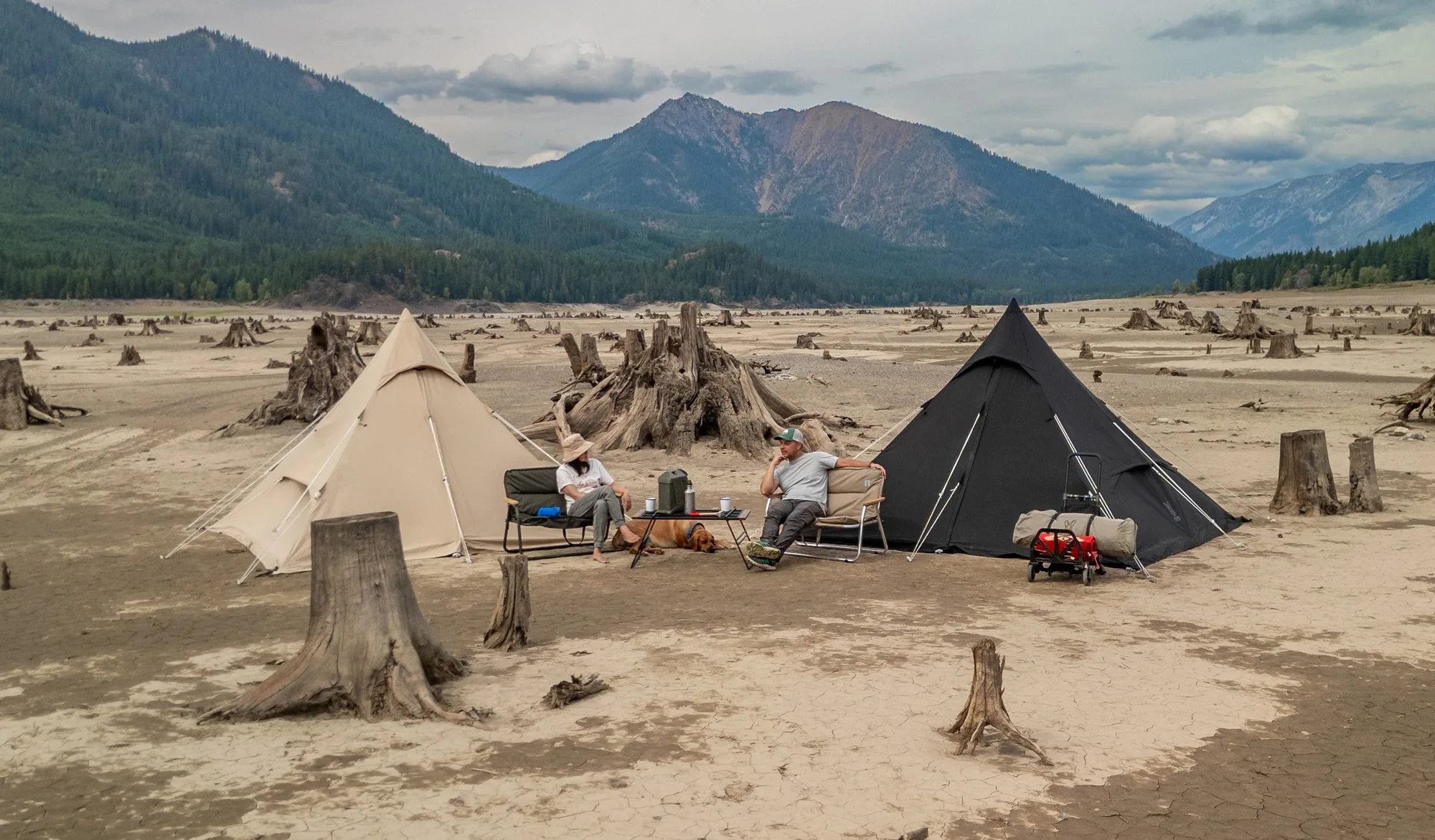
RX Pyramid Tent (M)
- List poles, guylines, stakes, and connectors before committing to a size.
- If your tent already provides an awning or vestibule, you may need less tarp.
Weight, packed size, and setup effort
Bigger tarps are heavier, bulkier, and slower to pitch. For car camping, that trade-off is usually fine. For paddling, biking, or hiking in, it is not. A useful rule: if you would not want to pitch it alone in the rain at the end of a long day, it is too big for that trip. Choose the smallest tarp that covers your sleep and gear zones, then add a separate small tarp for the living area if you need one.
Setup effort also scales with tie-out points and pole count. A simple rectangular tarp with a few guylines goes up fast; a shaped tarp with many anchor points takes longer but handles weather better. Match the effort to how often you move camp.
- Car camping: size up for comfort.
- Mobile trips: size down and pitch lower.
Decision rules for choosing a tarp size
- Rule 1: Count sleep setups first: One or two sleep setups with minimal gear can work under a medium tarp in a low pitch. Three or more setups, or two setups plus a living area, call for a large tarp or two smaller ones. If you cannot sketch your zones under the tarp, it is too small.
- Rule 2: Choose for your default pitch: Low A-frame: smaller tarp, better weather protection. Raised lean-to or flat roof: larger tarp for the same dry area. Decide the pitch before comparing dimensions. Same tarp, different pitch, different usable space.
- Rule 3: Add overhang when covering a tent: A tarp over a tent should extend past the tent on all sides, with extra on the windward side. A tarp that only matches the tent footprint will funnel rain onto it. Overhang is the difference between a shield and a funnel.
- Rule 4: Let the trip decide weight: Car camping can absorb a large, heavy tarp. Hiking, biking, and paddling trips favor a smaller tarp pitched low, with a separate lightweight option for living space if needed. Pick the size you will actually pitch every day.
- Rule 5: Budget for the full kit: Poles, guylines, stakes, and connectors are part of the decision. A large tarp with too few anchor points performs worse than a medium tarp pitched well. If the accessory list feels excessive, step down a size.
Catalog details that affect tarp planning
- Musha 1Pole Tent: Two-room, one-pole tent with a separate sleeping chamber and vestibule; the canopy door functions as a vertical awning for sunshade, blind, or windbreak, and the tent is made from Canvo, which is more durable than polyester and breathes. A solo camper who wants a dry entry and gear storage may get enough covered space from the tent itself, reducing the size of tarp needed.
- RX Pyramid Tent (M): Pyramid-shaped, symmetrical design that simplifies setup, extra tall for comfort, with wide entrances and a skirted outer shell; can be set up with the included inner tent or without it for a floorless space. The floorless option changes how much weather protection you need around the entrance, which affects whether you add a tarp and how large it should be.
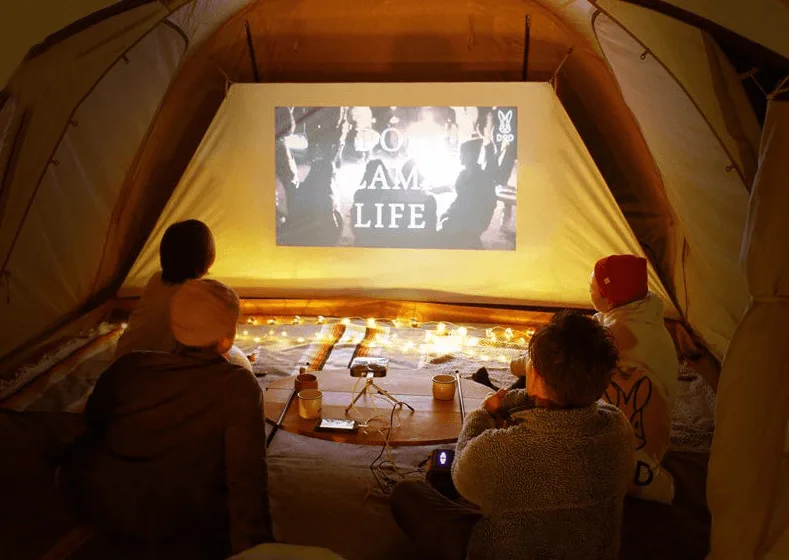
- Kamaboko Theatre Screen: Attaches to the last rib of the tent to create a projection surface for video; goes up and comes down in a minute; available in Large 138 in x 51 in, Medium 106 in x 65 in, and Small 86 in x 61 in. If evening screen time is part of your camp routine, plan tarp or awning coverage that leaves a clear wall or rib for the screen instead of blocking it.
Who this approach fits
Best for
- Campers who want a tarp as their main rain and sun shelter over a sleep and gear zone
- Solo or duo campers pairing a tarp with a tent that already has an awning or vestibule
- Car campers who can carry a larger tarp and want a covered living area
Not for
- Ultralight hikers who need the smallest possible pack size and should choose a dedicated shelter instead
- Campers who want a permanent, all-season structure rather than a pitched tarp
- Buyers who need exact coverage guarantees without measuring their own sleep and gear footprint first
Measure your sleep and gear zones, pick the pitch you will actually use, then choose the smallest tarp that covers both with overhang to spare. If you are unsure between two sizes, take the smaller one for mobile trips and the larger one for car camping, and let your tent's existing awning or vestibule do part of the work.