Quick answer
No, cats should not regularly eat natural dog treats. While an accidental nibble of a meat-based chew is usually harmless, dog treats lack essential feline nutrients like taurine and may contain ingredients that upset a cat's digestion. For occasional sharing, check the label for cat-safe ingredients and avoid any with garlic, onion, or high levels of plant-based fillers.
Why dog treats aren't formulated for cats
Cats are obligate carnivores with different nutritional requirements than dogs. Dog treats are designed to supplement a canine diet, which means they often contain higher levels of carbohydrates and plant proteins that cats don't need. More critically, many dog treats lack taurine—an amino acid that cats must get from food to prevent heart and eye problems. Even a natural dog treat that looks like meat may not provide the balanced nutrition a cat requires.
That said, not all dog treats are created equal. Some single-ingredient, freeze-dried meat treats (like plain chicken or fish) can be safe for cats in small amounts because they're essentially meat. The risk comes with multi-ingredient chews that include herbs, oils, or supplements targeted at dogs. For example, a skin-and-coat chew for dogs may contain omega oils and biotin that are fine for cats, but the dosage and additional botanical ingredients might not be appropriate.
What to check before sharing a dog treat with your cat
If you want to offer your cat a dog treat as an occasional snack, start by reading the ingredient list. Avoid any product that lists garlic, onion, raisin, or xylitol—these are toxic to cats. Look for treats with a short list of recognizable meat or fish as the first ingredient. Also keep portion size tiny: a cat's digestive system is sensitive, and a large dog chew could cause vomiting or diarrhea.
For pet parents who want a single treat that both dog and cat can enjoy, consider plain cooked meat (no seasoning) or commercial treats specifically labeled for both species. Some natural dog treats that are essentially dehydrated meat or fish can work, but always introduce them slowly and watch for any adverse reaction.
Verdicts on common claims
- Claim: Natural dog treats are safe for cats because they're made from natural ingredients.: Not necessarily. 'Natural' doesn't mean 'species-appropriate.' Many natural dog treats contain herbs, oils, and supplements that are safe for dogs but may upset a cat's digestion or lack essential feline nutrients like taurine. Check the ingredient list and avoid treats with garlic, onion, or high plant content. Stick to single-ingredient meat or fish treats if you must share.
- Claim: A dog skin-and-coat chew can help a cat with dry skin.: Possibly, but not reliably. Omega oils and biotin in dog skin chews can support skin health in cats, but the dosage is designed for a dog's body weight. A cat would need a much smaller amount, and the other ingredients (like zinc or collagen) may not be balanced for feline needs. Consider a cat-specific omega supplement instead. If you use a dog chew, offer only a tiny piece and watch for digestive upset.
- Claim: It's fine to feed dog treats to cats as long as they're meat-based.: Partially true. Plain, dehydrated meat treats (like chicken or fish) can be safe for cats in moderation. However, many meat-based dog treats include added flavors, preservatives, or nutrient blends that are not suitable for cats. Always read the full ingredient list. When in doubt, choose treats labeled for cats. A small piece of plain cooked meat is a safer alternative to a multi-ingredient dog chew.
Product facts for informed treat choices
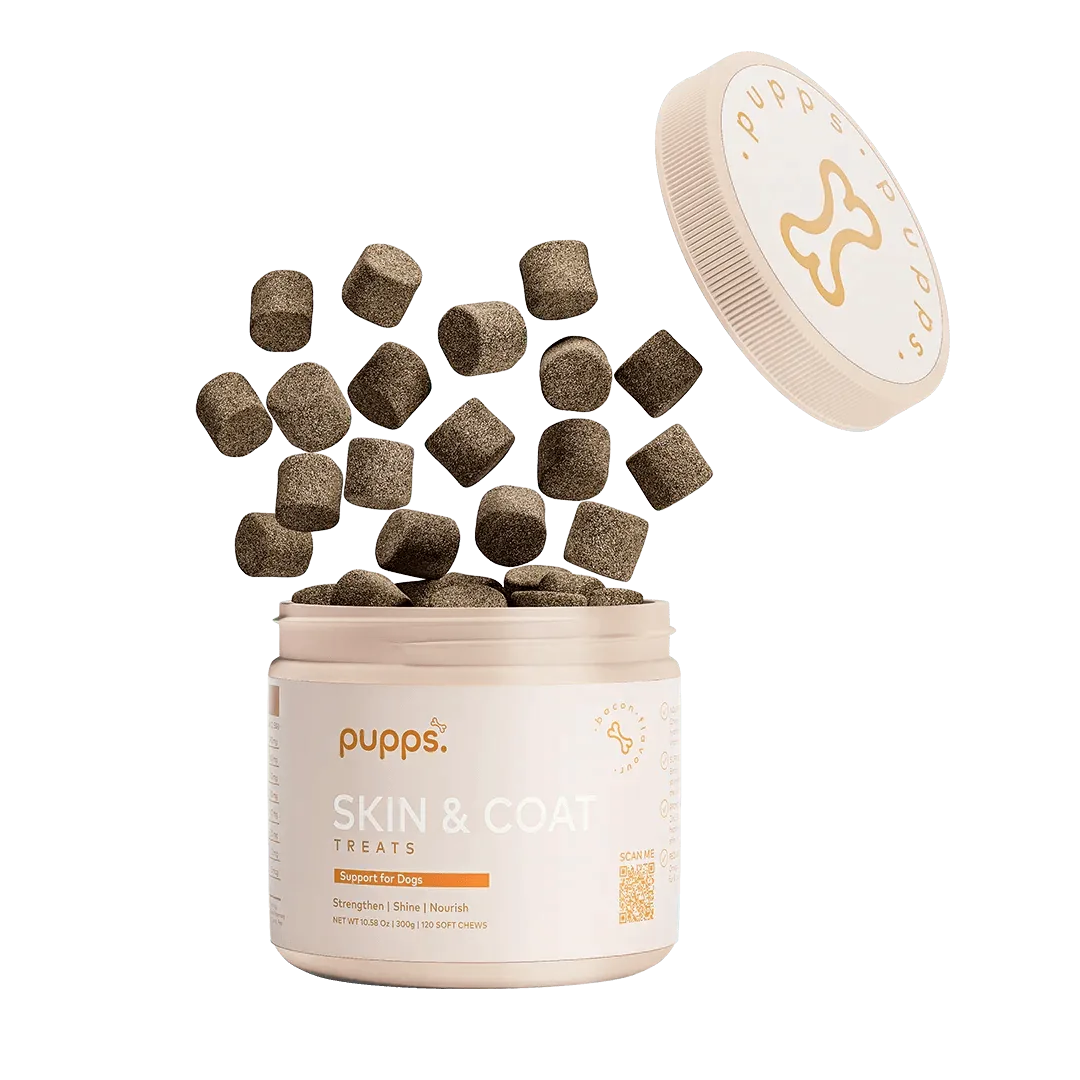
- Pupps Skin & Coat Treats For Dogs: Pupps Skin & Coat Treats For Dogs are daily skin and coat support chews made with omega oils, marine collagen, biotin, zinc, vitamins, and supportive nutrients. These chews are formulated for dogs and include a blend of nutrients that support canine skin and coat health. While the omega oils and biotin are generally safe for cats in small amounts, the product is not designed to meet feline nutritional needs, so it should not replace a cat's regular diet or treats.
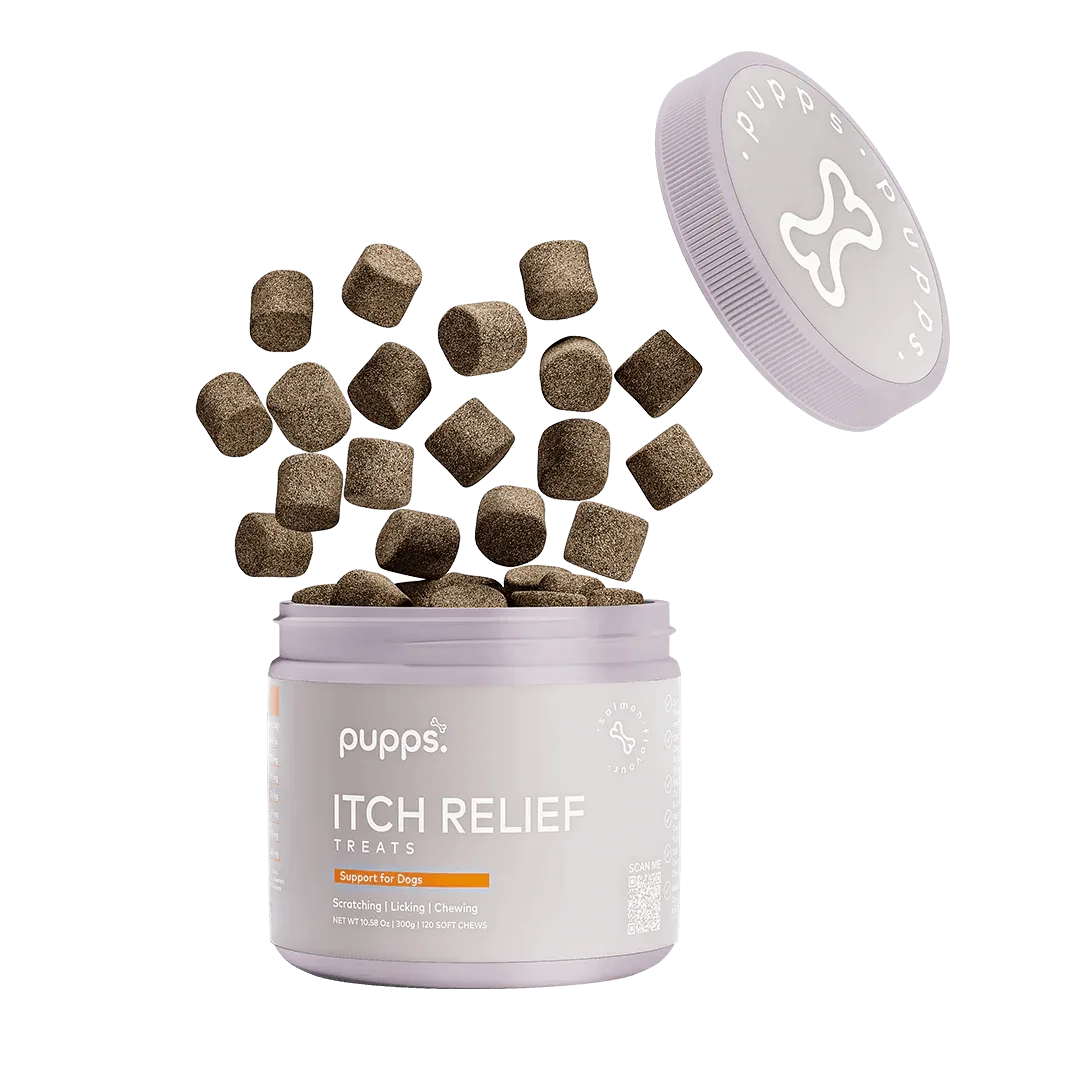
- Pupps Itch Relief Treats For Dogs: Pupps Itch Relief Treats For Dogs contain probiotics, salmon oil, colostrum, turmeric, apple cider vinegar, and vitamin C to support skin health and digestive balance in dogs. The inclusion of turmeric and apple cider vinegar may be too strong for a cat's sensitive stomach. Probiotics and salmon oil can be beneficial for cats, but the overall formulation is tailored to dogs. Sharing a small piece occasionally is unlikely to cause harm, but it's not recommended as a regular treat for cats.