Quick answer
Yes, a play piano like the Melissa & Doug Learn-to-Play Piano can introduce preschoolers to music basics such as high and low notes and volume control, but it is not a substitute for structured music lessons.
What a play piano can teach
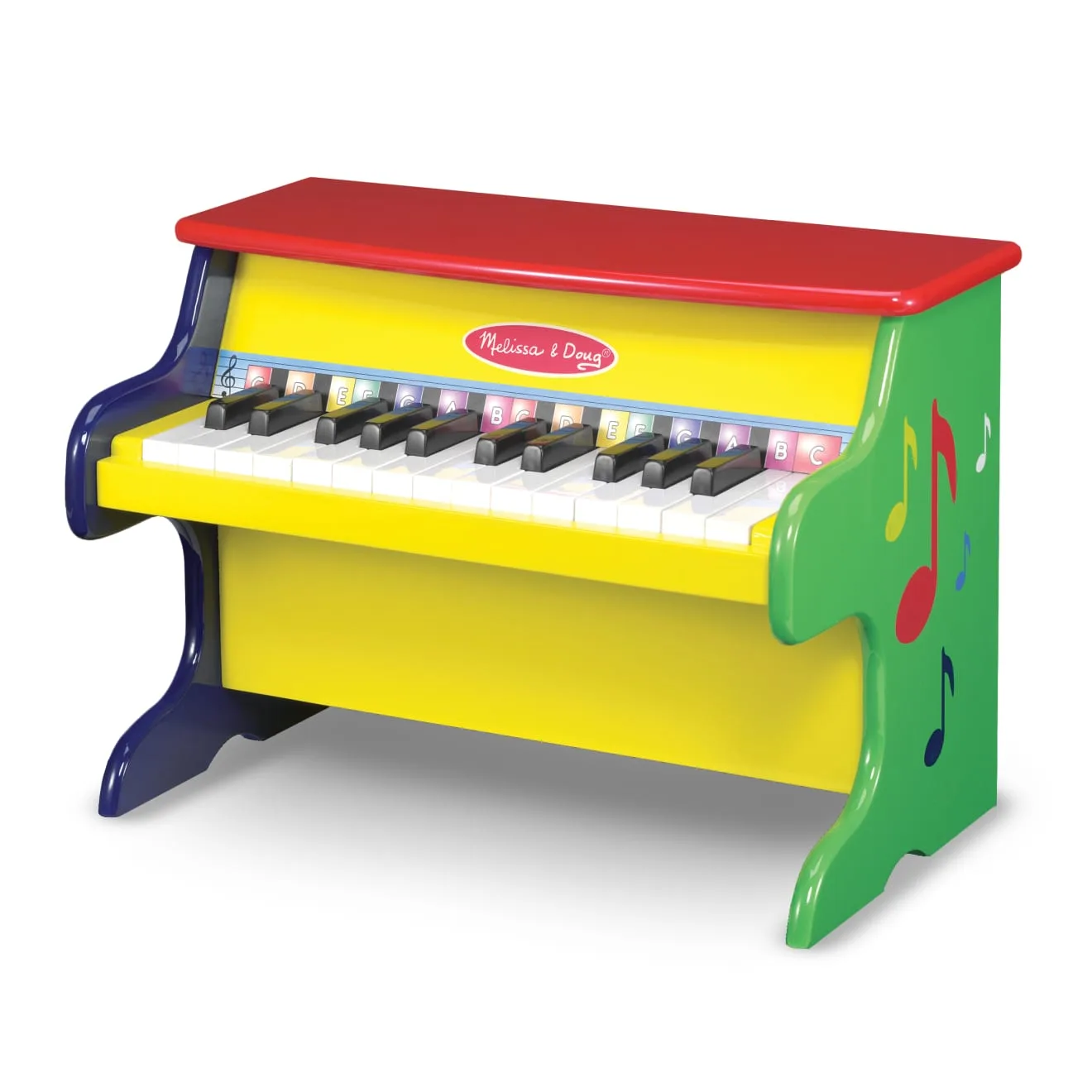
A play piano gives toddlers a hands-on way to explore sound. The 25 keys and two full octaves on the Learn-to-Play Piano let children experiment with high notes versus low notes and loud versus soft playing. These are real music fundamentals, even if the instrument is a toy.
The bright colors and upright design invite spontaneous play. That kind of free exploration helps build confidence and curiosity about music long before formal instruction begins.
What a play piano cannot do
A toy piano does not offer weighted keys, proper pedals, or graded lessons. It cannot teach finger positioning, reading sheet music, or rhythm counting. Parents should see it as a first exposure tool, not a complete music education.
The absence of these features is a deliberate trade-off: the toy prioritizes durability and simplicity for small hands over realistic piano mechanics.
Myth vs. reality: verdicts
- Myth: A play piano is just a noisy toy: Reality: It can teach high/low notes and loud/soft dynamics through free play.
- Myth: A play piano will teach your child to play songs: Reality: It encourages creative melody-making but does not provide structured lessons or sheet music reading. Use the piano alongside simple songbooks or parent-led games to extend learning.
- Myth: Any toy piano works the same: Reality: A model with two full octaves, like this one, offers more musical range than smaller keyboards with fewer keys. Look for at least 25 keys if you want your child to explore both high and low notes.
Product facts
-
Learn-to-Play Piano: The Melissa & Doug Learn-to-Play Piano has 25 keys covering two full octaves. Two octaves give enough range for a child to experiment with high and low notes, a core music concept, without overwhelming them.
Learn-to-Play Piano