Quick answer
A candle-powered Stirling engine usually fails to spin because of insufficient heat, a misaligned displacer, or too much friction. Start by using a steady candle flame placed directly under the heating pipe, ensure the engine is level, and check that the displacer and power piston move freely. If it still won't run after these checks, the issue may be a mismatched heat source or a mechanical fault that requires a different model.
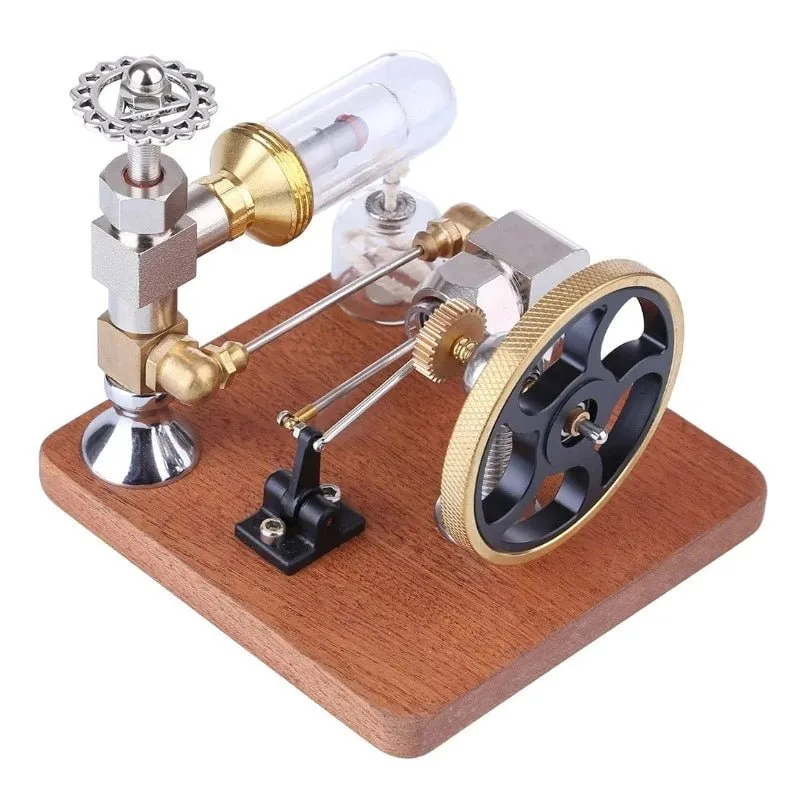
Stirling engine
Setting up your candle-powered Stirling engine
Place the engine on a flat, heat-resistant surface away from drafts. A stable base prevents vibration from interfering with the delicate balance of the moving parts. Insert the candle into the holder and position it so the flame sits roughly 1–2 cm below the heating pipe. If the flame touches the pipe directly, soot may build up and block heat transfer; if it's too far, the temperature difference won't be enough to drive the piston.
Before lighting the candle, manually rotate the flywheel a few times to check for smooth movement. Any binding or scraping indicates a misalignment that should be corrected first. Once the candle is lit, give the engine 30–60 seconds to warm up. The first rotations may be slow, but as the air inside the displacer cylinder heats, the engine should reach a steady rhythm.
Common reasons a Stirling engine won't spin
If the engine doesn't start after a minute, work through the basics: Is the flame actually reaching the heating pipe? Is the engine perfectly level? Are the moving parts clean and free of dust? A tiny speck of debris on the piston rod can create enough friction to stop the engine. Also check that the displacer moves freely inside the cylinder—if it rubs against the walls, the engine will stall.
Another frequent culprit is ambient temperature. Stirling engines rely on a temperature difference between the hot and cold sides. In a warm room with poor air circulation, the cold side may not dissipate heat efficiently, reducing the temperature gradient. A small fan or a cooler location can help, but avoid placing the engine near an air conditioner vent, which can cause uneven cooling.
Adjusting the heat source for consistent performance
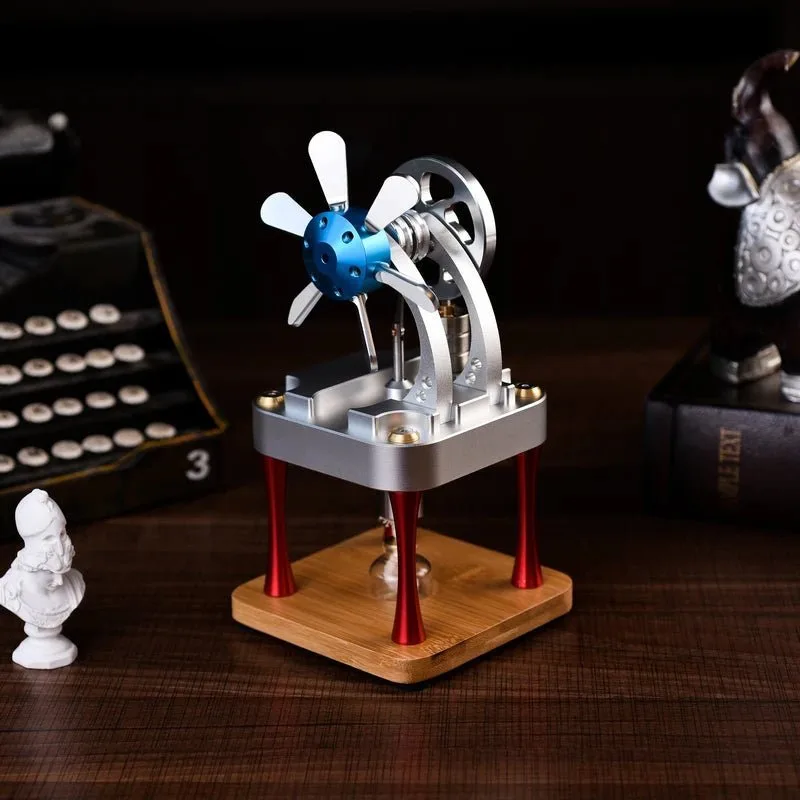
Not all candles are equal. A tealight may provide enough heat for a small engine, but a larger model like the Stirling Engine with Propeller (product ID 1714317) benefits from a candle with a larger flame or a higher heat output. The 304 stainless steel heating pipe in that model is designed to withstand sustained heat, but it still needs a flame that can maintain a steady temperature.
If you're using an alcohol lamp instead of a candle, ensure the wick is clean and the flame is steady. Alcohol burns hotter than candle wax, so you may need to adjust the distance between the flame and the heating pipe to avoid overheating. Overheating can cause the displacer to expand and seize, so always start with a lower flame and increase gradually.
When to stop troubleshooting and consider another option
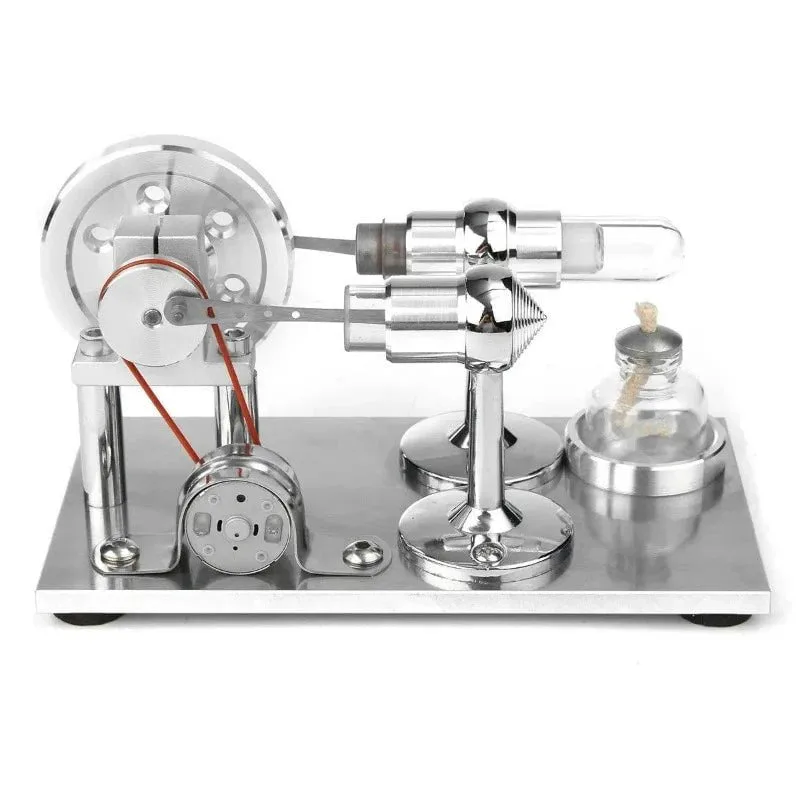
If you've verified the flame, alignment, and cleanliness, and the engine still won't run after several attempts, the problem may be a manufacturing defect or a design limitation. For example, the Mini Stirling Engine (product ID 1714320) is an educational tool that works well with a small alcohol lamp, but it may not generate enough power for continuous operation in a cold room. In that case, a larger model or a different heat source might be more suitable.
Before you give up, try running the engine in a warmer room or using a hotter flame for a short period. If it still fails, contact the manufacturer or retailer for support. Sometimes a replacement part or a simple adjustment can solve the issue, but if the engine is fundamentally incompatible with your environment, it's better to choose a model that matches your conditions.
Diagnosis: symptom, cause, and fix
- Engine doesn't move at all: No temperature difference or excessive friction. Check that the flame is lit and positioned correctly, and manually rotate the flywheel to feel for binding. If the flywheel turns freely but the engine still won't start, the heat source is likely too weak.
- Engine spins slowly or erratically: Insufficient heat or a draft causing uneven cooling. Move the engine away from windows or vents, and try a larger flame or a different candle. A steady, consistent flame usually resolves slow or jerky motion.
- Engine runs for a moment then stops: Overheating or a misaligned displacer. Let the engine cool, then check that the displacer moves without rubbing. Reduce the flame size or distance. If the problem persists after cooling and realignment, the displacer may be damaged.
- Engine makes scraping or clicking noises: Debris or a bent piston rod. Disassemble the affected area and clean it gently. Do not force any parts. If cleaning doesn't help, a replacement part may be needed.
- No improvement after all adjustments: The engine may be defective or unsuitable for your environment. Consider a different model or contact support. If you've tried everything and it still won't run, it's time to switch to a model better suited to your conditions.
Product facts
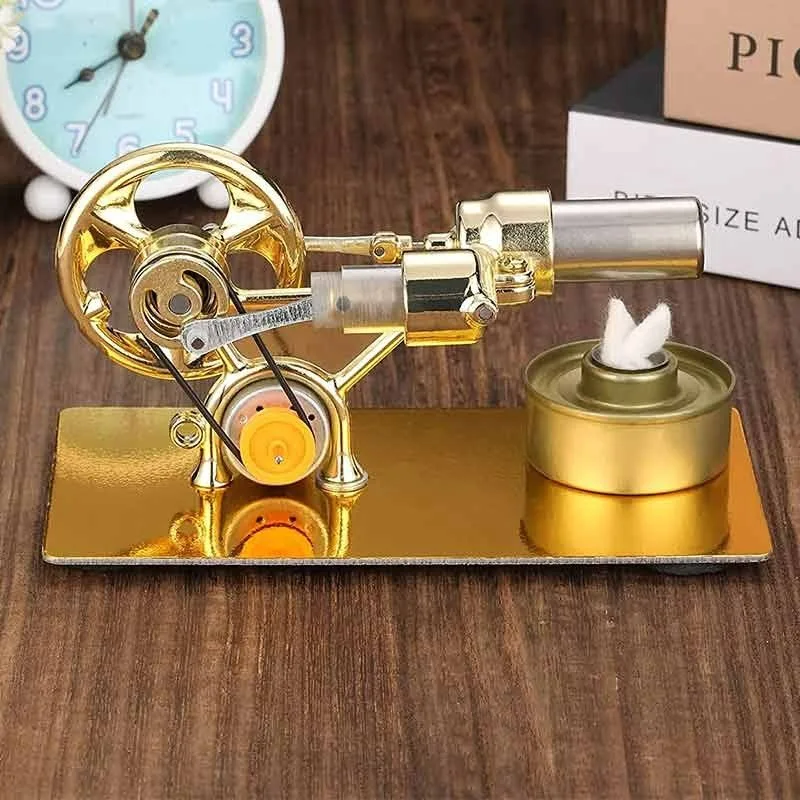
- Candle-Powered Stirling Engine: The Candle-Powered Stirling Engine is a mechanical marvel designed to ignite the minds of curious learners and science lovers. Its refined appearance and solid construction invite hands-on exploration of thermodynamic physics. This model is explicitly designed for candle use, so it's a good starting point for beginners who want a reliable, visually appealing engine that works with a simple candle.
- Mini Stirling Engine: The Mini Stirling Engine is much more than a toy—it's an educational tool that will fascinate anyone interested in science or engineering. Simply fill the alcohol lamp, light it, and watch the engine come to life. If you prefer an alcohol lamp over a candle, this compact model offers a straightforward setup and is ideal for demonstrating basic principles, though it may need a warmer environment to run consistently.
- Stirling Engine with Propeller: The Stirling Engine with Propeller features a 304 stainless steel heating pipe and a propeller driven by air-cooling operation. The stainless steel pipe handles higher heat and the propeller provides a visual indicator of performance, making it a better choice for users who want a more robust engine that can handle varied heat sources.