Kit lens or step up?
The Canon EF-S 18-55mm f/3.5-5.6 III is the standard zoom that ships with many Canon APS-C DSLRs. It offers a versatile 18–55mm range in a lightweight, affordable package. The Sigma 18-35mm F1.8 DC HSM Art is a premium wide-to-standard zoom that matches the speed of many prime lenses. Choosing between them means weighing everyday practicality against creative low-light capability.
This comparison focuses on real-world trade-offs: aperture, build, compatibility, and when the Sigma's extra cost makes sense.
Aperture and low-light performance
The most striking difference is the maximum aperture. The Canon kit lens has a variable f/3.5–5.6 aperture, while the Sigma maintains a constant f/1.8 throughout its zoom range.
- Canon EF-S 18-55mm f/3.5-5.6 III: At 18mm, the aperture is f/3.5; at 55mm, it narrows to f/5.6. This limits performance in dim light and reduces background blur at telephoto lengths.
- Sigma 18-35mm F1.8 DC HSM A: A constant f/1.8 across the entire 18–35mm range lets in over 3 stops more light than the kit lens at 55mm. This enables faster shutter speeds, shallower depth of field, and better low-light results.
Key specifications at a glance
-
Canon EF-S 18-55mm f/3.5-5.6 III Lens: Canon EF-S 18-55mm f/3.5-5.6 III – lightweight standard zoom, variable aperture, designed for APS-C DSLRs. Compatible with mirrorless via adapter. It's the baseline for everyday shooting: portable, affordable, and covers common focal lengths, but its aperture limits low-light use.
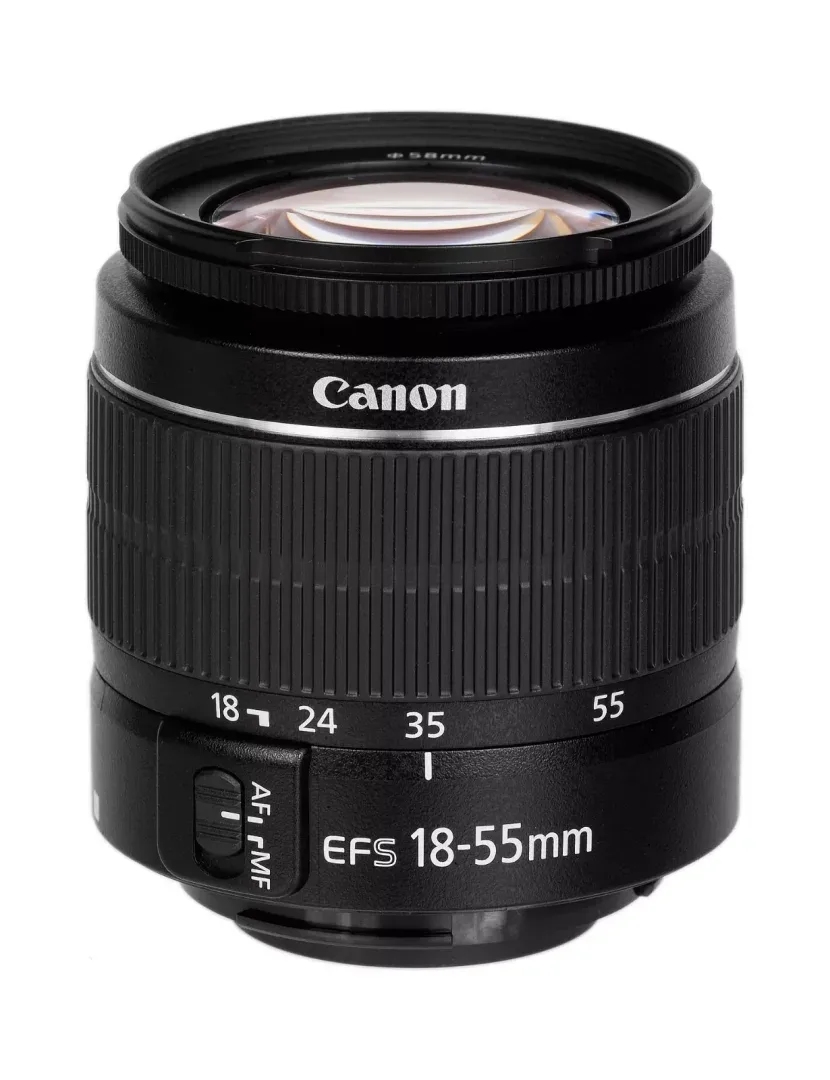
Canon EF-S 18-55mm f/3.5-5.6 III Lens
-
Sigma 18-35mm F1.8 DC HSM A – For Canon EF: Sigma 18-35mm F1.8 DC HSM A – first zoom to achieve f/1.8 throughout its range. Uses SLD glass and aspheric elements. Minimum focusing distance of 28cm. Compatible with Canon EF-S bodies. The wide aperture and close focus make it a versatile alternative to multiple primes, ideal for portraits, indoor events, and creative close-ups.
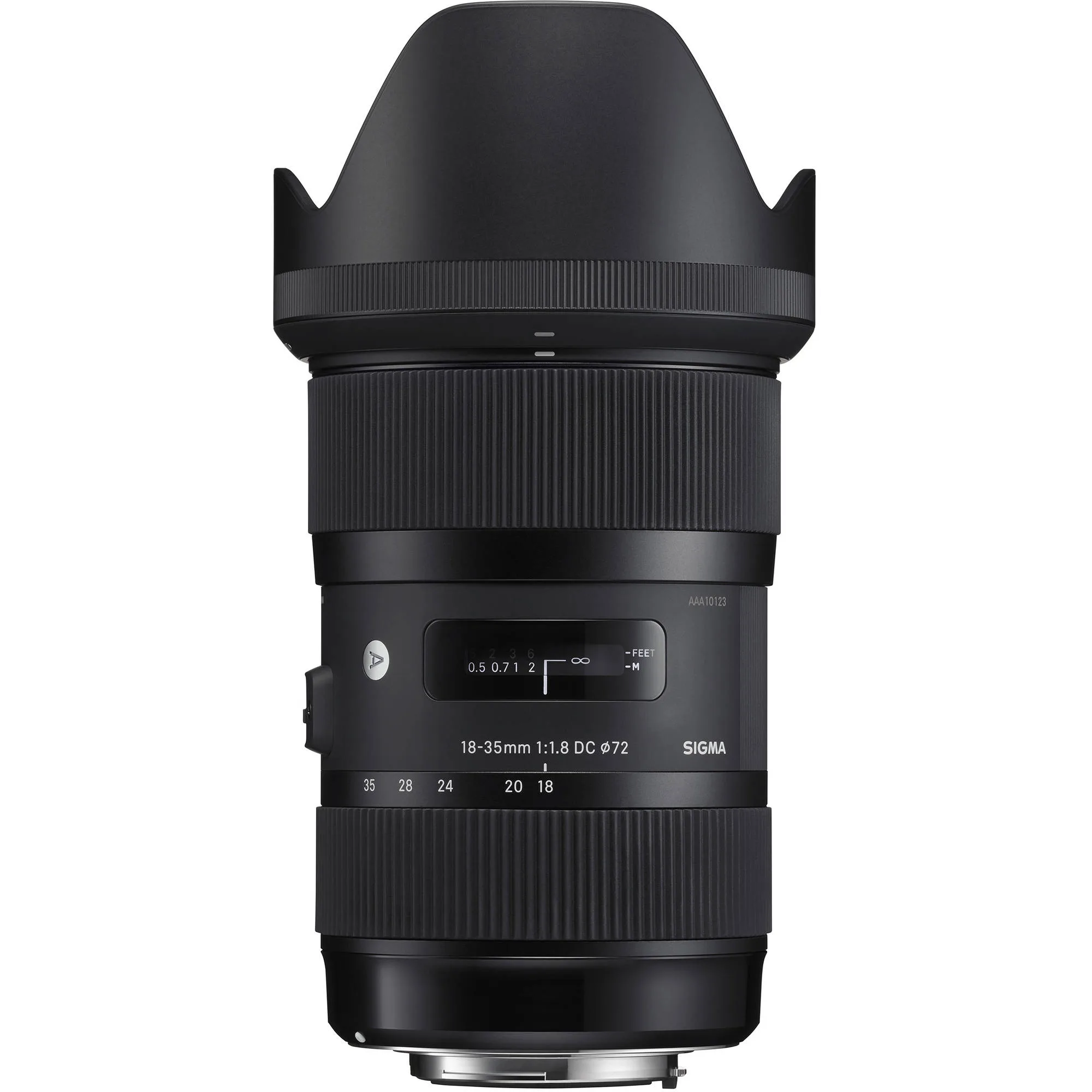
Sigma 18-35mm F1.8 DC HSM A – For Canon EF
Build and handling
The Canon 18-55mm is deliberately compact and light, making it easy to carry for travel or daily use. The Sigma 18-35mm is larger and heavier, reflecting its all-metal construction and complex optics. Sigma uses Thermally Stable Composite (TSC) for internal parts to maintain precision. The Sigma also includes a Hyper Sonic Motor for quiet, fast autofocus.
Both lenses can be used on Canon mirrorless cameras with an EF-EOS M or EF-EOS R adapter, retaining autofocus and exposure functions.
When the kit lens is the right choice
If you shoot mostly in daylight, need a lens that disappears into a bag, or are just starting out, the Canon EF-S 18-55mm f/3.5-5.6 III offers good value. It covers a wider telephoto reach (55mm vs 35mm) and costs a fraction of the Sigma.
The kit lens is also the obvious choice if you want a spare or backup zoom without a large investment.
When the Sigma 18-35mm earns its keep
The Sigma 18-35mm F1.8 DC HSM is for photographers who regularly shoot in low light or want to control depth of field without switching primes. Its f/1.8 aperture allows you to blur backgrounds at wide angles and keep shutter speeds fast indoors. The lens also focuses as close as 28cm, making it suitable for near-macro work.
Sigma's Art line prioritises optical quality and creative expression. If you value maximum aperture and sharpness over compactness and zoom range, the upgrade is justified.