Quick answer
Choose the Nikon D7500 if you need 4K video and a rugged body for frequent use; pick the Canon Rebel T7 for an affordable entry into DSLR photography with solid image quality.
Why these two DSLRs are often compared
Both the Canon EOS Rebel T7 and the Nikon D7500 are popular DSLRs, but they target different skill levels and budgets. The Rebel T7 is a classic entry-level model, while the D7500 sits a tier higher with more advanced features. Understanding their differences helps you decide which one matches your photography goals.
Key differences that matter
The most obvious difference is video capability: the Nikon D7500 records 4K video, while the Canon Rebel T7 is limited to 1080p. If you plan to shoot high-resolution footage, the D7500 is the clear choice. Another contrast is build quality—the D7500 has a rugged body designed for everyday use, whereas the Rebel T7 is more basic in construction. Sensor resolution also differs: the Rebel T7 packs a 24.1MP sensor, slightly higher than the D7500's 20.9MP, but the D7500's EXPEED 5 processor may offer better noise handling.
Trade-offs at a glance
- Video resolution: Nikon D7500 offers 4K video; Canon Rebel T7 maxes out at 1080p. If 4K video is essential, the D7500 is your only choice here.
- Build and durability: D7500 has a rugged body for everyday use; Rebel T7 is more basic. For frequent outdoor or travel shooting, the D7500 is more durable.
- Price and value: Rebel T7 is significantly cheaper (around $380) vs D7500 (around $664). Budget-conscious beginners will appreciate the Rebel T7's lower entry cost.
- Lens versatility: D7500 includes an 18-140mm VR lens; Rebel T7 comes with an 18-55mm lens. The D7500's longer zoom range covers more scenarios out of the box.
Product facts
-
Nikon - D7500 DSLR 4K Video Camera with AF-S DX NIKKOR 18-140mm f/3.5-5.6G ED VR lens - Black: The Nikon D7500 includes an 18-140mm VR lens for wide-angle to telephoto shooting, a 20.9MP sensor, and EXPEED 5 processing. This gives you a versatile all-in-one lens and reliable image processing for various shooting conditions.
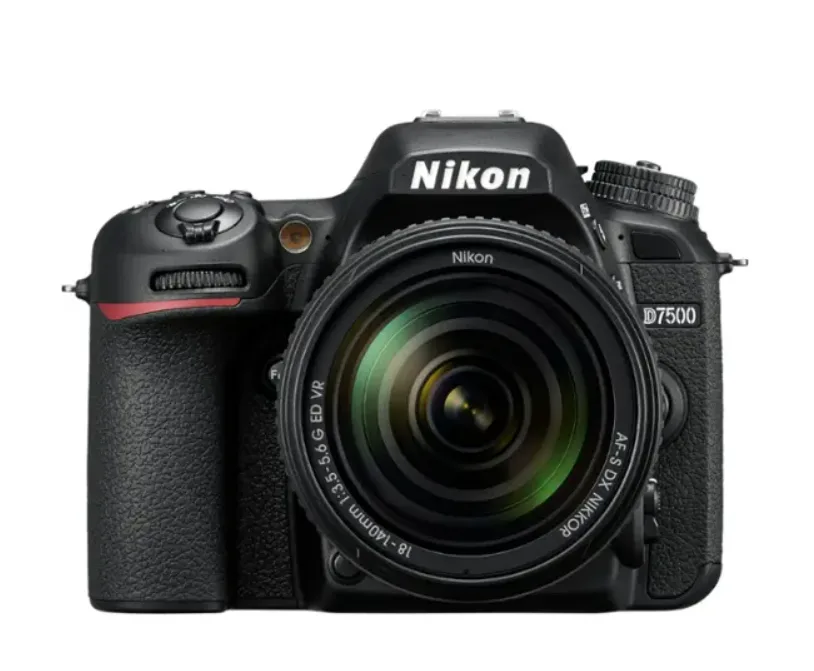
Nikon - D7500 DSLR 4K Video Camera with AF-S DX NIKKOR 18-140mm f/3.5-5.6G ED VR lens - Black
-
Canon - EOS Rebel T7 DSLR Video Camera with 18-55mm Lens - Black: The Canon Rebel T7 features a 24.1MP CMOS sensor and optical image stabilizer technology for sharp handheld shots. The higher resolution helps capture fine details, and the stabilizer reduces blur when shooting without a tripod.
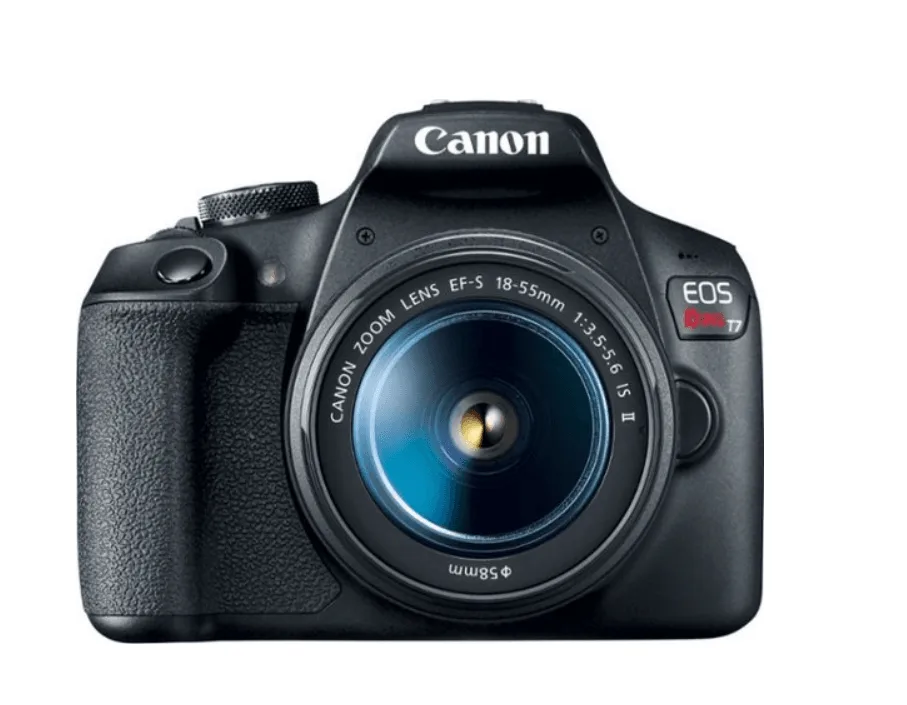
Canon - EOS Rebel T7 DSLR Video Camera with 18-55mm Lens - Black
Which should you choose?
Best for
- Enthusiasts who want 4K video and a rugged camera for regular use
- Users who prefer a versatile kit lens with longer reach
Not for
- Budget-minded beginners who just need basic DSLR features
- Those who prioritize maximum megapixels over video capability