Quick answer
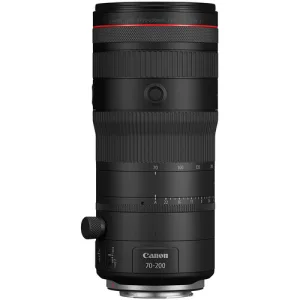
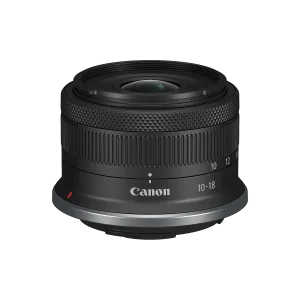
Choose the Canon RF 70-200mm F2.8 L IS USM Z if you shoot portraits, sports, or events on a full-frame EOS R body and need a fast f/2.8 aperture. Choose the Canon RF-S 10-18mm F4.5-6.3 IS STM if you shoot landscapes, architecture, or tight interiors on an APS-C EOS R camera and want a compact ultra-wide. They are not interchangeable: the 70-200mm is a full-frame RF lens, while the 10-18mm is an RF-S lens built for APS-C sensors.
Mount and sensor format decide compatibility first
The Canon RF 70-200mm F2.8 L IS USM Z is a full-frame RF lens, so it works on full-frame EOS R bodies and also on APS-C EOS R bodies, where it gives a tighter effective field of view. The Canon RF-S 10-18mm F4.5-6.3 IS STM is an RF-S lens designed for EOS R cameras with an APS-C sensor, so it is the wrong starting point if you shoot full frame. Before comparing focal lengths or prices, confirm which sensor format your camera uses, because that single fact eliminates one of these lenses for many buyers.
Focal length and aperture change what you can actually shoot
The RF 70-200mm covers a telephoto range at a constant f/2.8, which is what makes it useful for portraits with shallow depth of field, indoor events, and sports where you need to isolate a subject and keep shutter speeds up. The RF-S 10-18mm covers an ultra-wide range at f/4.5-6.3, which is a slower aperture but a much wider angle of view in a compact package. These are opposite tools: one pulls distant subjects closer and blurs backgrounds, the other fits more of a scene into the frame and keeps more of it in focus.
Price and weight set different expectations
At a catalog price of USD 2175.32, the RF 70-200mm sits in professional L-series territory, and its internally zooming, internal focus design is aimed at hybrid shooters who want consistent handling. The RF-S 10-18mm is listed at USD 239.99, a fraction of that cost, which reflects its role as an accessible ultra-wide for APS-C shooters rather than a main workhorse telephoto. If budget or bag weight is the deciding factor, the 10-18mm is the easier lens to add; if you need reach and light gathering, the 70-200mm is the one that does the job.
Two more RF options worth knowing about
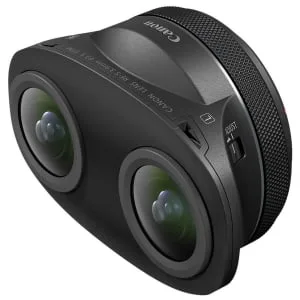
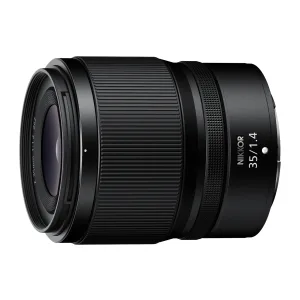
If your interest is video or VR rather than stills, the Canon RF-S3.9mm F3.5 STM DUAL FISHEYE Lens is a dual fisheye RF-S mount lens positioned for affordable high-quality VR content creation, which is a completely different job from either zoom here. If you shoot Nikon Z instead, the Nikon Z 35mm f/1.4 Lens is a natural wide-angle with a large f/1.4 aperture that cuts through low light and creates dramatic shallow depth-of-field, a useful middle ground between ultra-wide and telephoto. Neither replaces the two lenses above, but they show how quickly the right answer changes with your camera system and subject.
Trade-offs at a glance
- Reach vs. angle of view: The RF 70-200mm compresses distant subjects and isolates them; the RF-S 10-18mm expands the frame to include more of a scene. Pick based on whether you usually step back or step closer.
- Aperture vs. portability: The 70-200mm holds a constant f/2.8 for low light and shallow depth of field; the 10-18mm is f/4.5-6.3 but far smaller and lighter. If you shoot after dark or want blurred backgrounds, the faster lens matters more than the size.
- Full-frame RF vs. APS-C RF-S: The 70-200mm is a full-frame RF lens that also works on APS-C bodies; the 10-18mm is RF-S and built for APS-C EOS R cameras. Check your sensor format before anything else.
- Price gap: The 70-200mm is listed at USD 2175.32, while the RF-S 10-18mm is listed at USD 239.99. The cheaper lens is not a downgrade; it is a different tool for a different format.
Product facts
- CANON RF 70-200mm F2.8 L IS USM Z Lens (Black): New internally zooming, internal focus F2.8 L-Series hybrid telephoto zoom lens featuring an iris ring for manual iris control. The internal zoom and focus design keeps the lens length stable on a gimbal or tripod, and the iris ring gives hybrid shooters direct manual control over exposure.
- CANON RF-S 10-18mm F4.5-6.3 IS STM Lens: The RF-S10-18mm F4.5-6.3 IS STM lens combines excellent optics and high performance, providing an ultra-wide angle of view in a compact, portable package, perfect for EOS R cameras with an APS-C sensor. It is a lightweight way to get ultra-wide coverage on an APS-C EOS R body, which suits travel, landscapes, and tight interiors where a telephoto cannot fit the scene.
- CANON RF-S3.9mm F3.5 STM DUAL FISHEYE Lens: The Canon RF-S3.9mm F3.5 STM DUAL FISHEYE Lens is a Canon RF-S mount lens built for capturing dual fisheye imagery, positioned for affordable high-quality VR content creation. It is a specialist RF-S lens for VR capture, not a general-purpose zoom, so it only makes sense if immersive video is your goal.
- Nikon Z 35mm f/1.4 Lens: The NIKKOR Z 35mm f/1.4 lens is a natural wide-angle lens with a large f/1.4 aperture that cuts through low light and creates dramatic shallow depth-of-field. For Nikon Z shooters, this is a low-light wide-angle alternative that sits between the ultra-wide and telephoto use cases discussed here.
Which lens fits your shooting
Best for
- Full-frame EOS R shooters who photograph portraits, sports, or events and need a fast f/2.8 telephoto zoom
- Hybrid shooters who want internal zoom and focus plus an iris ring for manual iris control
- APS-C EOS R shooters who want a compact ultra-wide for landscapes, architecture, or tight interiors
Not for
- Full-frame EOS R shooters looking for an ultra-wide, since the RF-S 10-18mm is built for APS-C sensors
- Buyers who need a lightweight, low-cost everyday lens, since the RF 70-200mm is a larger professional investment
- Anyone who needs a single lens to cover both ultra-wide and telephoto work, because these two cover opposite ends of the range