The first decision is your camera mount, not the lens
These two lenses are not interchangeable alternatives. The Canon RF 70-200mm F4L IS USM is an RF-mount lens, while the Nikon NIKKOR Z 24-200mm f/4-6.3 VR is a Nikon Z-mount lens. If you already own a Canon RF body, the Nikon zoom cannot mount on it, and the reverse is also true. The supplied information does not confirm any adapter compatibility, so treat mount choice as settled before comparing focal lengths.
Once the mount question is out of the way, the real comparison is between two different design philosophies: a constant-aperture telephoto zoom and a wide-to-tele superzoom.
What each lens confirms about its own design
-
Canon RF 70-200mm F4L IS USM: Canon describes the RF 70-200mm F4L IS USM as one of the shortest and lightest 70-200 f/4 interchangeable lenses in the world, with high image quality throughout its focal length. This is a dedicated telephoto zoom built around a fixed f/4 aperture, so the size and weight advantage is central to its travel appeal.
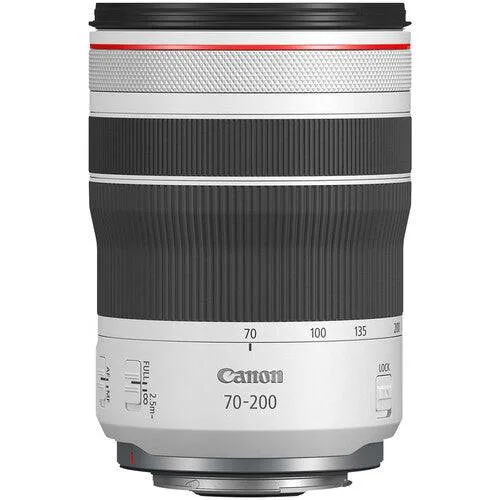
Canon RF 70-200mm F4L IS USM
-
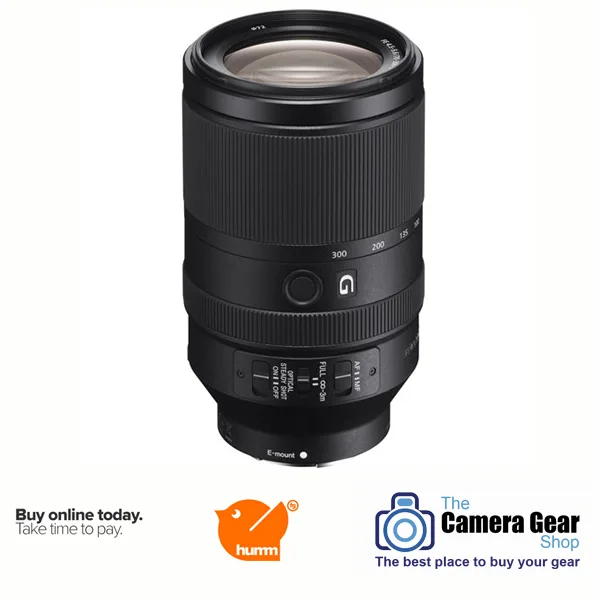
Nikon NIKKOR Z 24-200MM F/4-6.3 VR: Nikon describes the NIKKOR Z 24-200mm f/4-6.3 VR as an all-in-one 8.3x zoom covering wide-angle to telephoto focal lengths. This is a superzoom intended to replace several lenses, with a variable aperture that shifts as you zoom.
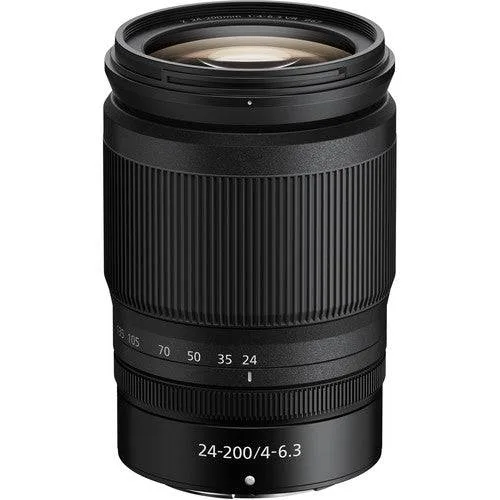
Nikon NIKKOR Z 24-200MM F/4-6.3 VR
Focal range and aperture: reach versus flexibility
The Canon starts at 70mm and ends at 200mm, so it is a telephoto-only tool. The Nikon starts at 24mm and reaches 200mm, giving you wide-angle through telephoto in one barrel. For travel, that difference matters: the Nikon can shoot a street scene at 24mm and a distant subject at 200mm without a lens change, while the Canon asks you to carry a second, wider lens for those broader views.
The trade-off is aperture. The Canon holds f/4 across its entire range, which is a constant-aperture design. The Nikon is f/4-6.3, meaning the maximum aperture narrows as you zoom toward 200mm. The supplied information does not include low-light test results for either lens, so judge that difference against your own shooting conditions rather than assuming a specific outcome.
- Canon RF 70-200mm F4L IS USM: 70-200mm, constant f/4. A single-purpose telephoto zoom that prioritizes a bright, consistent aperture over wide-angle coverage.
- Nikon NIKKOR Z 24-200mm f/4-6.3 VR: 24-200mm, f/4-6.3 variable aperture. An 8.3x all-in-one zoom that covers wide-angle to telephoto but loses maximum aperture as you zoom in.
Stabilization: what the numbers actually refer to
- Canon RF 70-200mm F4L IS USM: Canon states image stabilisation of up to 7.5 shutter stops with In-Body Image Stabilizer on a compatible camera, and up to 5 stops with Optical IS only. The headline 7.5-stop figure depends on a compatible camera body with in-body stabilization. On a body without it, the confirmed figure is 5 stops, so check your camera before relying on the larger number.
- Nikon NIKKOR Z 24-200MM F/4-6.3 VR: Nikon states Vibration Reduction minimizes the appearance of camera shake by up to 5 stops for sharper handheld shooting. This gives a single confirmed stabilization figure for the Nikon zoom, useful for handheld telephoto shooting comparison.
Close-up capability and optical design
Canon lists 0.28x macro magnification for the RF 70-200mm F4L, which makes the lens more adaptable to close-up subjects than a typical telephoto zoom. The supplied information does not state a minimum focusing distance, so you cannot calculate working distance from the catalog alone.
Nikon describes an optical design using aspherical and ED elements paired with ARNEO and Nano Crystal Coatings, intended to produce sharp, high-contrast images with accurate color rendering in various lighting. The supplied information does not give a magnification figure for the Nikon, so close-up performance is not confirmed here. Both lenses are described by their makers as high-quality optics; neither claim is an independent test result.
Handling details that affect daily use
Beyond optics, the two lenses differ in the controls and features each maker confirms. These are practical points for travel and handheld work, not image-quality verdicts.
- Canon RF 70-200mm F4L IS USM: Confirmed as one of the shortest and lightest 70-200 f/4 lenses in the world, with Optical IS and up to 0.28x macro magnification. The supplied information does not list a control ring or a tripod collar.
- Nikon NIKKOR Z 24-200mm f/4-6.3 VR: Confirmed with a stepping motor for quick, quiet autofocus, full-time manual focus override, and a programmable control ring for exposure settings. These suit both stills and video, according to Nikon.
The Nikon promotion has a hard deadline
The supplied Nikon record includes a September Promotion running 1-30 September 2026, with a free 30L Dry Cabinet for purchases during that period. Redemption requires your receipt and warranty card at the Nikon Experience Hub, Funan Mall, 107 N Bridge Rd, #03-13, by 7 October 2026. Because the application date is 14 November 2026, that promotion window has already closed. Do not treat the free gift as a current reason to choose the Nikon; confirm any current offer with the store before ordering.
How to choose between them
Choose the Canon RF 70-200mm F4L IS USM if you shoot on a Canon RF body and want a dedicated telephoto zoom with a constant f/4 aperture, confirmed optical stabilization, and close-focus capability. It suits photographers who already carry a wide or standard lens and want the telephoto end to be the strongest part of the kit.
Choose the Nikon NIKKOR Z 24-200mm f/4-6.3 VR if you shoot on a Nikon Z body and want one lens to cover wide-angle through telephoto, accepting the variable aperture and the narrower maximum aperture at the long end. It is the more travel-oriented single-lens solution, while the Canon is the more specialized telephoto.
Neither choice is universal. The supplied information does not confirm weather sealing, filter thread size, minimum focus distance for the Nikon, or adapter compatibility for either lens, so verify those details against the full product record before you commit.