Quick answer
Canon EF lenses offer a wider selection of fast primes and telephoto options, while Fujifilm XF lenses deliver excellent optical quality and image stabilization in a compact mirrorless package. Your choice depends on whether you prioritize lens variety and DSLR compatibility or portability and in-lens stabilization.
Lens system basics: Canon EF vs Fujifilm X-Mount
Canon's EF mount has been around for decades, giving you access to a huge library of lenses—from affordable primes to high-end L-series glass. The system works with Canon DSLRs and, via adapters, on Canon mirrorless bodies. Fujifilm's X-Mount, by contrast, is designed specifically for APS-C mirrorless cameras, so every lens is optimized for that sensor size. That means smaller, lighter lenses that often include optical image stabilization (OIS) built right in.
If you already own Canon glass or plan to shoot full-frame, the Canon EF system gives you more room to grow. If you want a compact, modern setup with excellent out-of-camera colors and stabilization in the lens, Fujifilm XF is hard to beat.
Aperture and low-light performance
Aperture determines how much light a lens lets in and how shallow your depth of field can be. Canon EF lenses include many f/1.2 and f/1.4 primes, which are ideal for low-light portraits and subject isolation. Fujifilm XF lenses typically start at f/2.8 for zooms and f/2 for primes, but because the X-Mount sensor is smaller, the depth-of-field difference is less dramatic than the numbers suggest.
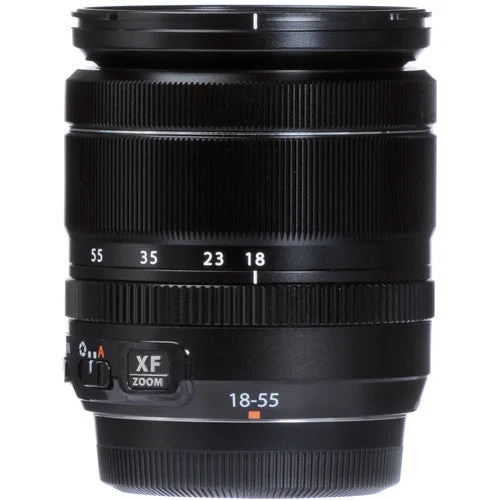
For example, the FUJIFILM XF 18-55mm f/2.8-4 R LM OIS Lens gives you a versatile zoom range with a relatively fast aperture and built-in stabilization. It's a great walk-around lens for travel and everyday shooting, though it won't match a Canon f/2.8 constant-aperture zoom in consistent low-light performance.
Image stabilization: in-lens vs in-body
Fujifilm puts OIS inside many of its XF zoom lenses, including the XF 18-55mm f/2.8-4. That means you get steady shots even when shooting handheld in dim light, without needing a tripod. Canon EF lenses generally rely on the camera body for stabilization (if the body has it), or you shoot unstabilized. If you're using an older Canon DSLR without in-body stabilization, you'll want to look for Canon lenses with IS (Image Stabilizer) in the name.
The trade-off: Fujifilm's approach makes every compatible lens stabilized, but it also adds weight and complexity. Canon's system lets you choose lighter, simpler lenses when you don't need stabilization.
Price and value
Fujifilm XF lenses tend to cost more upfront for similar specs compared to third-party Canon EF options, but they hold value well and often include OIS. Canon's EF mount has a huge aftermarket from brands like Tamron and Sigma, giving you more budget-friendly choices. For instance, the Tamron 20mm f/2.8 Di III OSD M1:2 Lens for Sony E-mount shows how third-party lenses can offer excellent value—but note that it's designed for Sony, not Canon or Fujifilm. Always check mount compatibility before buying.
If you're on a tighter budget and want maximum lens selection, Canon EF gives you more affordable paths. If you're willing to invest in a premium, all-in-one system with fewer compromises on portability, Fujifilm XF is a strong contender.
Canon vs Fujifilm: Trade-offs at a glance
- Lens selection and ecosystem: Canon EF has decades of lenses including many affordable and specialty options. Fujifilm XF is a newer, smaller ecosystem but covers the most popular focal lengths well. Choose Canon if you want maximum choice; choose Fujifilm if you prefer a curated, modern lineup.
- Aperture and depth of field: Canon offers f/1.2 primes for extreme shallow depth of field. Fujifilm XF primes are typically f/2, which still gives pleasing blur on APS-C but not as thin. Go Canon for the fastest apertures; Fujifilm is still great for portraits but with a different look.
- Image stabilization: Many Fujifilm XF zooms have built-in OIS. Canon EF lenses require body stabilization or an IS lens, which adds cost. Fujifilm wins for handheld low-light shooting; Canon is fine if you use a tripod or have a stabilized body.
Key product facts
- FUJIFILM XF 18-55mm f/2.8-4 R LM OIS Lens: The FUJIFILM XF 18-55mm f/2.8-4 R LM OIS Lens covers a 27-84mm equivalent range, features three aspherical elements, one extra-low dispersion element, Super EBC coating, a linear autofocus motor, and optical image stabilization. This lens is a versatile standard zoom that gives you a fast variable aperture, sharp optics, and built-in stabilization—ideal for travel and everyday shooting without swapping lenses.
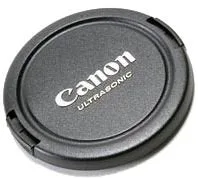
- Canon 72mm Lens Cap f/EF Lenses E-72U: The Canon 72mm Lens Cap f/EF Lenses E-72U protects your lens from dust and scratches and is compatible with many Canon EF lenses including the EF 50mm f/1.2 L USM and EF 85mm f/1.2L II USM. A simple lens cap is essential for protecting expensive glass when not in use. This Canon-specific cap ensures a perfect fit on popular EF lenses.
Which lens system fits you?
Best for
- Photographers who want the widest lens selection and fast f/1.2 primes – Canon EF
- Travel and everyday shooters who value compact size and built-in stabilization – Fujifilm XF
Not for
- If you need full-frame sensor coverage, Fujifilm XF is APS-C only – choose Canon EF or RF instead
- If you want the absolute cheapest lens options, Fujifilm XF lenses cost more on average – Canon EF has more budget third-party glass