Quick answer
Buy a car seat footmuff if your baby travels in an infant carrier and you want warmth without a coat, and buy a pram footmuff if your baby lies flat or sits in a pushchair. If you use both, start with the one your baby spends the most time in. Never use a thick footmuff under a harness in a car seat unless the harness still tightens correctly.
The real difference: harness access and shape
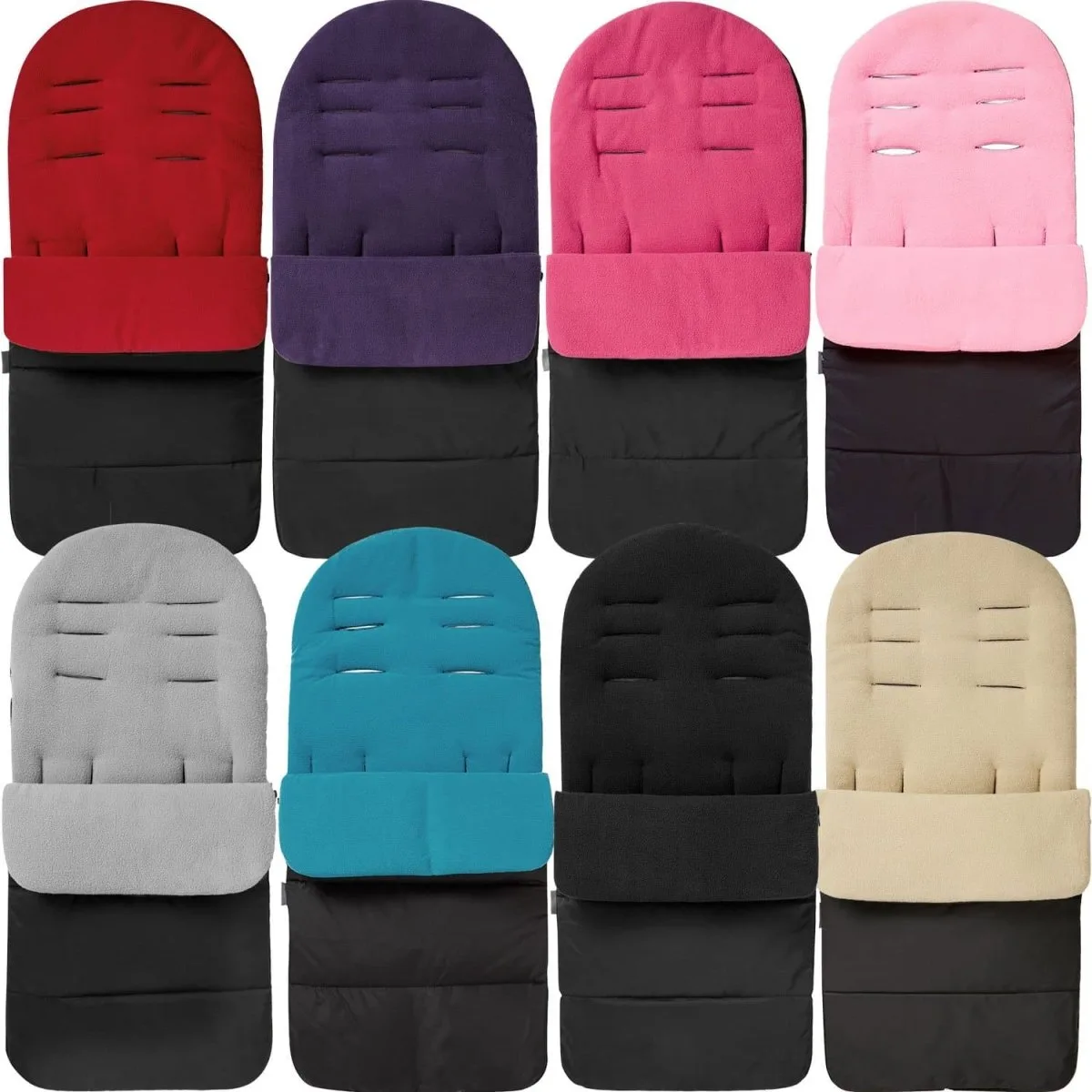
A car seat footmuff is cut to sit over an infant carrier with openings or a shaped top so the harness straps pass through and tighten against your baby. A pram footmuff is usually longer and flatter, designed to cover a lie-flat seat or a pushchair with a bumper bar. That shape difference matters more than the fabric: a pram footmuff on a car seat can bunch behind your baby and stop the harness from lying flat.
Check how the footmuff attaches. Car seat versions often secure around the shell or through harness slots, while pram versions may have a back panel that threads through the pushchair harness or simply tuck behind the seat. If you cannot see how it attaches, ask before buying.
When a car seat footmuff is the better buy
Choose a car seat footmuff if your baby is still in an infant carrier and you do short, frequent journeys. It lets you skip a bulky coat, which makes the harness easier to tighten correctly, and it keeps the carrier warm between the car and the house. For a newborn, a footmuff that opens flat is easier to use because you can lay the baby in and fold it over rather than pushing them into a narrow opening.
The trade-off is that car seat footmuffs are usually smaller, so they stop being useful once your child moves to a forward-facing seat or a pushchair. They also tend to be model-specific. The Animal Print Car Seat Footmuff, for example, is listed as compatible with Bebecar car seats and all Bebecar models, so it is a poor match if you own a different brand.
When a pram footmuff makes more sense
Buy a pram footmuff if your baby sleeps in the pushchair, if you walk more than you drive, or if your child has outgrown the infant carrier. A longer footmuff covers the legs and feet on a lie-flat seat, which a car seat version often cannot do. It is also the better choice for toddlers who sit up, because you can fold the top down without fighting a harness.
The trade-off is that a pram footmuff is usually too bulky for a car seat and may not have harness openings in the right place. If you only buy one and your baby is still in a carrier, the car seat version will get more use right now.
How to check the fit before you buy
Fit is the most common reason a footmuff gets returned. Measure the internal width of your car seat or pushchair seat at the widest point, then check the footmuff's stated dimensions or ask the seller. A footmuff that is too wide will not sit flat, and one that is too narrow will not cover the shoulders.
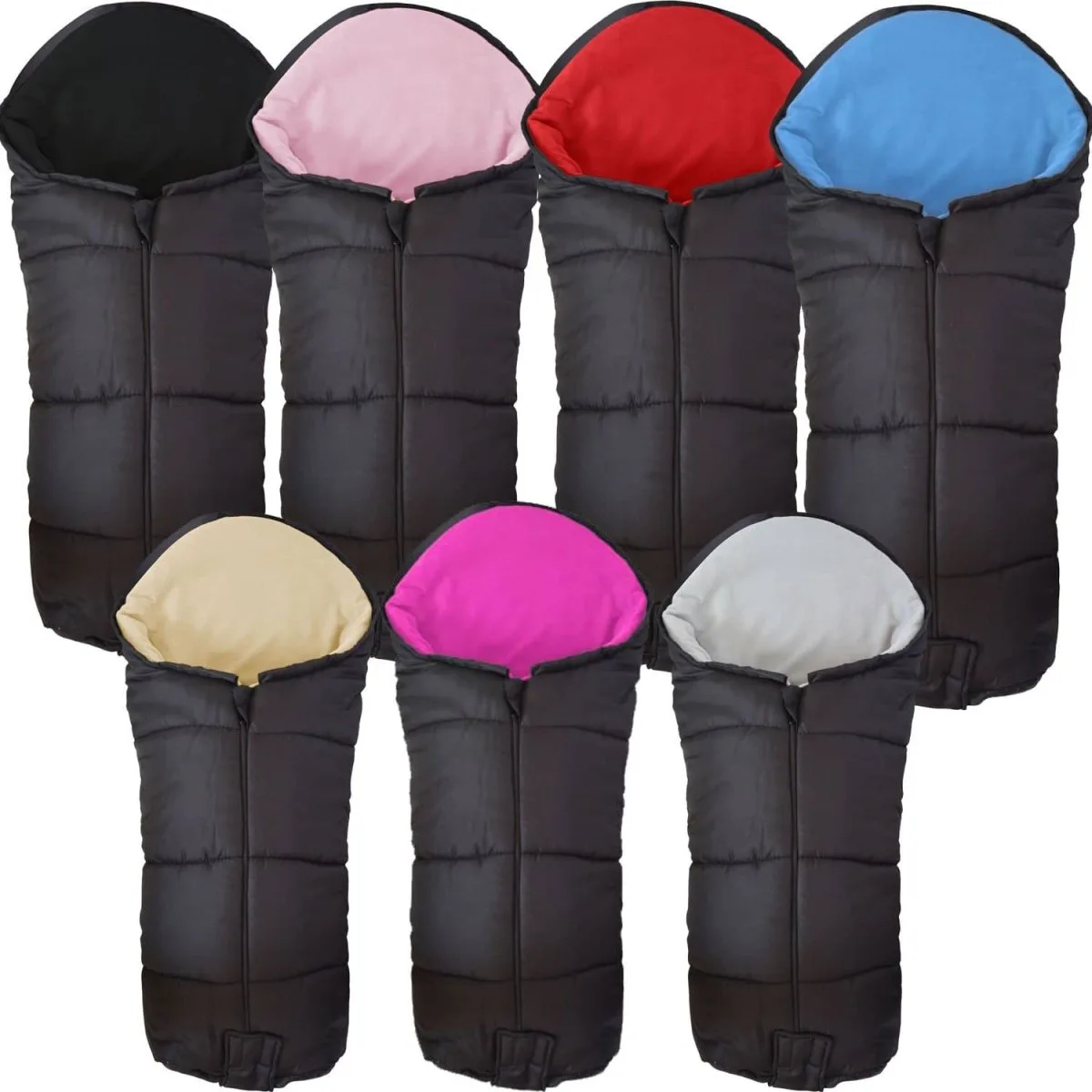
Look for the attachment method in the product photos: harness slots, a back panel, or a simple wrap-around. Confirm the model compatibility in the product title, because many footmuffs are made for one brand only. If a listing does not state compatibility, treat it as a universal-style footmuff and expect to adjust it yourself.
Decision rules: which footmuff to buy first
- If your baby is in an infant carrier: Buy a car seat footmuff first and check that the harness still tightens against your baby's chest with it in place. Skip a pram footmuff until your baby moves to a pushchair.
- If your baby sleeps in the pushchair: Buy a pram footmuff with a long body and a fold-down top so you can cover the legs without waking your baby. A car seat footmuff will be too short for a lie-flat seat.
- If you use both a car seat and a pushchair: Buy the footmuff that matches the seat your baby uses most, then add the second one when the seasons change. Two cheap footmuffs beat one expensive compromise.
- If you are unsure about compatibility: Check the product title for your brand name and confirm the attachment method before ordering. A footmuff listed for another brand is not a universal fit.
Footmuffs worth comparing
- Animal Print Car Seat Footmuff / Cosy Toes Compatible with Bebecar - Fits All Models: Animal print car seat footmuff / cosy toes compatible with Bebecar, fits all Bebecar models, with a weather-resistant outer shell. A good match if you own a Bebecar car seat and want rain protection on short trips, but it is not a universal fit for other brands.
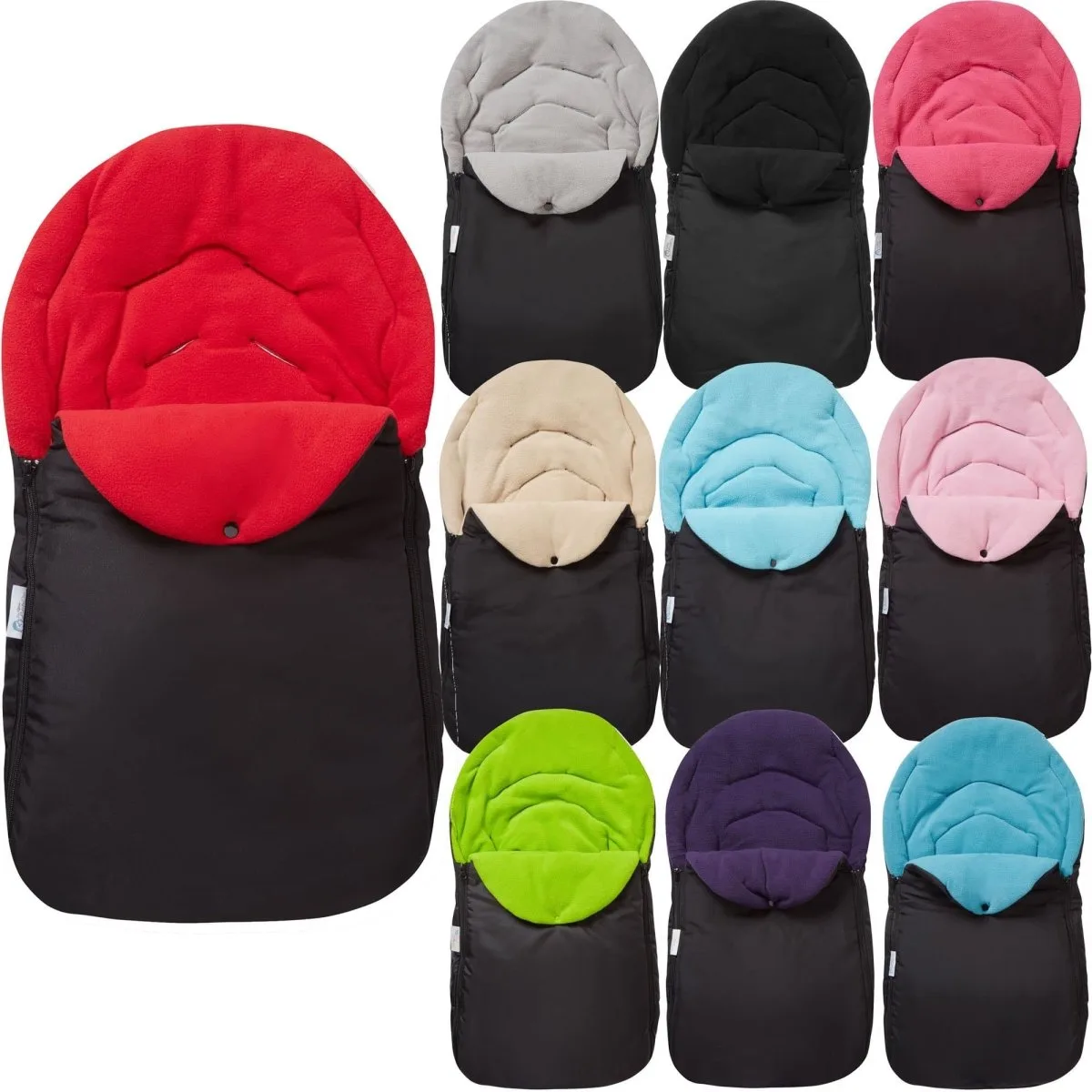
car seat footmuff / cosy toes compatible with Bebecar
- Broderie Anglaise Car Seat Footmuff / Cosy Toes Compatible with Obaby: Broderie Anglaise car seat footmuff / cosy toes compatible with Obaby, with embroidered ruffle detailing and a plush padded interior. Suits parents who want a car seat footmuff that looks dressier, provided your car seat is an Obaby model.
- Premium Footmuff / Cosy Toes Compatible with Mothercare: Premium footmuff / cosy toes compatible with Mothercare, with soft fleece, a breathable lining, and a waterproof and windproof outer fabric. A practical pick for wet, windy weather if you use a Mothercare pushchair or car seat, and the breathable lining helps on milder days.
- Deluxe Footmuff / Cosy Toes Compatible with Silver Cross: Deluxe footmuff / cosy toes compatible with Silver Cross pushchairs, designed for chilly days and nights. Best for pushchair users who want a warmer, more padded option for cold evening walks rather than a car seat insert.
Best for and not for
Best for
- Parents who want to skip a bulky coat on short car journeys with an infant carrier
- Babies who sleep in a lie-flat pushchair and need leg and foot coverage
- Parents who own a Bebecar, Obaby, Mothercare, or Silver Cross seat and want a matched footmuff
Not for
- Parents who need one footmuff to fit every brand of car seat and pushchair
- Toddlers who have moved to a forward-facing car seat with no harness openings
- Anyone who wants to use a thick footmuff under a car seat harness without checking the fit