Quick Answer
If your group is large, short on time, or loves bluffing and debate, card games are a flexible pick. If you prefer deeper strategy, spatial thinking, and a longer session, board games deliver more substance. For many groups, a mix of both keeps game night fresh.
When planning game night, the first question is often: card games or board games? Both bring people together, but they create very different experiences. Understanding the tradeoffs helps you match the game to your group's size, mood, and attention span.
We'll compare the two categories using concrete examples from Smirkanddagger's catalog, so you can see how the differences play out in real games. Whether you're hosting a party or a cozy two-player evening, there's a format that fits.
Player Count and Social Dynamics
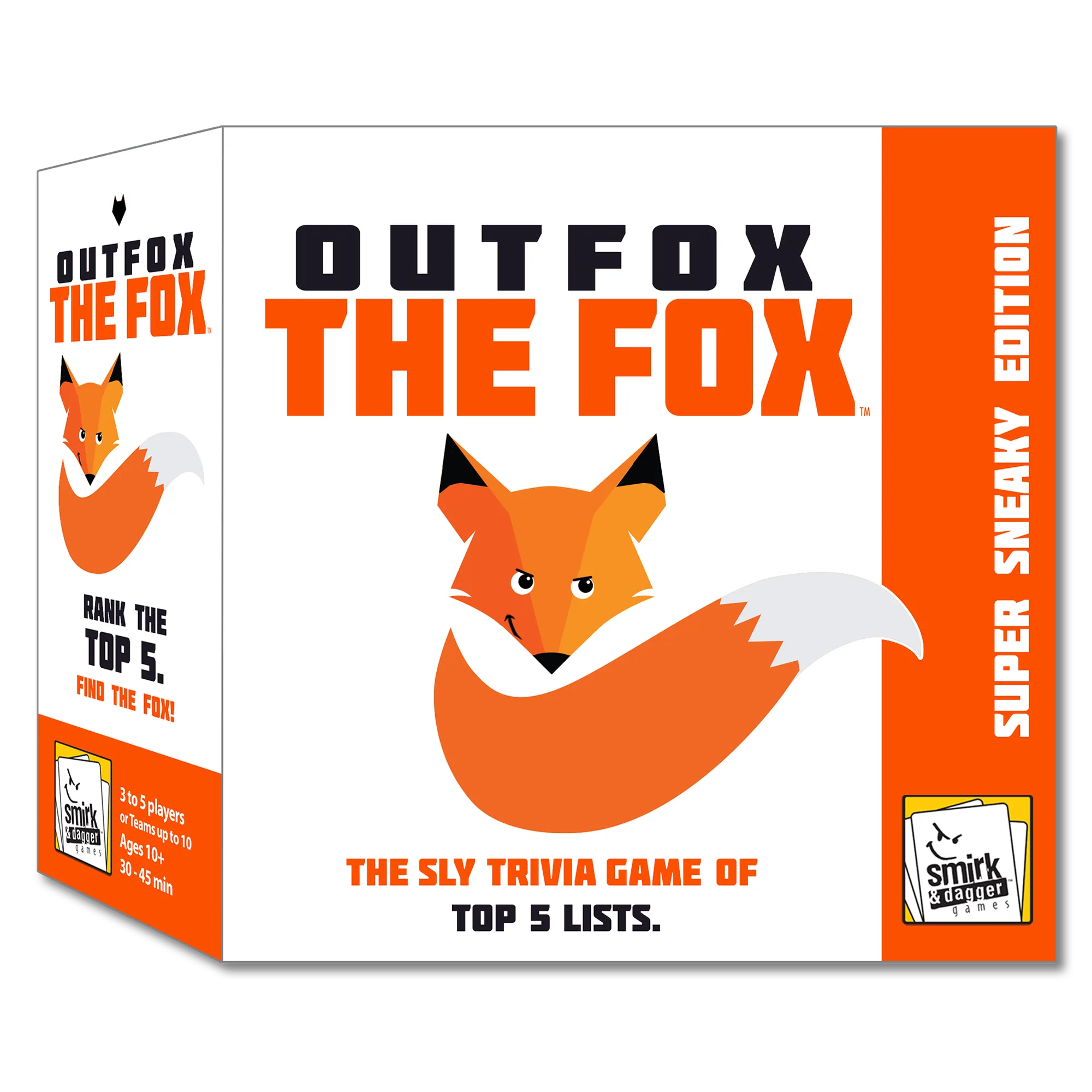
Card games often shine with larger groups. They tend to have simpler rules and faster rounds, making it easy to rotate players or jump in mid-session. For example, OUTFOX the FOX supports 3-10 players and turns trivia into a team debate, perfect for a lively crowd.
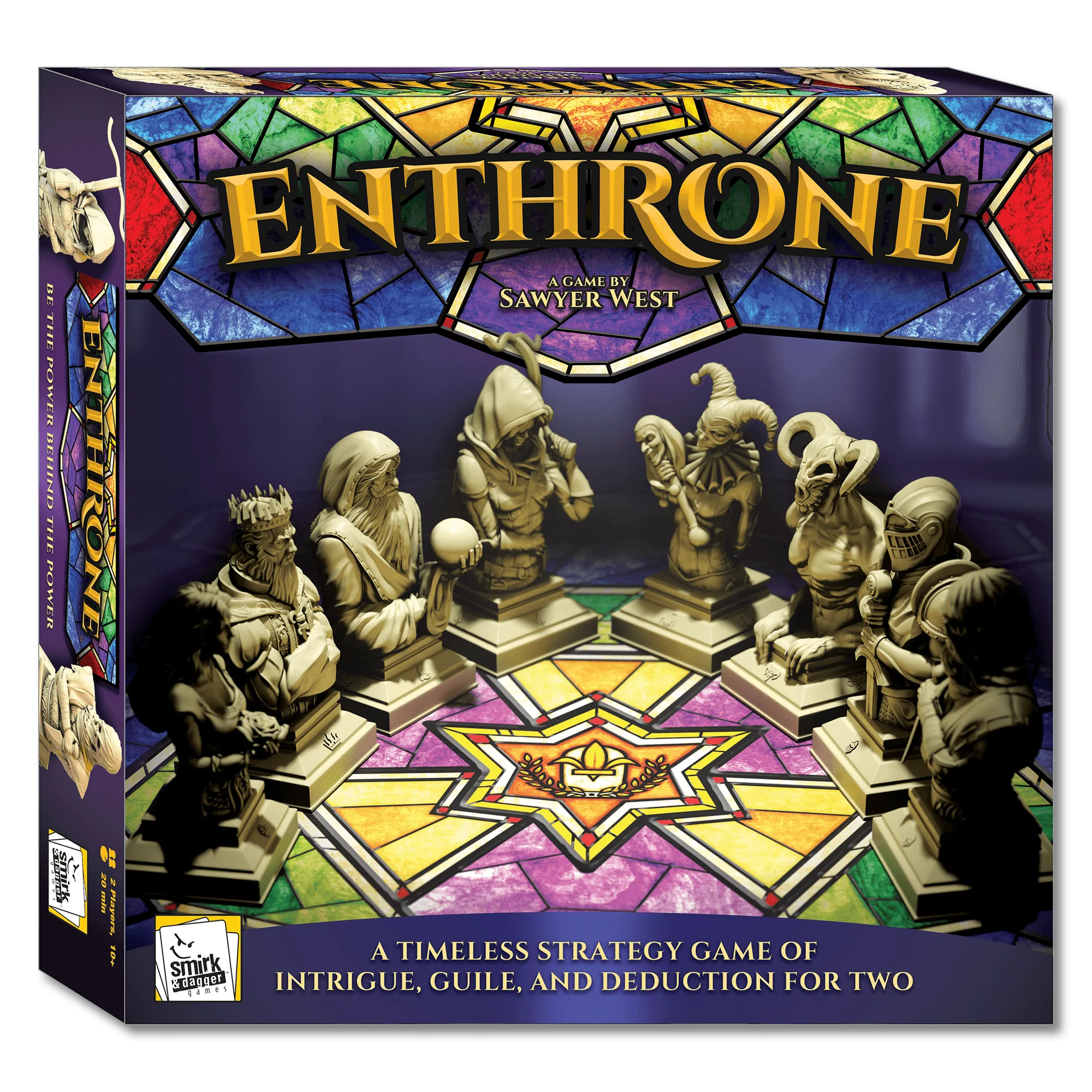
Board games, on the other hand, usually cap at lower player counts and reward focused interaction. A game like ENTHRONE is designed for two players, offering a tense, one-on-one deduction duel. If your group is small and wants a deep challenge, board games might be the better fit.
ENTHRONE
- Card games are great for drop-in players and larger parties.
- Board games often deliver more meaningful interaction in smaller groups.
Time Commitment and Complexity
If you have only 20 minutes, a card game can deliver a satisfying arc without dragging. Their compact design keeps setup and rules overhead low. OUTFOX the FOX, for instance, gives you all the answers upfront, so you spend time debating rather than memorizing facts.
Board games frequently demand a longer block of time and a willingness to learn layered mechanics. BOOoop, for example, is a strategy game that rewards planning and spatial thinking. It's not overly long, but it asks more of players than a quick card filler.
The tradeoff is clear: card games offer quick, accessible fun; board games provide a more substantial mental workout. Consider how much time and energy your group wants to invest.
- Card games are ideal for weeknight sessions or waiting for latecomers.
- Board games suit dedicated game nights when everyone can focus.
Theme and Player Experience
Card games often lean into social mechanics like bluffing, deduction, and quick wit. The theme is usually lighter and more approachable. OUTFOX the FOX, for example, turns trivia into a team challenge where catching a fake answer is the core thrill.
Board games can transport players into richer worlds with more tangible components. ENTHRONE casts you as a puppet master in a political intrigue, while BOOoop offers a cute yet thinky spatial puzzle. These games create a more immersive experience, but they also require players to engage with the theme and mechanics on a deeper level.
- Card games often prioritize social interaction over theme depth.
- Board games can offer stronger thematic immersion and component quality.
Tradeoffs at a Glance
- Setup and Portability: Card games are compact and quick to set up, perfect for travel or spontaneous play. Board games often have more components and require table space. If you're short on space or on the go, choose a card game.
- Depth vs. Accessibility: Board games like ENTHRONE offer layered strategy and deduction. Card games like OUTFOX the FOX are easier to learn but still engage the brain. For a quick, social experience, pick a card game; for a deeper session, pick a board game.
- Group Size Flexibility: Card games often support larger player counts and allow for more casual participation. Board games usually cap at lower counts and demand more attention from each player. Match the game to your group size: big and social? Card game. Small and focused? Board game.
Real Examples from Smirkanddagger
- OUTFOX the FOX - A Sly Game of Top Five Trivia for 3-10: In OUTFOX THE FOX players team up to debate and sequence the order of top 5 lists, but each round, one player inserts a fake answer (THE FOX) among the 5 real ones. It’s like trivia night, but you are given ALL the answers. This card game thrives on group discussion and quick thinking, making it a great icebreaker for larger parties.
- ENTHRONE: ENTHRONE is a unique, abstract deduction strategy game for two players. You are the power behind the power. You are the silent hand and one of these unwitting 8 pawns will be your key to securing complete dominion. This board game offers a deep, head-to-head challenge that rewards careful deduction, ideal for a duo that wants a strategic duel.
How to Choose
Best for
- Groups of 5 or more who want lively, social interaction and quick rounds.
- New players or casual gamers who prefer easy-to-learn rules.
- Those who value portability and quick setup for on-the-go fun.
Not for
- Duos seeking intense, strategic head-to-head battles—consider a board game like ENTHRONE instead.
- Players who want deep, immersive themes and longer sessions—board games offer more substance.
There's no universal winner between card games and board games—it all depends on your group's mood and preferences. Keep a mix on your shelf so you're ready for any game night. For a lively party, grab OUTFOX the FOX; for a cerebral duel, set up ENTHRONE. Your perfect game is the one that brings your group together.