Quick answer
For most collectors, a fitted deck sleeve like the Fulton's Carat Case DS1 is the better everyday choice: it costs far less, protects the tuck from scuffs, and still lets you see the deck. A rigid display case makes more sense when a deck is genuinely irreplaceable and you want it standing on a shelf as a showpiece.
What each option actually protects
A sleeve is a fitted archival cover for the tuck box. It guards the printed surfaces, edges, and corners against shelf rub, fingerprints, and dust while keeping the deck ready to pull out and handle. It does not add crush resistance, so a sleeve will not save a box that gets sat on or dropped in a heavy bag.
A rigid display case is a structure, not a cover. It holds the deck in a fixed position and absorbs impact that would dent a bare tuck. The trade-off is bulk and cost, and because the deck usually sits inside a cradle or insert, you may handle it less often.
Cost, display, and handling compared
The Fulton's Carat Case DS1 Deck Sleeve is listed at USD 14.80, with a catalog comparison price of USD 20.00, and is sold in quantity bundles, so the per-sleeve cost drops as you buy more. That makes it realistic to sleeve an entire shelf rather than one prized deck.
A display case is a one-deck purchase. You buy it for the deck you want to look at every day, not for the ten decks in a storage box. If you rotate decks for play, sleeves are faster: slide the deck out, play, slide it back. A case usually means opening a lid and lifting the deck out of a fitted insert.
Where the sleeve wins and where the case wins
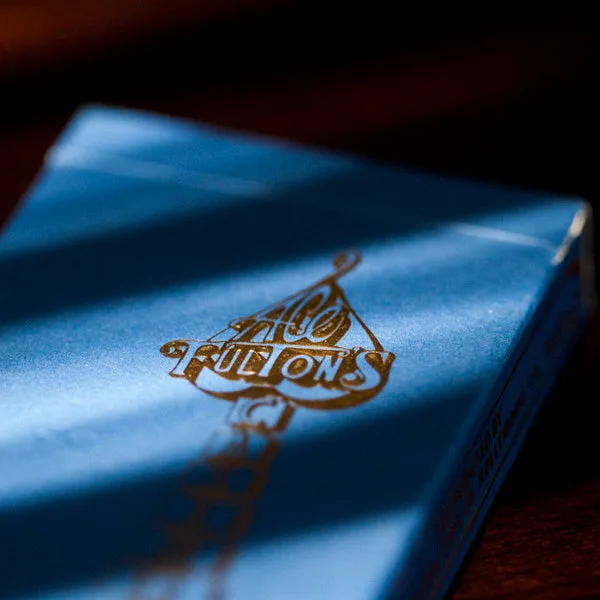
Choose a sleeve when the goal is preventing wear during normal storage and transport. It is the lower-risk default because it adds almost no thickness, fits standard tuck boxes, and does not change how the deck handles. The DS1 is a Fulton's exclusive, so the branding is etched on the side rather than printed on a generic cover.
Choose a case when the deck is a display object first and a playable deck second. A case gives you a stable footprint on a shelf and a clear front, which is what you want for a deck you are not shuffling. The honest trade-off is that a case protects better against impact but costs more per deck and takes up more room.
Fit guidance before you buy
Measure your tuck box before ordering any sleeve or case, because a sleeve that is too tight stresses the corners and one that is too loose lets the deck slide. The supplied catalog facts for the DS1 do not list dimensions or which box sizes it fits, so treat that as a decision you have to confirm with the deck in hand rather than assume.
For decks you plan to open and shuffle, a sleeve is the practical answer. For sealed or archived decks, a case keeps the box rigid and visible. If you are storing many decks, sleeves in bundles are the only option that scales without a dedicated display cabinet.
Trade-offs at a glance
- Protection level: A sleeve stops surface wear and dust but not crushing; a rigid case absorbs impact and holds the box shape. Sleeve for wear, case for impact.
- Cost per deck: The DS1 sleeve is USD 14.80 with a USD 20.00 comparison price and bundle savings; a display case is a single-deck purchase at a higher effective cost. Sleeves scale, cases do not.
- Display and access: A case presents the deck upright and visible but adds a lid and insert to open; a sleeve keeps the deck ready to slide out and play. Display case for show, sleeve for play.
Product facts that affect the choice
- FULTONS CARAT CASE DS1 DECK SLEEVE: Official Fulton's Playing Cards Storage Protectors made by Carat Case Creations, sold in bundles with a buy-more-save-more structure, with the Fulton's logo etched on the side. This is the low-cost, scalable option for protecting many decks at once, and the etched side makes it identifiable on a crowded shelf.
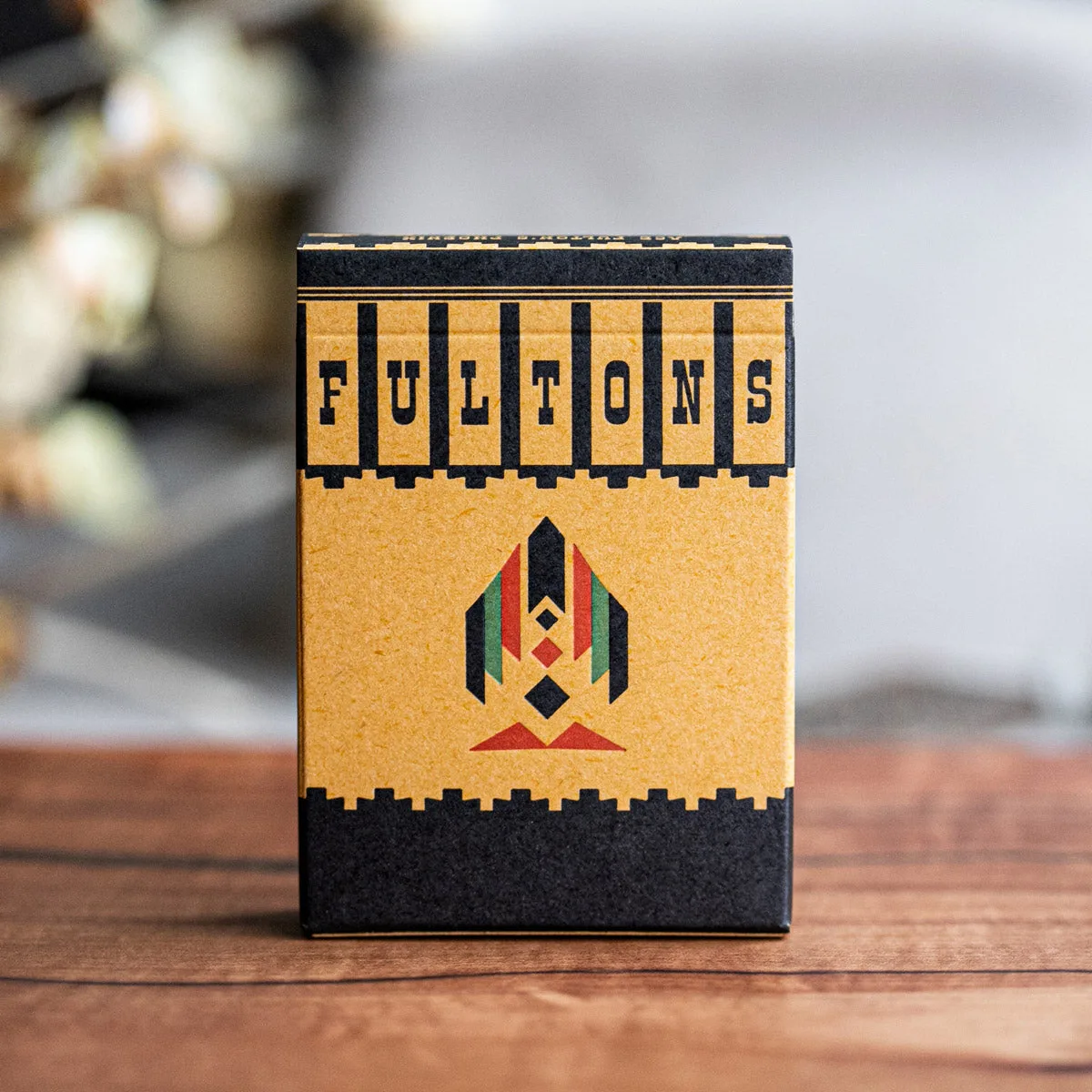
- ACE FULTON'S PHOENIX CASINO PLAYING CARDS TOBACCO TEA LIMITED EDITION: A limited edition alternate tuck of Phoenix printed on WHEAT paper that gives the appearance of tobacco-stained paper, with only 100 existing and the paper no longer made. A deck this scarce and unrepeatable is the case for a rigid display case rather than a sleeve, because the tuck itself is the collectible.
- ORIGINAL Ace Fulton's Casino Playing Cards - Cowboy Denim: One of the rarest decks produced, with fewer than six known decks remaining after an error destroyed the print run, and the first FULTONS deck with the script printed inside the tuck case. At this rarity level, protection is about preventing any new handling wear, so display and storage decisions should favor the most protective option you can justify.
Which one fits your deck
Best for
- Collectors storing or transporting multiple decks who want low-cost, low-bulk protection
- Players who rotate decks regularly and want to pull a deck out without unpacking a case
- Shelf storage where dust and scuffs are the main risk
Not for
- Decks that need crush resistance in a bag or during shipping, where a rigid case is safer
- Display-first collections that want a deck standing upright as a showpiece
- Irreplaceable decks where any added handling wear is unacceptable