Quick answer
Buy protection in the order you handle the cards: sleeves first for any deck you shuffle, a snug deck box or case second, and a card clip only if you carry a deck in a pocket or bag. For display-only decks, a rigid box plus a dust-free shelf beats sleeves. Fit is the deciding factor—measure the deck, not the brand.
Start with the job, not the product
Playing card storage accessories solve three different problems, and mixing them up wastes money. Sleeves protect card faces and edges during play. Boxes and cases protect the whole deck when it is not being used. Clips protect a deck in transit by keeping the tuck box closed and the cards compressed.
Decide which problem you actually have. If a deck never leaves a shelf, sleeves add bulk and cost without much benefit. If a deck gets shuffled weekly, sleeves do more for condition than any display case. If a deck rides in a backpack, the tuck box is the weak point, not the cards.
Fit guidance: measure before you buy
Most fit failures come from assuming a standard size. Playing cards vary in thickness, and a gilded or heavily foiled deck can be slightly thicker than a plain one. Measure the deck's width, height, and stack thickness with a ruler, then compare against the internal dimensions of the sleeve, box, or case.

Playing cards
For sleeves, the card should slide in with light resistance and no bowing. If the sleeve is too tight, the corners catch; too loose, and the cards shift and pick up edge wear. For deck boxes, leave a few millimeters of clearance so you are not forcing the stack. For cases that hold multiple decks, check the internal height against your tallest deck, not the average.
Sleeves, boxes, and clips: what each one actually does
Sleeves are the only accessory that protects cards during play. They take the shuffle wear, the table grit, and the finger oils. The trade-off is feel: sleeved decks handle differently, and thick sleeves make a 52-card deck noticeably taller. If you play often, that is usually worth it. If you collect, sleeves can hide the finish and foil you paid for.
Deck boxes and cases protect the deck between sessions. A rigid box resists crushing in a bag; a soft pouch mostly keeps dust off. Card clips are a narrow tool: they keep a tuck box shut and the deck compressed, which helps in a pocket or a tight case. A clip is not a substitute for a box, and a box is not a substitute for sleeves if the deck gets played.
Tuck box protection: the part most buyers ignore
The tuck box is often the most fragile part of a deck, especially on gilded or foil-stamped editions where the finish is part of the value. A box that gets crushed, scuffed, or damp loses resale appeal even if the cards inside are perfect.
If you keep decks in a tuck box, store them upright rather than stacked, and avoid squeezing them into tight shelves. A card clip can help a tuck box hold its shape in transit. For long-term storage, a rigid outer case adds a layer the tuck box cannot provide on its own.
Where the decks in this catalog fit
The right accessory depends on how the deck is made and how you plan to use it. A gilded collection box is a display object first, so a rigid outer case and a stable shelf matter more than sleeves. A standard playing deck that gets shuffled weekly is the opposite case: sleeves and a snug box do the real work.
If you are buying a bundle or a sale pair, decide which deck is the player and which is the keeper before you buy accessories. That one decision tells you where to spend.
Decision rules for buying card protection
- If the deck gets shuffled weekly: Buy sleeves first, then a snug deck box. Sleeves absorb shuffle wear; the box keeps the sleeved stack from spreading. Sleeves and box together, not one or the other.
- If the deck is display-only: Skip sleeves and put the money into a rigid case and a stable, dust-free shelf. Sleeves add bulk and hide foil and gilding. Protect the box, not just the cards.
- If the deck travels in a pocket or bag: Use a card clip to keep the tuck box closed and the deck compressed, then put the clipped deck inside a rigid case. A clip alone will not survive a crowded bag.
- If you are unsure about fit: Measure the deck's width, height, and stack thickness before ordering. Compare those numbers to the internal dimensions, not the external ones. When in doubt, size up on the case and down on the sleeve.
Catalog examples and what they imply
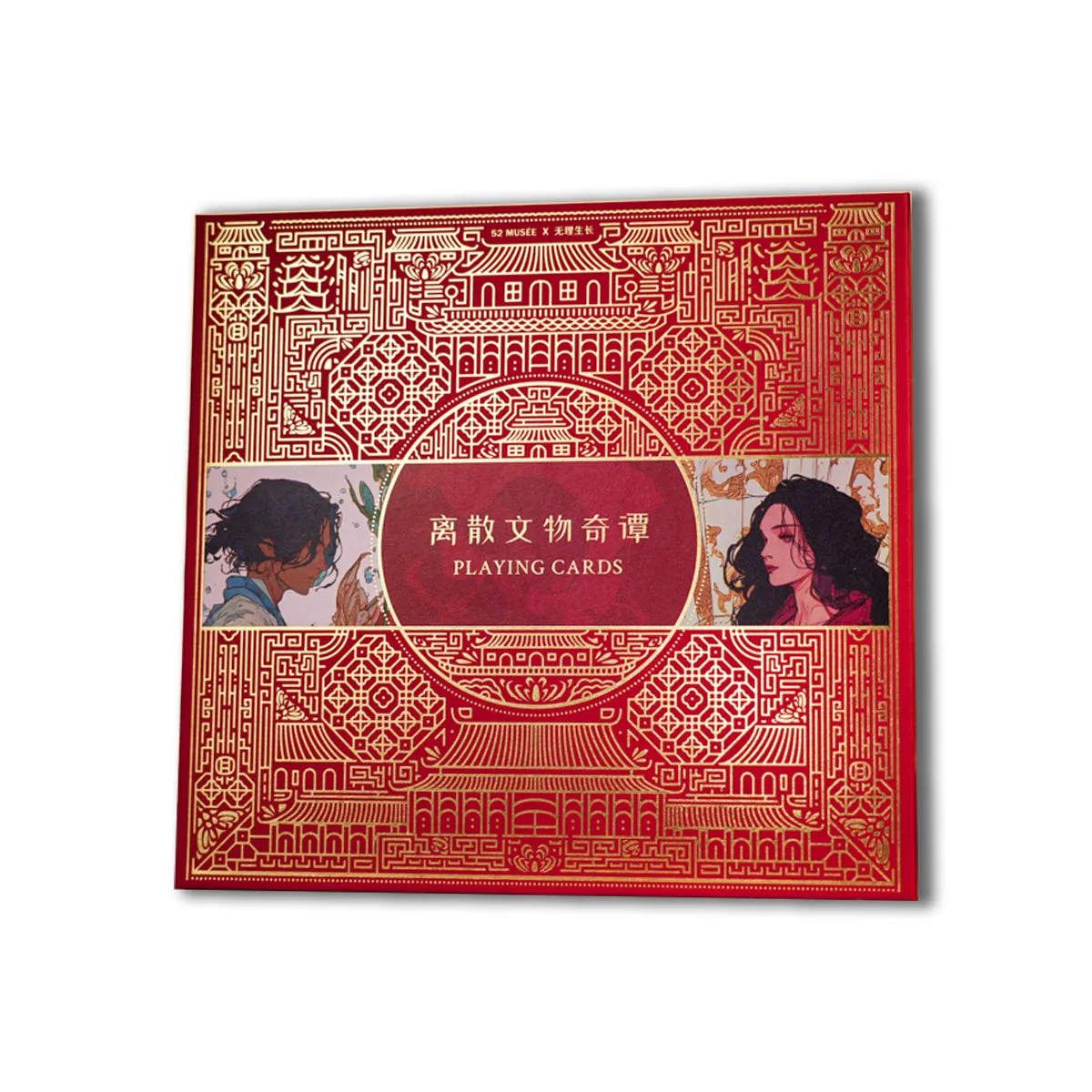
- Ancient Relics Gilded Collection Box: The Ancient Relics Gilded Collection Box uses delicate, symmetrical patterns across the box exterior, tracing ancient architecture and traditional motifs. The decorated outer box is part of the presentation, so protect the box itself with a rigid case or stable shelf rather than sleeves alone.
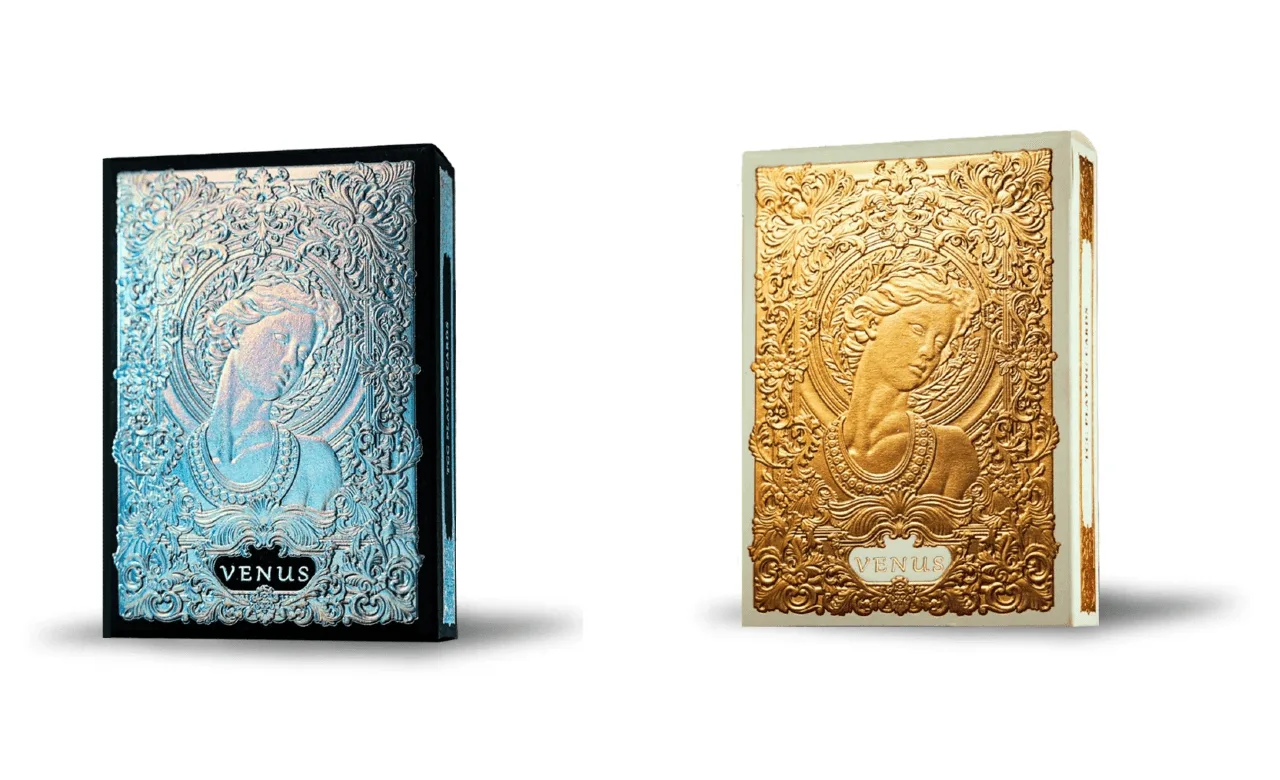
- 2 Decks for $19 Sale: The 2 Decks for $19 Sale bundles Venus Onyx Playing Cards with a choice of one additional deck from options including Venus Platinum, Light Factor α, Morandi Blue 5th, Flower Moon V1, Parts NO.52, or Tokidoki Playing Cards. Two decks at once is a natural split: sleeve and box the deck you play, and store the second deck as a keeper with a rigid case.
- Mucha Playing Cards by 52 MUSÉE: Mucha Playing Cards by 52 MUSÉE uses holographic craftsmanship, with the women in the foreground kept as the focus against a hazy, dazzling background. Holographic finishes show fingerprints and scuffs easily, so handle by the edges and consider a case that keeps the deck off dusty surfaces.
- Four Beauties Diao Chan Playing Cards: Four Beauties Diao Chan Playing Cards includes gold foil numbering and gold lines tracing snowflakes, berries, and pine branches. Foil details on the box are easy to rub off, so a clip or rigid case that prevents box flex helps preserve the finish.
Who should buy which protection
Best for
- Players who shuffle the same deck several times a week and want it to last
- Collectors storing gilded or foil-heavy decks in a tuck box long term
- Anyone carrying a deck in a bag and tired of crushed tuck boxes
Not for
- Buyers who only want a display piece and never handle the cards
- Collectors who prefer to keep decks sealed and untouched
- Anyone unwilling to measure a deck before ordering accessories