Quick answer
Most major airlines allow a carry-on around 22 x 14 x 9 inches, but many publish limits closer to 21 x 14 x 9 or 21.6 x 15.7 x 9 inches, and some budget carriers are stricter. Measure your bag's exterior, including wheels and handles, against your specific airline's published limit before you fly, and check whether a personal item is included separately.
Carry-on rules vary more than most travelers expect, and the difference usually comes down to an inch or two in one direction. A bag that slides into an overhead bin on one airline can be flagged at the gate on another, especially on regional jets and international routes.
This guide answers the questions that come up most often: how to read airline carry-on dimensions, how a personal item differs, how to measure a bag you already own, and where CALPAK carry-on options fit into the picture.
How do airlines measure carry-on luggage?
Airlines list carry-on limits as length x width x height, but the order is not standardized. Some list height first, some list length first, and the numbers can look different even when the total size is similar. Always match the numbers to the labels the airline provides, not to the order you assume.
The measurement that matters is your bag's exterior, fully packed, with wheels, handles, and any attached charm or tag included. A soft-sided bag can compress slightly under pressure, while a hardside shell keeps its shape. Neither is automatically safer, but a hardside bag makes it easier to know exactly what you are bringing to the gate.
- Measure with the bag packed, not empty.
- Include wheels, handle, and any clips or charms.
- Compare against the specific airline's chart, not a general rule.
What size carry-on is allowed on most major airlines?
For many domestic carriers, the common ceiling sits around 22 x 14 x 9 inches, but several publish limits of 21 x 14 x 9 or 21.6 x 15.7 x 9 inches. That means a bag built to the largest common size may still be too tall or too wide for a stricter airline. If you fly several carriers, aim for the smallest limit among them.
Regional jets and smaller aircraft often have tighter overhead bins, and gate agents may require you to check a bag that fits the airline's published size but not that specific plane. If your itinerary includes a regional leg, a slightly smaller carry-on or a soft-sided bag gives you more flexibility.
- Pick a bag that meets the smallest limit among the airlines you fly most.
- Check the aircraft type, not just the airline, for regional legs.
- Keep a personal item within reach in case your carry-on is gate-checked.
Carry-on vs personal item size: what is the difference?
A carry-on goes in the overhead bin and is subject to the airline's larger size limit. A personal item goes under the seat in front of you and has a smaller limit, often around 18 x 14 x 8 inches, though this varies by airline. Many fares include one personal item but charge for a carry-on, so the distinction affects both space and cost.
A personal item is a good place for essentials you want during the flight: medication, a laptop, chargers, and a change of clothes if you are checking a bag. A tote or backpack works well here because it stays accessible and can double as your day bag at the destination.
- Personal item limits are usually smaller and enforced at the gate.
- Check whether your fare includes a carry-on or only a personal item.
- Pack medication and valuables in the personal item, not the overhead bag.
What is the international carry-on size?
International carriers often use smaller limits than domestic ones, and some use weight limits instead of, or in addition to, size limits. A bag that works for a domestic weekend trip may exceed an international carrier's dimensions or weight allowance. Check the rules for each carrier on your itinerary, including any connecting flights.
If you travel internationally often, a slightly smaller carry-on is the safer choice because it clears more airlines without a second thought. Soft-sided bags also help when a gate agent asks you to compress a bag into a sizing frame.
- International limits are often smaller than domestic ones.
- Some airlines enforce weight limits at check-in or the gate.
- Verify rules for every carrier on a multi-airline itinerary.
How do I measure a carry-on I already own?
Pack the bag the way you would for a real trip, then measure the tallest point, the widest point, and the deepest point with a tape measure. Include wheels, the extended handle, and anything hanging off the exterior. Write the three numbers down and compare them to your airline's chart in the same order the airline lists them.
If your bag is close to the limit, test it at home against a doorway or a marked area that matches the airline's dimensions. A bag that is one inch over may still fit in an overhead bin, but it can fail a gate sizing frame, and gate-checking adds time and risk to your trip.
- Measure packed, not empty.
- Include wheels, handles, and attachments.
- Leave a small margin if your bag is near the limit.
Do CALPAK carry-ons fit airline size limits?
CALPAK carry-on options are built for carry-on travel, business trips, and weekend trips, with features like quick-access front pockets, spinner wheels, and expandable space. Expandable bags are useful when plans shift, but remember that expanding a bag increases its depth, which can push it past a strict airline limit.
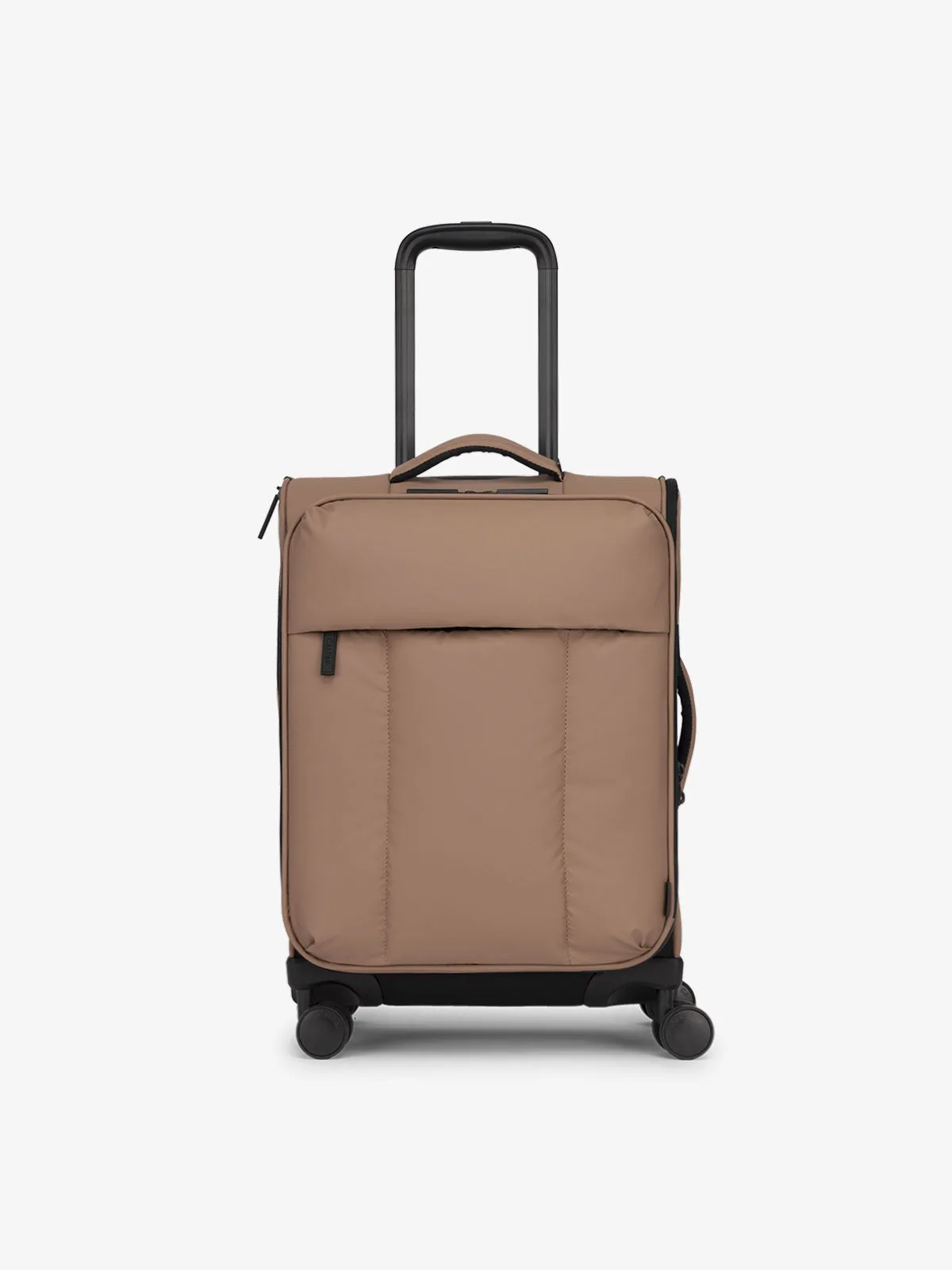
The Luka Soft-Sided Carry-On Luggage has a soft, structured exterior with a dedicated laptop compartment and quick-access front pockets, which suits business trips and weekend travel. The Hue Carry-On Luggage uses a durable hardside shell with a secure lock and expandable space, which suits travelers who want a fixed shape and a bit of flexibility when packing.
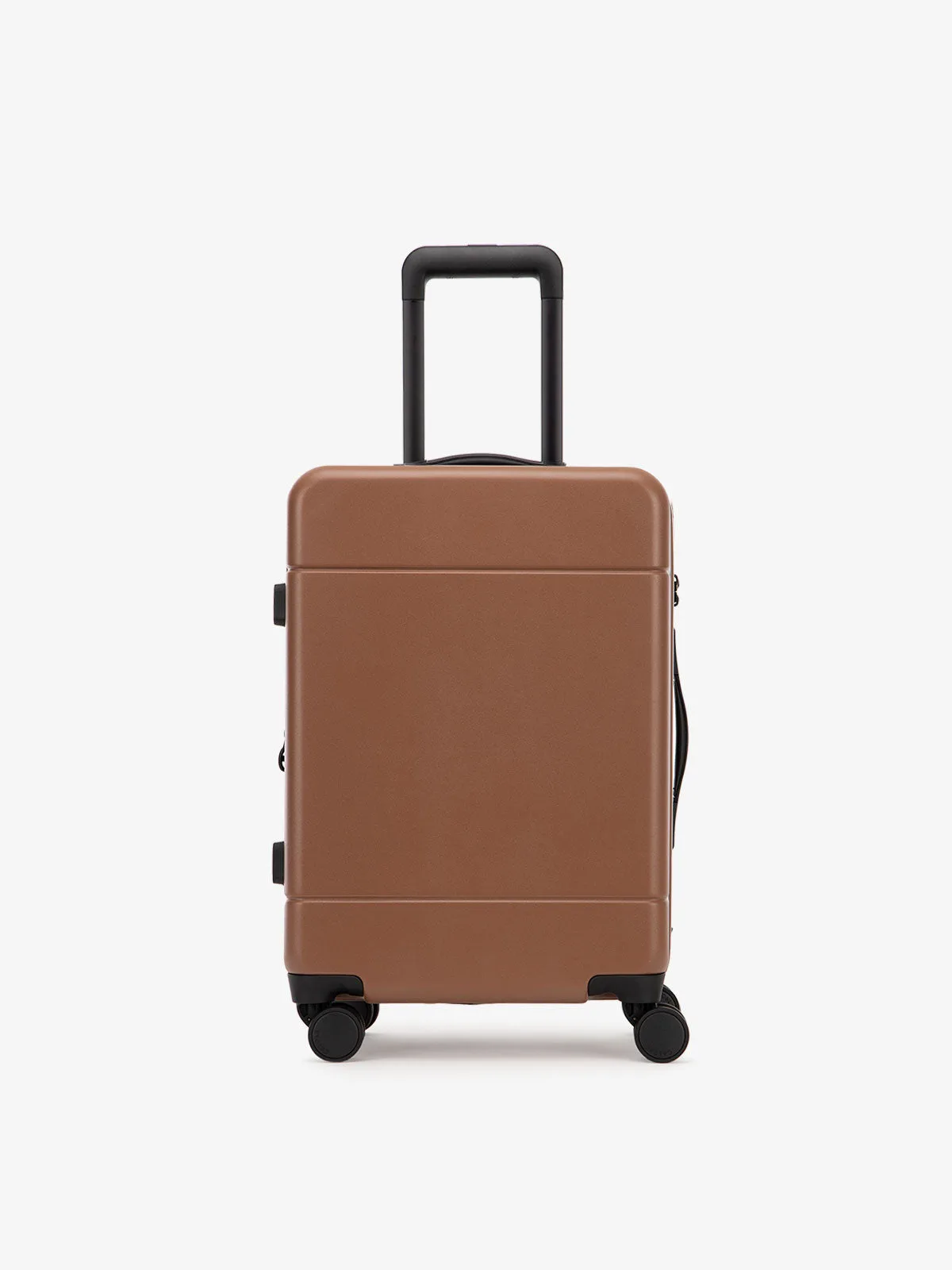
Hue Carry-On Luggage
- Soft-sided bags can compress slightly if a gate agent asks.
- Hardside bags keep their shape and are easier to measure.
- Expand a bag only after confirming your airline's depth limit.
Carry-on sizing checklist
Check your airline's exact limit
Look up the published dimensions for each carrier on your itinerary, including regional and international legs. Use the smallest limit among your airlines as your target.
Measure your bag packed
Include wheels, handles, and any attachments, and compare the numbers in the same order the airline lists them. If you are within an inch of the limit, consider a smaller bag.
Separate carry-on from personal item
Confirm what your fare includes and keep essentials in the personal item in case the carry-on is gate-checked. A tote or backpack works well as a personal item and a day bag.
Plan for expansion
Expanding a bag increases its depth, which can push it over a strict limit on the return trip. Expand only after confirming the airline's depth allowance.
CALPAK carry-on facts worth knowing
- Luka Soft-Sided Carry-On Luggage: Soft, structured exterior with quick-access front pockets, a dedicated laptop compartment, and smooth-glide wheels. The front pockets keep essentials reachable at the gate, and the laptop compartment means you can carry a computer without a separate bag.
- Hue Carry-On Luggage: Hardside shell with expandable space, smooth spinner wheels, and a secure lock. The fixed shell makes the bag easier to measure against airline limits, and the expansion helps on trips where you bring home more than you packed.
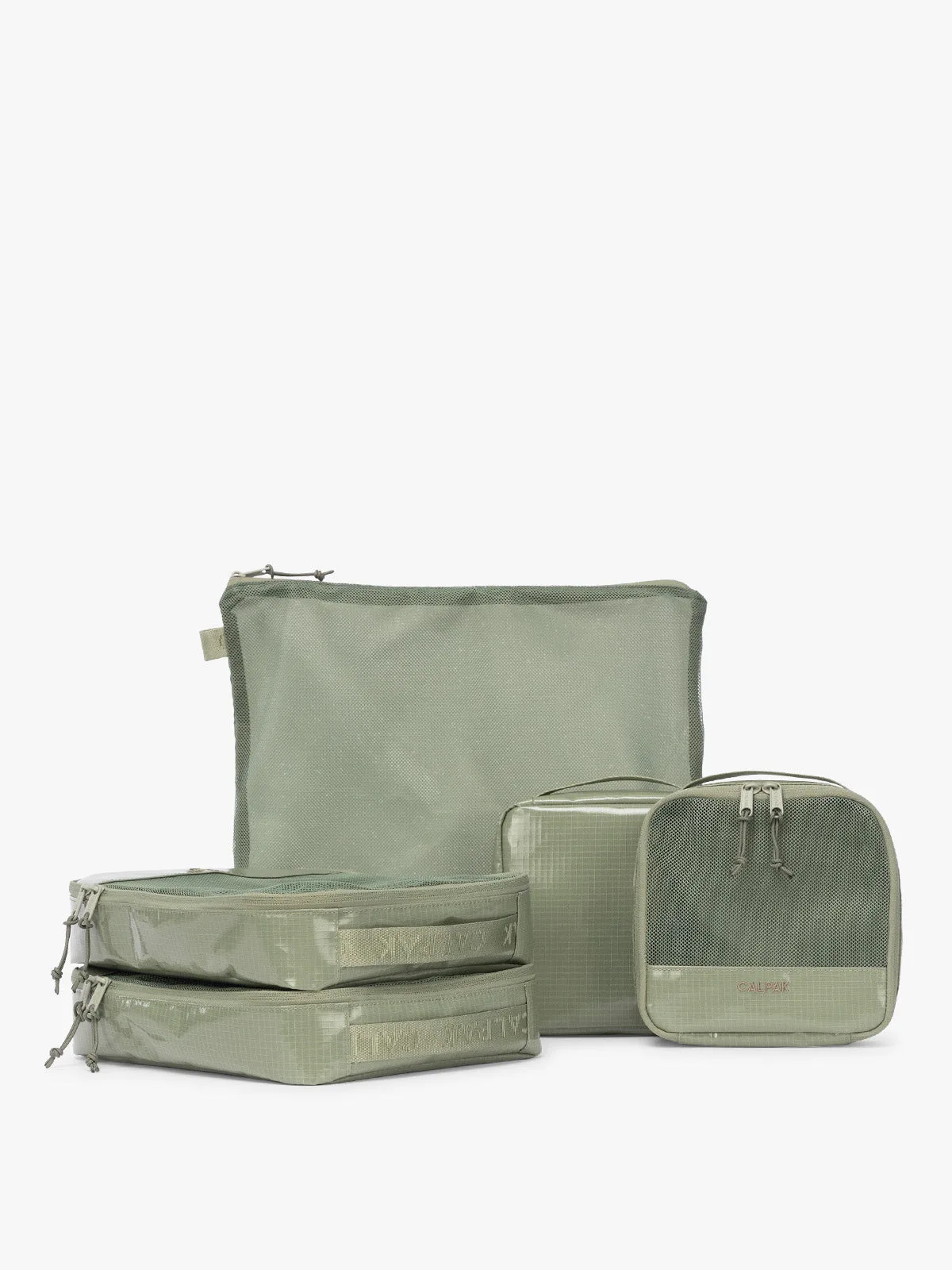
- Terra 5-Piece Packing Cube Set: Five-piece set with a breathable mesh top, water-resistant materials, and a laundry pouch. Cube packing keeps a carry-on organized and makes it easier to repack quickly if a gate agent asks you to consolidate.
Carry-on sizing comes down to your specific airlines, not a universal number. Measure your packed bag, match it to the smallest limit on your itinerary, and choose a soft-sided or hardside carry-on based on how much flexibility you want at the gate.