Quick Answer
Choose a turntable if you want the widest new-release selection, easy upgrades, and a living-room listening ritual. Choose a cassette player if you value compact size, portability, and the tactile charm of tapes—accepting narrower sound and more maintenance. If space or budget is tight, a portable cassette player is the simpler start; if you already own vinyl, a turntable rewards the setup.
Sound Quality: What Each Format Actually Gives You
Cassette tape sound quality is warm and slightly compressed, with hiss that varies by tape type and deck condition. Vinyl can sound more open and dynamic, but only if the turntable, cartridge, and speakers are set up well. Neither format is automatically 'better'—the recording and the hardware matter more than the format name.
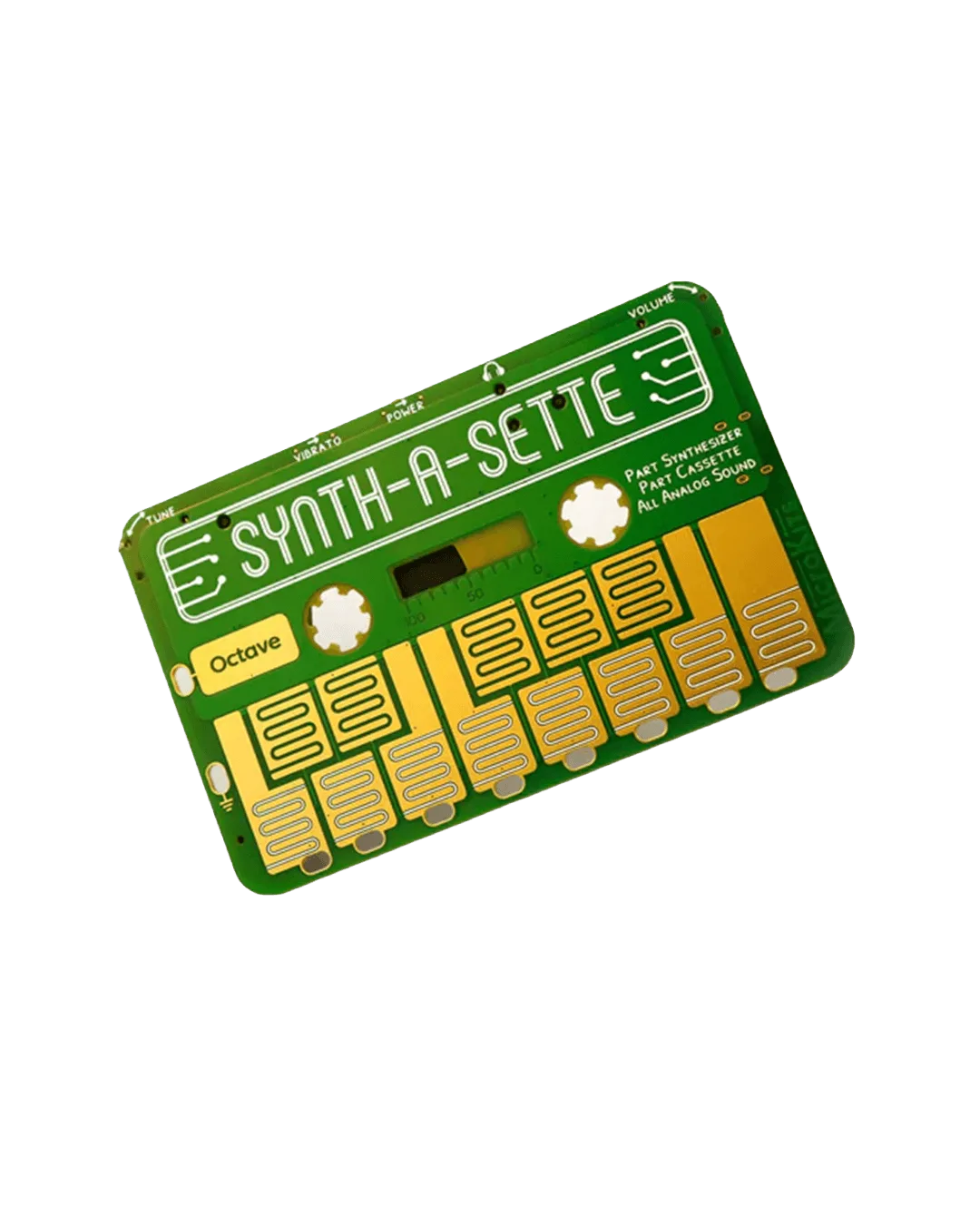
For casual listening, a portable cassette player through its built-in speaker is fine. For critical listening, a turntable with a decent cartridge and a clean record will usually outperform a budget cassette deck. If you want to experiment with analog sound on a tiny scale, the Synth-a-Sette Pocket Synth is a cassette-shaped DIY kit that generates drones and rhythms—it is an instrument, not a tape player, so treat it as a separate creative tool.
Space, Portability, and Setup
Turntables need a level surface, space for the platter and dust cover, and ideally a shelf or stand that isolates vibration. You also need an amplifier or powered speakers with a phono input, or a built-in preamp. That is why turntable setup for small spaces takes planning: measure your shelf depth and leave room for the tonearm to move.
Cassette players are smaller and often battery-powered. A portable cassette player can live in a drawer, a bag, or on a nightstand, and many include a headphone jack so you can listen without speakers. The trade-off is that tiny players often have modest mechanisms, so tape handling and speed stability are less refined than a full-size deck.
Cost and Ongoing Maintenance
Entry costs overlap, but the long-term picture differs. Turntables reward upgrades: a better cartridge or stylus can transform the sound, and replacement parts are widely available. Cassette decks are harder to service; belts, pinch rollers, and heads wear out, and fewer technicians work on them. Tapes themselves can stretch, snap, or develop dropouts, especially if stored in heat.
If you buy used, test both formats before committing. For cassettes, check that play, fast-forward, and rewind all work and that the speed sounds correct. For turntables, check the platter spins smoothly, the tonearm moves freely, and the stylus is not bent. Budget for a replacement stylus or a new belt soon after purchase.
Collecting Culture: Vinyl vs. Cassette
Vinyl vs cassette collecting comes down to availability and ritual. New vinyl releases are common, and record stores, thrift shops, and online sellers make browsing easy. Cassettes have a smaller new-release pipeline, but they are cheap to ship, fun to trade, and often carry personal mixtape history. Neither collection is better; they simply attract different habits.
If you want a display piece that doubles as a puzzle, the Visible Drawer Puzzle Box is a walnut-and-wenge object designed by Hiroshi Iwahara with two difficulty levels—the Ternary Box opens in eighteen moves and the Quinary Box in fifty. It is not audio gear, but it fits the same analog, tactile collecting mindset and makes a distinctive shelf companion for a listening corner.
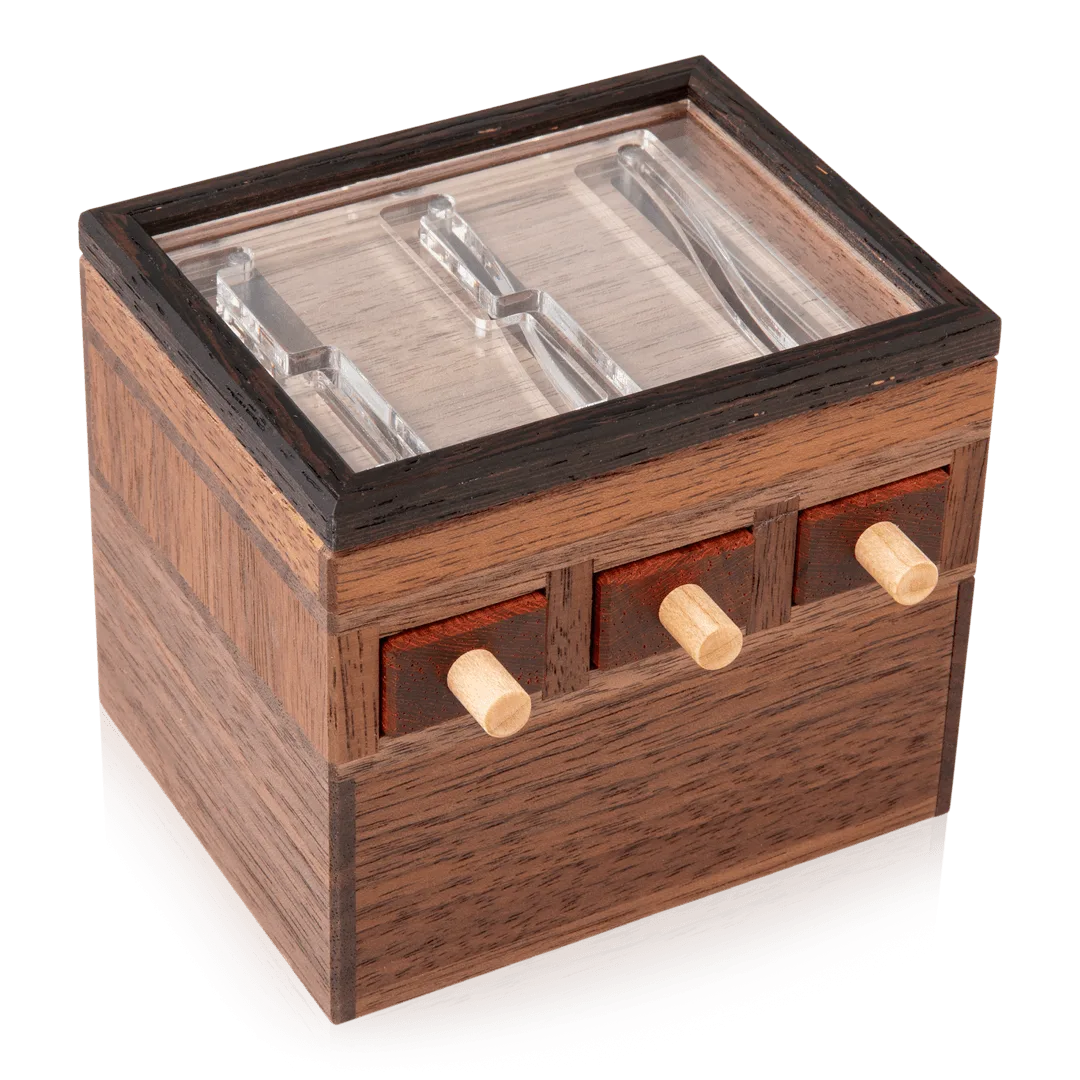
Visible Drawer Puzzle Box
Trade-Offs at a Glance
- Turntable: sound potential: A well-set-up turntable can sound more open and dynamic than cassette, but it needs a level surface, a phono stage or compatible speakers, and a clean stylus. Best if you will invest in setup and records.
- Cassette player: simplicity and size: Portable cassette players are compact, often battery-powered, and easy to store, but their small mechanisms may have less stable speed and more hiss. Best if space and portability matter most.
- Collecting: availability vs. charm: Vinyl has a wider new-release market and easier upgrades; cassettes are cheaper to ship and carry mixtape nostalgia but have fewer new releases. Pick the format whose browsing and buying habits you actually enjoy.
Analog-Friendly Picks from Our Catalog
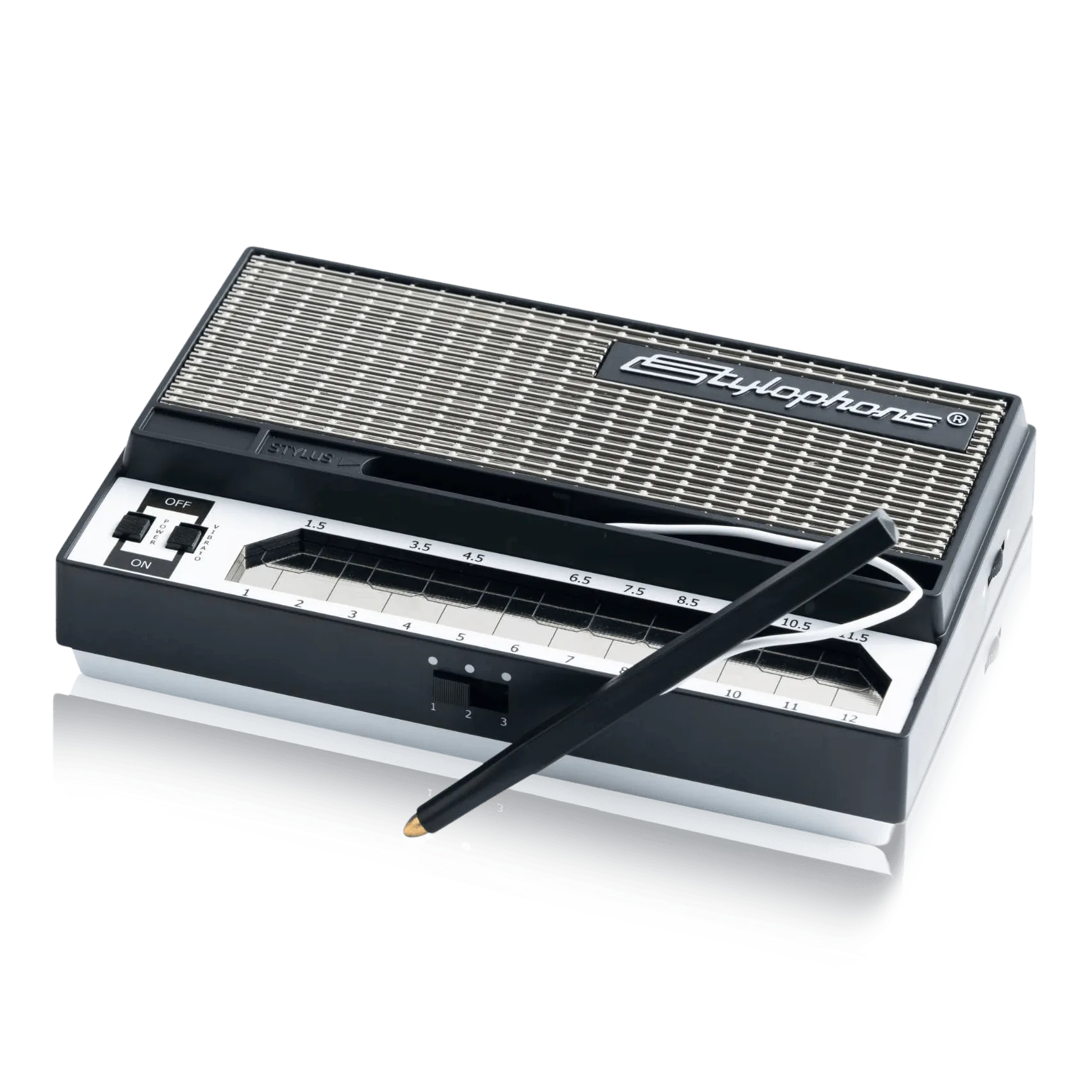
- S-1 Stylophone Pocket Synthesizer: The Stylophone S-1 is a compact analog synthesizer played with a connected stylus on a touch-sensitive metal surface, with a retro sound first released in 1968. If you want to make analog sound rather than play tapes, this is a small, immediate option that needs no turntable setup or tape collection.
- Synth-a-Sette Pocket Synth: The Synth-a-Sette Pocket Synth is a DIY kit housed in a cassette tape form that assembles into a functioning analog synthesizer capable of drones, pulsing rhythms, and unpredictable tones. It appeals to cassette culture visually while offering hands-on sound design—useful if you like the tape aesthetic but want a creative project instead of a playback device.
- Earth Infinity Puzzle: The Earth Infinity Puzzle is a jigsaw without edges, designed by Nervous System using computational design, so it unfolds from any point rather than starting with corners and borders. It suits slow, intuitive analog-style downtime and can sit on the same table as your listening setup without competing for outlet space.
Which Should You Choose?
Choose a turntable if you...
- want the largest selection of new and used releases
- have a stable shelf or stand and room for speakers
- enjoy upgrading cartridges and cleaning records as part of the ritual
Choose a cassette player if you...
- need something pocket-sized or battery-powered
- already own tapes or want a low-cost way to try analog
- prefer a self-contained player with a headphone jack over a component setup