Quick answer
Choose a pre-seasoned cast iron skillet for high-heat searing, oven finishing, and long-term durability. Pick a ceramic nonstick frying pan for quick, low-fat cooking with easy cleanup.
Heat performance and cooking style
Cast iron excels at storing and radiating heat evenly, making it ideal for tasks like searing steaks or pan-roasting potatoes. The Bloomhouse Cast Iron Skillet's heavy build holds temperature steady, so you get a consistent crust on meat or even browning on vegetables.
A ceramic nonstick pan like the Bloomhouse Ceramic Nonstick Sauté Pan heats up faster and more evenly across its aluminum base, but it loses heat quickly when food is added. That's fine for delicate eggs or fish where precise temperature control matters less than a slick release.
Maintenance and care
Cast iron requires a little more effort: hand-wash with mild soap, dry immediately, and oil the surface periodically to maintain its nonstick properties. The Bloomhouse skillet comes pre-seasoned, so it's ready to use, but you still need to avoid acidic foods for long periods and never let it soak.
Ceramic nonstick pans are simpler day-to-day. Hand-wash with a soft sponge and avoid metal utensils. The Bloomhouse sauté pan's PFA-free coating resists scratches better than traditional nonstick, but over years of use the coating may wear off.
Versatility and lifespan
Cast iron can go from stovetop to oven up to high temperatures, making it a true one-pan solution for recipes that start on the burner and finish roasting. With proper care, it lasts decades.
Ceramic nonstick pans are primarily stovetop tools—most have oven-safe lids but limited maximum temperatures. The payoff is extreme convenience: scrambled eggs slide out without butter, and cleanup takes seconds.
Cast Iron vs Nonstick: Key Trade-Offs
- Heat: Cast Iron wins for searing: Cast iron holds high heat and gives a deep crust on steaks and chops. Nonstick pans lose heat faster and are better for delicate foods. If you cook steak or pan-roast vegetables often, cast iron is the better choice.
- Ease of use: Nonstick wins daily: Ceramic nonstick requires less fat for eggs or fish and cleans up effortlessly. Cast iron needs careful drying and occasional oiling. For quick weekday breakfasts or low-fat cooking, the nonstick pan is more convenient.
- Lifespan: Cast iron lasts decades: A cast iron skillet can survive generations if seasoned properly. Nonstick coatings eventually degrade even with good care, typically after 3-5 years. If you want a single pan that lasts a lifetime, choose cast iron.
- Versatility: Cast iron goes oven-to-table: Cast iron works on any stovetop and in the oven up to very high heat. Nonstick pans have lower oven limits and are best on the stove alone. For recipes that finish in the oven or for camping trips, cast iron is more adaptable.
At a glance: the two pans we are comparing
-
Bloomhouse Natural Bronze Finish Cast Iron Skillet with Long Handle, Helper Handle & Olive Wood Trivet – Olive Oil Treated Fry Pan, Oven & Stovetop Safe: Pre-seasoned, heavy-duty cast iron with long handle, helper handle, and olive wood trivet. The helper handle makes it easier to lift when full, and the trivet protects your table for direct serving.
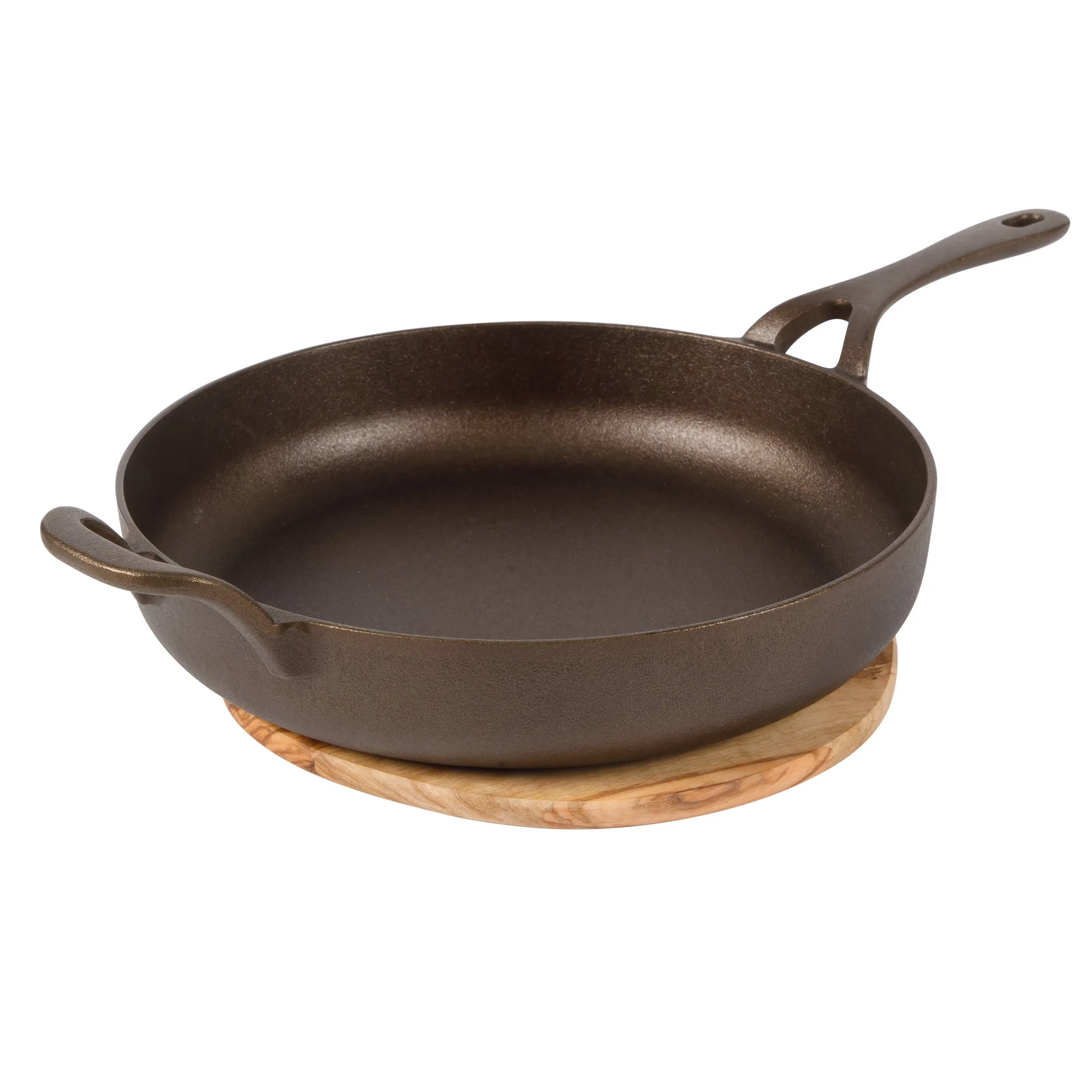
Bloomhouse Natural Bronze Finish Cast Iron Skillet with Long Handle, Helper Handle & Olive Wood Trivet – Olive Oil Treated Fry Pan, Oven & Stovetop Safe
-
Bloomhouse 6 QT Heavy Duty Aluminum Premium PFA Free Ceramic Nonstick Saute/Deep Frying Pan Skillet with Lid - Linen White with Gold Handle: 6-quart aluminum sauté pan with PFA-free ceramic nonstick coating and tempered glass lid. The lid traps moisture for braising, and the ceramic coating means fewer oils needed for healthier meals.
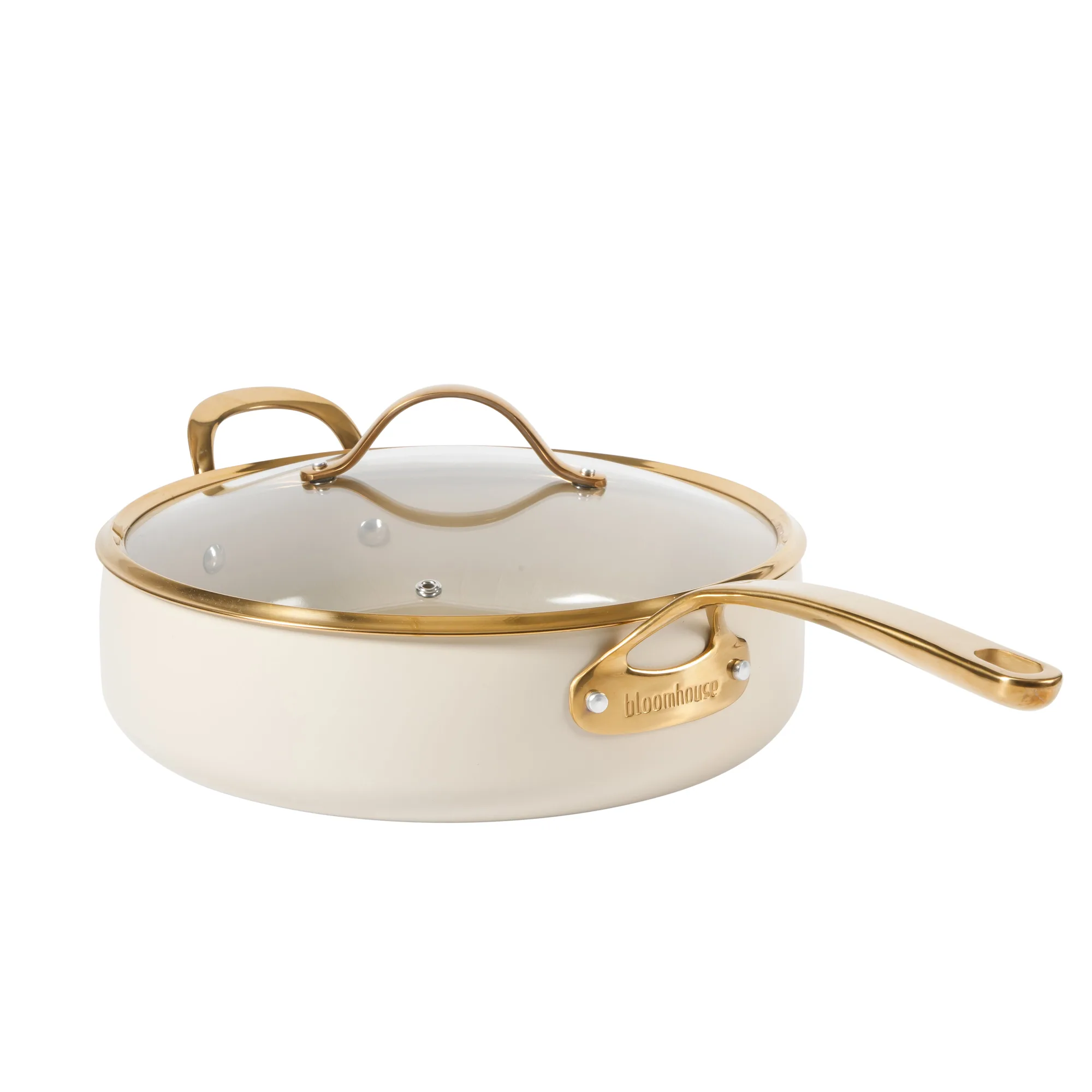
Bloomhouse 6 QT Heavy Duty Aluminum Premium PFA Free Ceramic Nonstick Saute/Deep Frying Pan Skillet with Lid - Linen White with Gold Handle
Which pan fits your kitchen?
Choose cast iron if you:
- love making seared steak or crispy-skinned fish
- need a pan that can go from stovetop to oven for roasts and baked recipes
- prefer a single, durable pan that lasts many years with simple maintenance
Choose ceramic nonstick if you:
- cook mostly eggs, thin fish fillets, or sauces that tend to stick
- want easy cleanup without hand-drying and occasional oiling
- are new to cast iron care and prefer a lighter, quicker pan