Quick answer
For tight spaces, choose a hooded corner litter box if you want to contain odors and spray, or an open-top box with a shield if your cat prefers quick exits and you can clean frequently.
Space and placement considerations
In a small apartment, every inch counts. A corner litter box fits neatly into a corner, freeing up floor space. An open-top box with a shield can be placed against a wall or in a closet, but its footprint is more rectangular.
The hooded box also offers a handle and secure buckles for easy carrying, which is handy if you need to move it for cleaning. The open-top box has a recessed bottom and molded feet, allowing it to sit flush in tight spots.
Odor and mess management
Hooded boxes with a flap entry door keep litter and spray inside, which is a major plus for small spaces where smells can linger. The open-top box uses high side walls to prevent scattering, but without a lid, odors are more noticeable.
If you can scoop daily and use a good deodorizer, an open-top box works well. If you prefer a set-and-forget approach, a hooded box helps trap smells.
Cat preferences and accessibility
Some cats dislike enclosed spaces and may refuse a hooded box. The open-top design offers quick entry and exit, which can reduce accidents. The hooded box provides privacy, which some cats prefer.
Observe your cat's behavior: if they avoid the box or seem hesitant, an open-top might be better. If they like to hide while doing business, a hooded box could be ideal.
Decision rules for choosing a litter box in a small space
- Measure your available floor space: If you have a corner that is at least 21 inches wide, a corner hooded box fits perfectly. If you have a narrow wall or closet, an open-top box (19 x 15 inches) may work better.
- Assess your cat's comfort with enclosures: If your cat has never used a covered box, start with an open-top. If they seem nervous or hide often, a hooded box can provide security.
- Decide on odor and cleaning routine: If you can scoop daily, an open-top box is fine. If you prefer less frequent cleaning, a hooded box helps contain odors longer. Consider using an odor-absorbing litter or deodorizer regardless of box type.
Product facts
-
Open-Top Cat Litter Box with Shield, without scoop, Navy: Open-top design with high side and back walls to keep litter from scattering. This helps contain mess without enclosing the cat, making it a good choice for cats that dislike covered boxes.
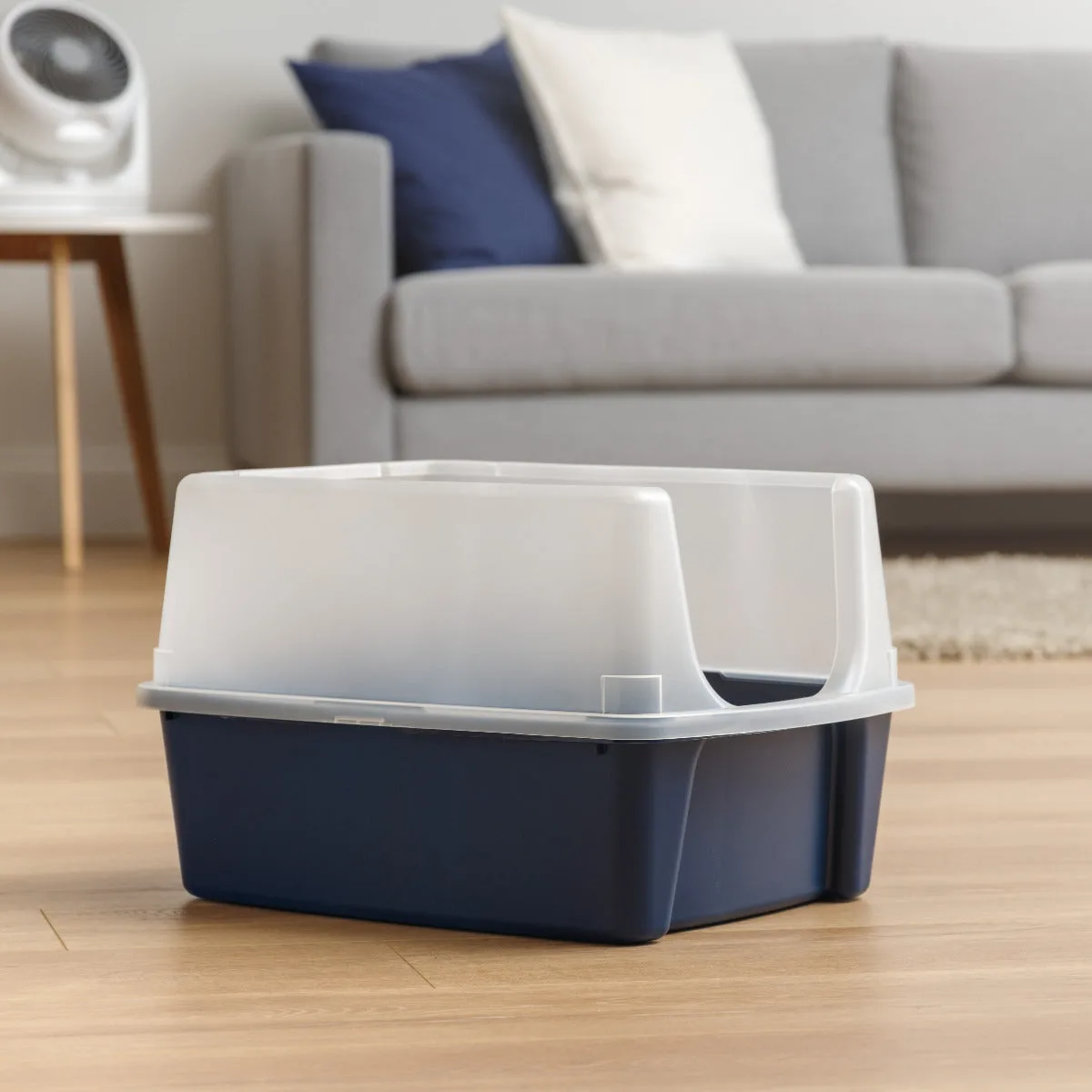
Open-Top Cat Litter Box with Shield, without scoop, Navy
-
Large Hooded Corner Litter Box with Scoop, Navy: Corner shape maximizes space, and includes a lid with flap entry door to contain litter and spray. The corner fit saves floor space in small apartments, while the lid helps reduce odors and mess.
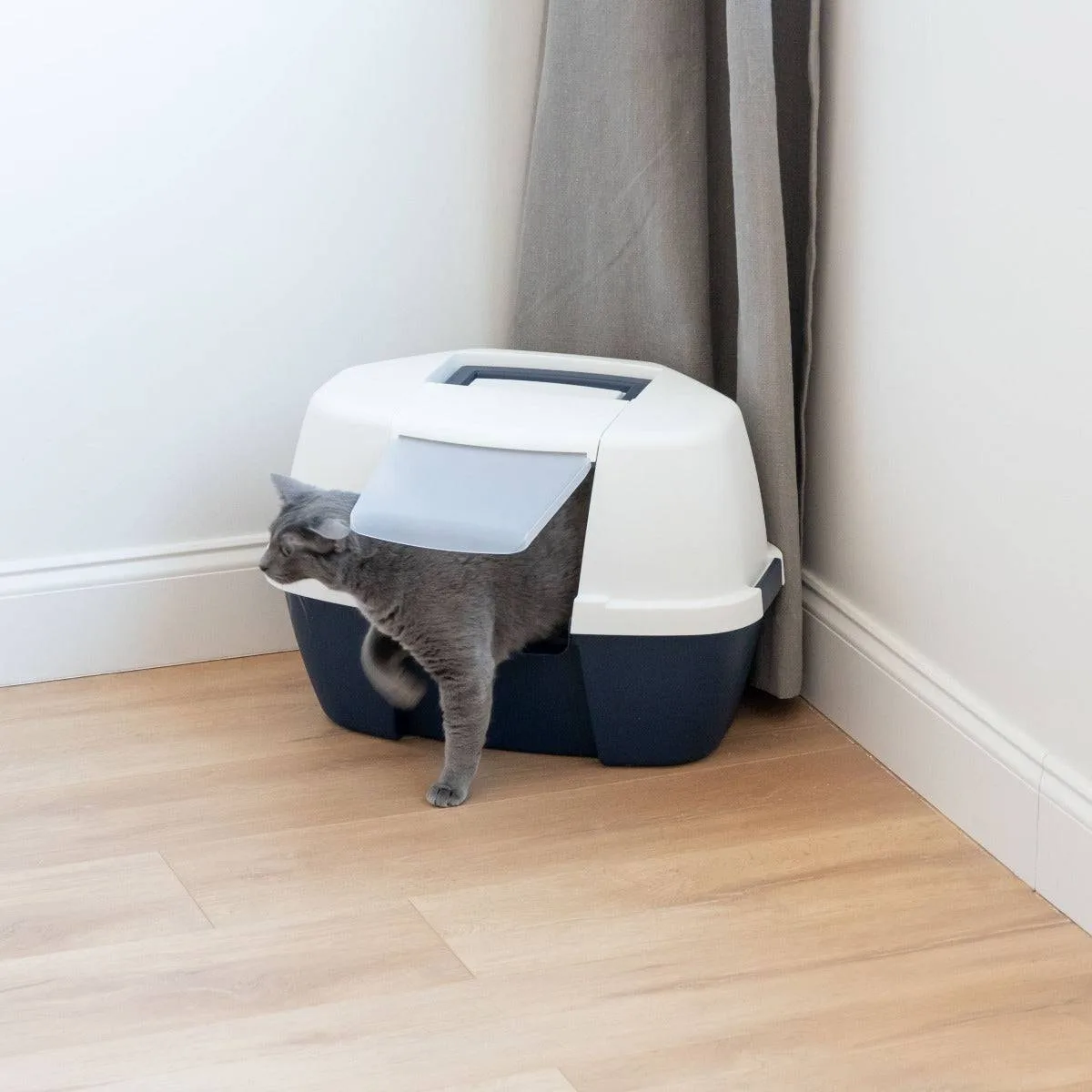
Large Hooded Corner Litter Box with Scoop, Navy
Which one fits your situation?
Best for
- Small apartments where floor space is at a premium and odor control is a priority
- Cats that appreciate privacy and are comfortable with enclosed spaces
Not for
- Cats that are anxious or refuse to use covered boxes
- Households where you cannot scoop daily and need maximum odor containment