Quick answer
Set up a litter box that is about one and a half times your cat's body length, fill it with 5-7 cm of unscented clumping litter, and place it somewhere quiet with two clear exits. Scoop at least once a day, top up the litter level, and wash the box with mild soap when it smells even after scooping. Most litter box problems are solved by changing size, depth or placement, not by buying a different cat.
Choose a box size your cat can turn around in
Measure your cat from nose to the base of the tail, then add roughly half again. A cat measuring 45 cm needs a box around 65-70 cm long. Kittens and senior cats do better with a low entry they can step over without jumping, while large breeds need extra width as well as length.
If you are unsure, go bigger rather than smaller. An oversized box with a shallow litter layer is easier for a cat to use than a cramped one, and it reduces the chance of urine spraying over the rim.
Set litter depth and type for your cat
Pour 5-7 cm of unscented clumping litter for most adult cats. Kittens, seniors and cats recovering from surgery often prefer 3-4 cm because it is easier to dig in, while cats that dig enthusiastically may need 8 cm or more.
Avoid switching litter type and depth at the same time. If you need to change litter, mix the new litter into the old one over about a week so your cat does not reject the box.
Place the box where your cat feels safe
The best litter box placement is a quiet, low-traffic spot with at least two escape routes. Avoid putting the box next to a washing machine, boiler or noisy appliance, and do not tuck it into a dead-end corner where your cat can be cornered.
Keep food and water bowls at least a metre away. If you have multiple cats, place boxes in separate rooms rather than lining them up side by side, because cats often treat a row of boxes as one territory.
Decide between covered and open boxes
Open boxes give better airflow and let you see changes in urine or stool quickly. Covered boxes can contain odour and scatter for some owners, but many cats avoid them because they trap smells and offer only one exit.
If you already own a covered box and your cat is avoiding it, remove the lid for two weeks. If use improves, keep it open or switch to an open design.
Control odour with routine, not air fresheners
Scoop solids and urine clumps at least once a day, and top up the litter to the correct depth. Once a week, empty the box, wash it with mild unscented soap and warm water, and dry it fully before refilling.
Skip strong disinfectants and citrus-scented cleaners, which can put cats off the box. If odour persists after a full wash, replace the litter completely and check whether the box itself has absorbed smell.
Add a mat and scoop that make daily care easier
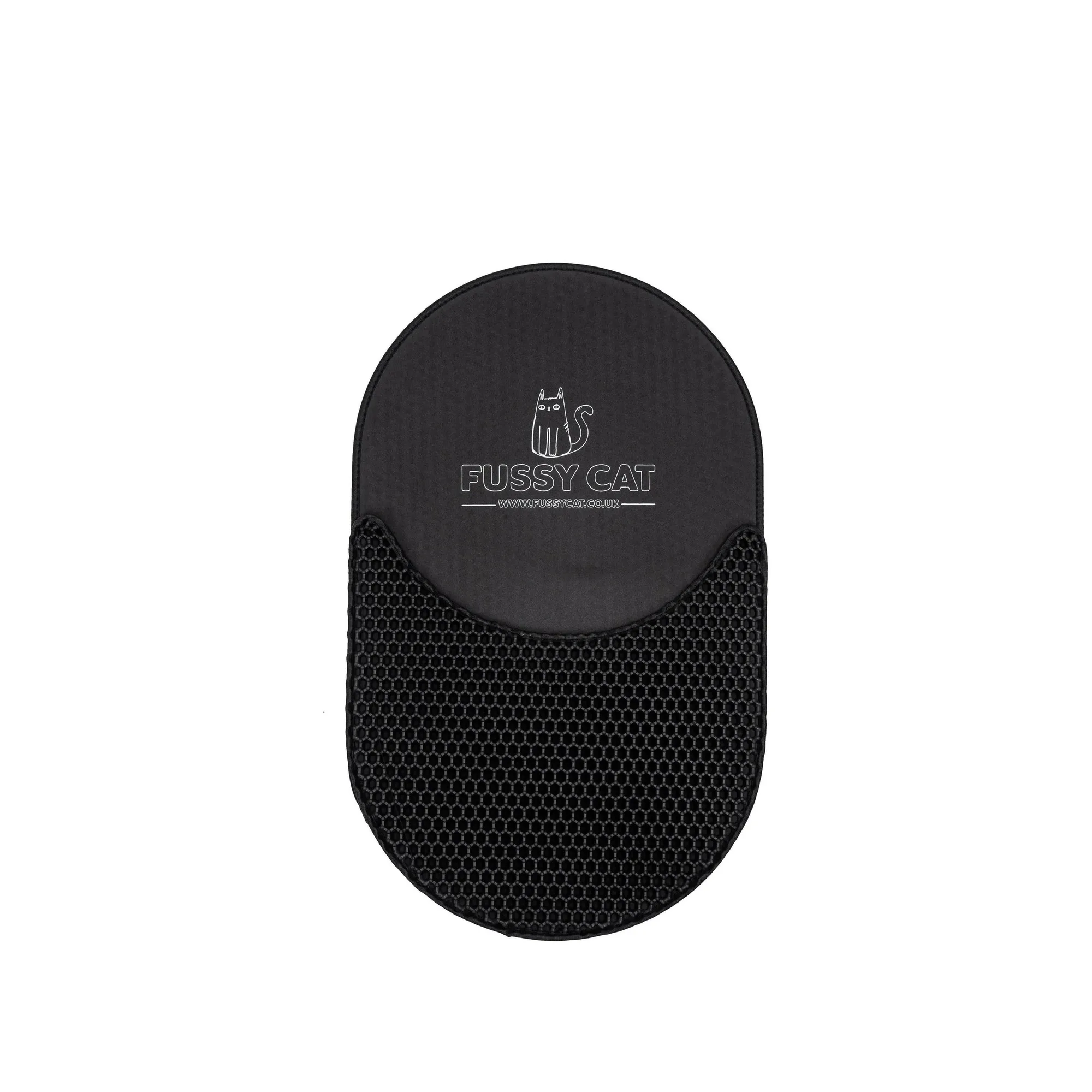
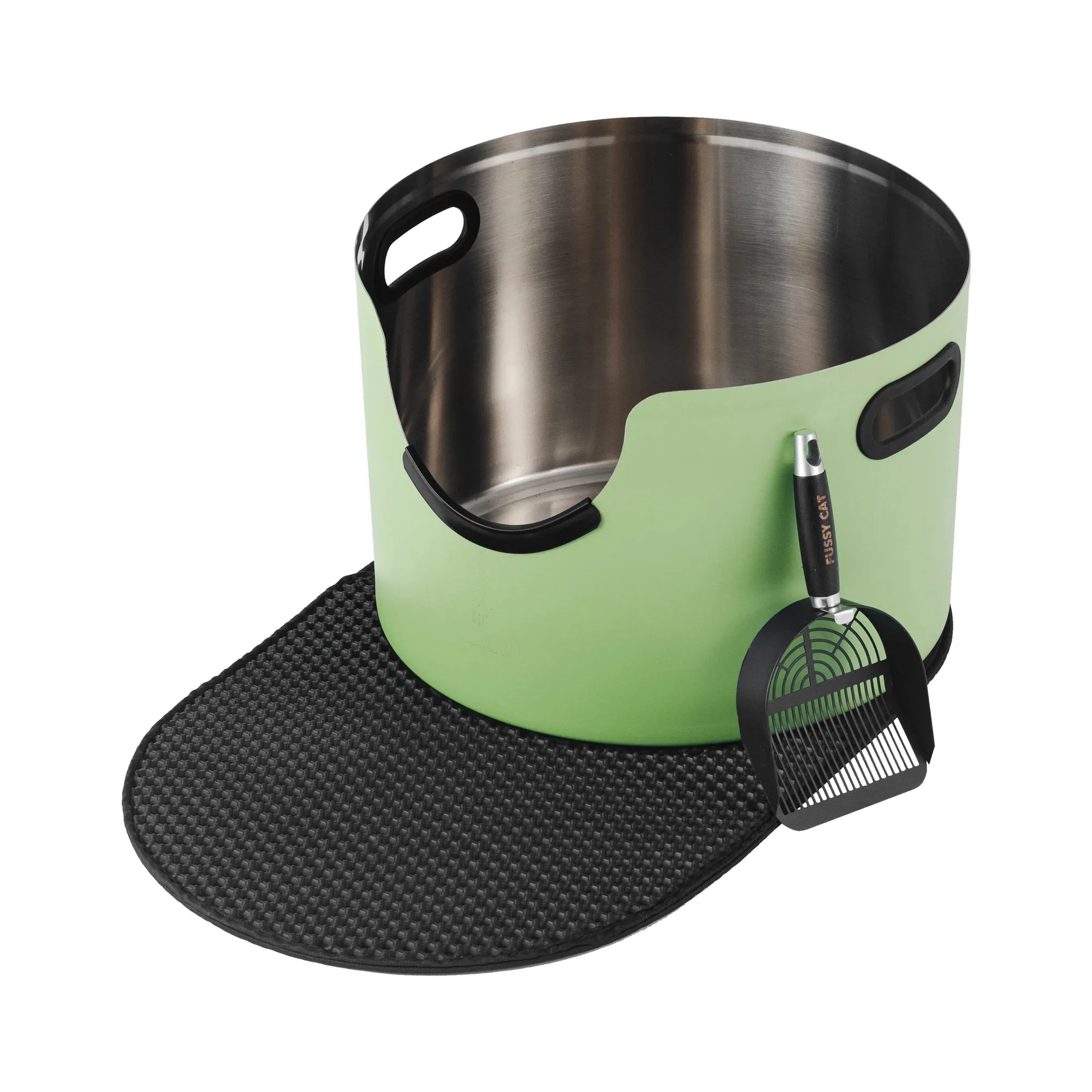
A litter mat placed just outside the entry catches tracked granules before they reach the rest of the room. Choose a mat that is at least as wide as the box so your cat cannot step around it.
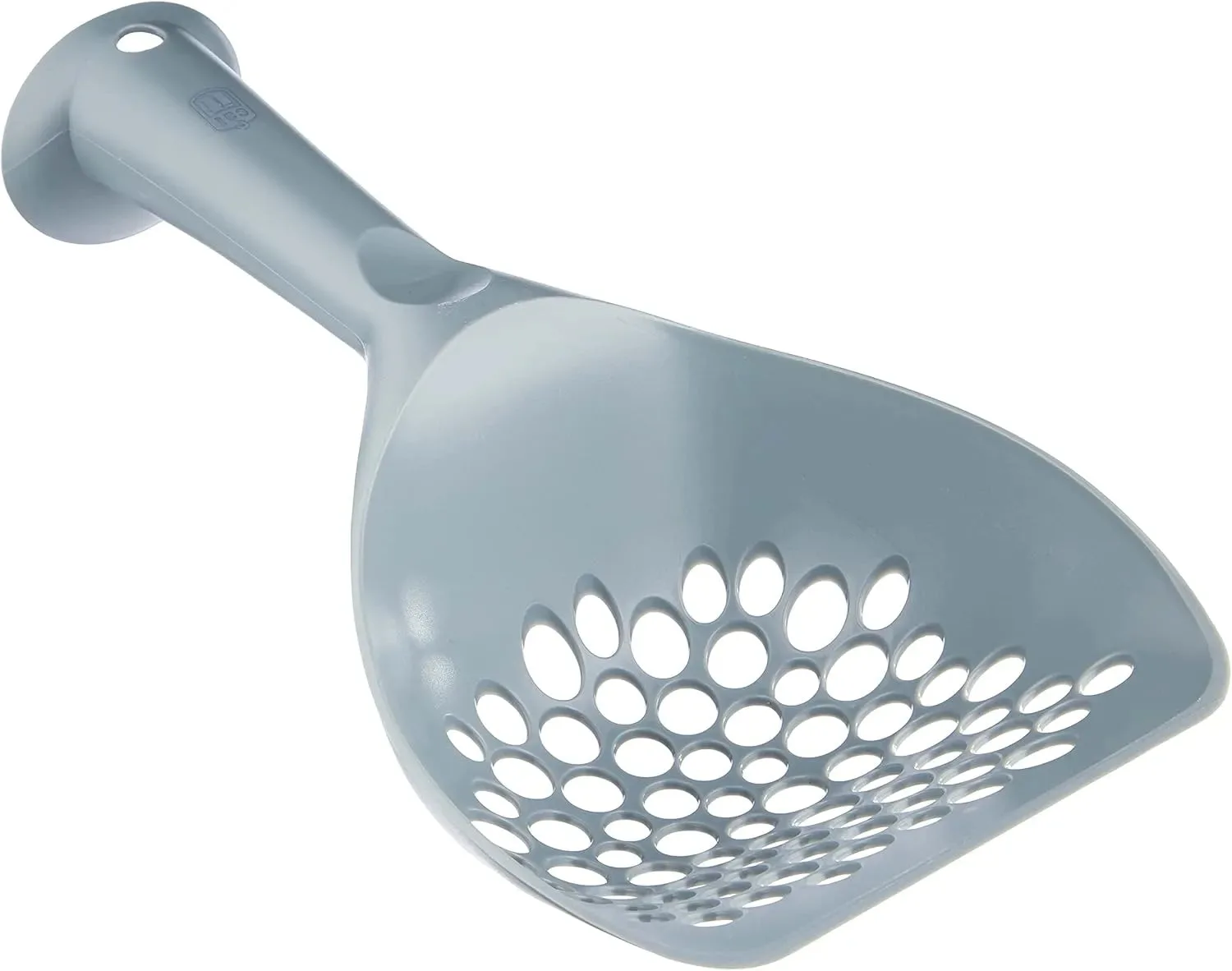
A scoop with oversized holes sifts clean litter back into the box faster and leaves fewer broken clumps behind. Store the scoop flat, hanging or standing so it dries between uses.
Step-by-step litter box setup
- Measure and choose the box: Measure your cat from nose to tail base and add about half again. Pick a box at least that long, with a low entry for kittens or seniors. Common mistake: buying a box that fits the space rather than the cat. Checkpoint: your cat should be able to stand, turn and dig without touching the sides.
- Fill to the right litter depth: Add 5-7 cm of unscented clumping litter for most adults, or 3-4 cm for kittens and seniors. Do not overfill, because litter above the rim spills over the edge. Common mistake: pouring a deep layer that makes digging hard work. Checkpoint: your cat can dig a hole without litter spilling over the side.
- Place the box for privacy and escape: Choose a quiet spot with two clear exits, away from food, water and noisy appliances. If you have several cats, spread boxes across different rooms. Common mistake: hiding the box in a dead-end cupboard where your cat feels trapped. Checkpoint: watch for one week and note whether your cat uses the box without hesitating at the entrance.
- Decide on a lid: Start with an open box unless you already know your cat tolerates a covered one. If you use a covered box, remove the lid for two weeks if you see avoidance. Common mistake: assuming a lid solves odour when it often traps it. Checkpoint: if your cat toilets beside the box rather than inside it, remove the lid before changing anything else.
- Add a mat and scoop at the entry: Place a mat at least as wide as the box just outside the entry, and keep a scoop with oversized holes nearby. Store the scoop flat, hanging or standing so it dries. Common mistake: using a mat that is narrower than the box, which lets litter scatter around it. Checkpoint: after one week, most tracked litter should sit on the mat, not on the floor.
- Set a daily and weekly cleaning routine: Scoop solids and clumps at least once a day and top up litter depth. Once a week, empty the box, wash it with mild unscented soap and warm water, dry it fully and refill. Common mistake: using strong scented cleaners that make the box smell wrong to your cat. Next step: if odour remains after a full wash, replace the litter and check whether the box material has absorbed smell.
Products that match this setup
- Fussy Cat - The Green Litter Box, 48 Litres. With Litter Mat & Scoop.: Fussy Cat - The Green Litter Box, 48 Litres, is a round stainless steel litter box powder coated in green, supplied with a custom litter mat and scoop. The stainless steel surface resists odour absorption and is easier to wash than plastic, and the included mat and scoop cover two of the steps above in one purchase.
- Litter Mat for the Round 60cm Fussy Cat Litter Box: The Litter Mat for the Round 60cm Fussy Cat Litter Box measures 90 x 60 cm and is a replacement mat for the XXL 60cm round box. If your existing mat is worn or too small, this spare gives you a mat wide enough to catch tracked litter without replacing the whole box.
- Catit Cat Litter Scoop, Grey – Durable, Easy-Clean Plastic Scoop for All Litter Types: Catit Cat Litter Scoop, Grey, is a durable plastic scoop with oversized holes for sifting and a flat end so it can be stored flat, hanging or standing. Oversized holes speed up daily scooping and the flat end keeps the scoop off the floor between cleans, which matters if you are scooping once or twice a day.