Quick answer
Most cat litter box smells come from one of six fixable causes: too little litter, a shallow scooping routine, a scratched plastic tray holding onto odor, the wrong litter depth for your cat, poor airflow around the box, or a box that is simply too small. Work through the causes in order, because fixing depth and routine solves most odor complaints before you spend money on anything new.
Start with depth and daily scooping
Why does cat litter smell even when you scoop? Usually because there is not enough litter to bury waste properly, or because clumps sit long enough to break apart. Aim for roughly 5-7 cm of clumping litter in a standard tray, then scoop solids at least once a day and remove clumps before they crumble. If you can smell the box from the doorway, scoop twice daily for a week and see whether the smell drops before changing anything else.
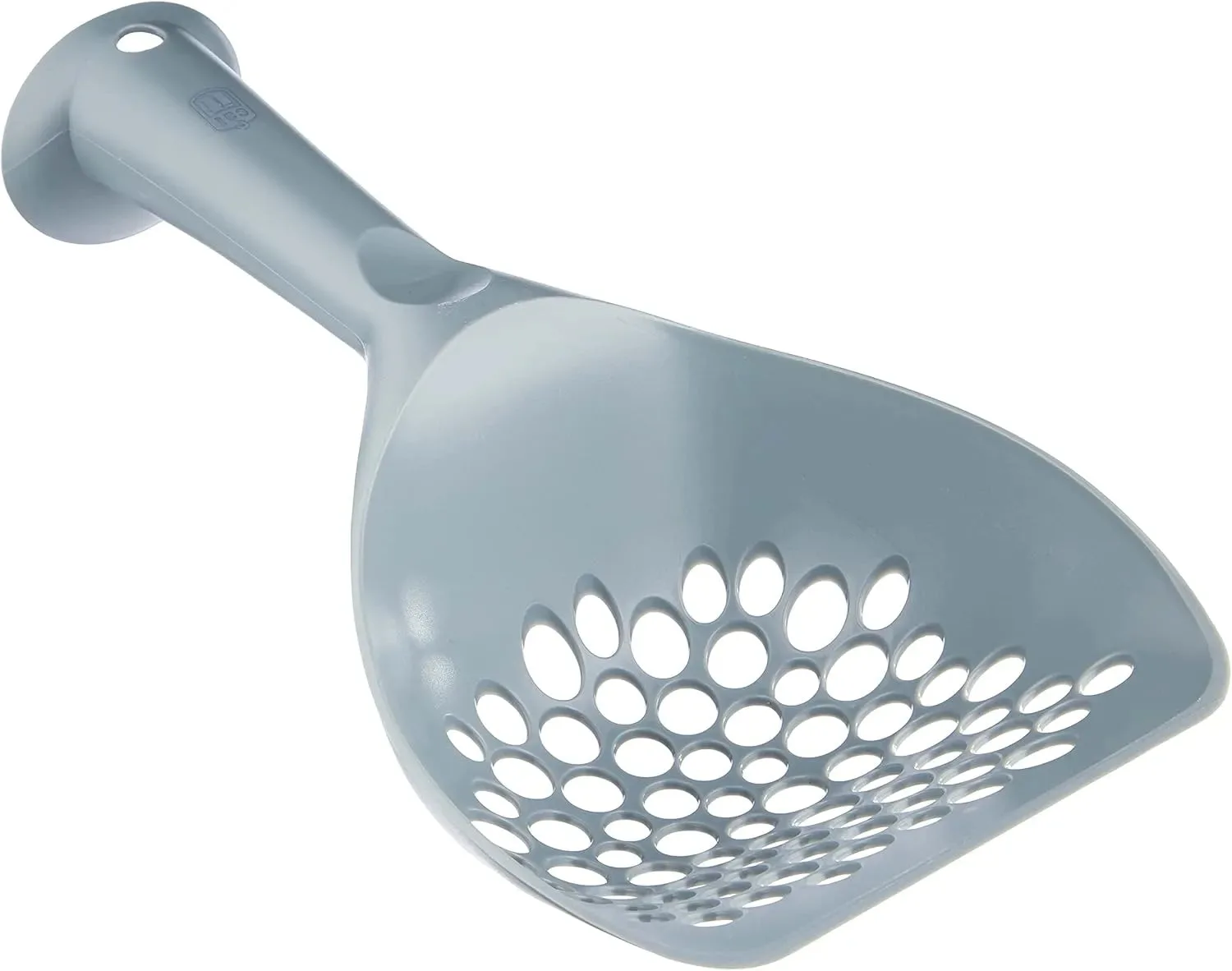
A clumping litter odor control routine only works if the clumps stay intact. Use a scoop with wide sifting holes so you lift whole clumps instead of breaking them, and tip them straight into a bag you tie off immediately. Leaving a bag of clumps next to the box undoes the work you just did.
Check whether the tray itself is the source
Scratched plastic trays absorb urine into the scratches, and no amount of scrubbing removes it. If the box still smells within a day of a full clean, run a fingernail across the base. Deep gouges that hold a smell mean the tray is finished, not dirty.
This is where material matters. Stainless steel does not absorb urine the way scratched plastic does, so a steel tray stays neutral after washing. That does not make it self-cleaning, and it does not remove the need for daily scooping, but it removes one recurring cause of odor entirely.
Fix airflow and placement before buying anything
A box pushed into a closed cupboard traps ammonia. Cats also avoid tight, dark, single-exit spaces, so a box in a cabinet often gets used less and smells more. Move it to an open, low-traffic spot with a wall behind it, and leave the lid off a hooded box for a week to test whether ventilation alone solves the problem.
If you use a covered box because of a dog, try a baby gate or a raised shelf instead. Airflow is the cheapest fix on this list and the one most often skipped.
Deep clean on a schedule, not on a hunch
A litter box deep clean means emptying the tray completely, washing it with a mild unscented soap, rinsing thoroughly, and drying it before adding fresh litter. Do this every two to four weeks for a plastic tray, and more often in multi-cat homes. Skip ammonia-based cleaners and strong fragrances, because cats read them as a reason to go elsewhere.
Do not top up old litter indefinitely. Fine dust and broken clumps build up at the base and hold odor even when the surface looks clean. Replacing the litter fully at each deep clean is part of the routine, not an extra.
When to stop troubleshooting and change the setup
Stop adjusting and change something structural if the box still smells within 24 hours of a full clean and fresh litter, if your cat urinates over the edge or misses the box, or if the tray is too small for your cat to turn around in. A box that is too small concentrates waste in one spot and gets soiled on the sides and floor.
If you have already fixed depth, scooping, airflow, and cleaning, and the odor returns fast, the tray itself is the remaining variable. At that point a stainless steel box, or a larger box, is a reasonable next step rather than another round of cleaning products.
Odor diagnosis: match the smell to the fix
- Sharp ammonia smell within a day of scooping: Urine is pooling rather than being absorbed or removed. Check litter depth first, then look for scratches in the tray base that are holding urine. If depth is correct and the tray is scratched, the tray is the problem, not your routine.
- Smell that returns within hours of a full clean: The tray material has absorbed odor. Plastic with deep gouges cannot be cleaned back to neutral, no matter which product you use. Replace the tray or switch to stainless steel rather than buying more deodorizers.
- Smell concentrated in one corner or on the floor beside the box: The box is too small for your cat to turn around and dig comfortably, so waste lands in the same spot or over the edge. Size up before changing litter or cleaning products.
- Smell in the room but not in the box: Trapped air or tracked litter. A closed cupboard or hood holds ammonia in, and scattered granules around the box carry odor across the floor. Improve airflow and add a mat; this is usually solved without new litter.
- Cat avoids the box or eliminates elsewhere: This is a behavioral signal, not just an odor problem. Strong fragrances, ammonia cleaners, and hooded boxes are common triggers. Stop using scented products and speak to your vet if avoidance continues.
Products that remove common odor causes
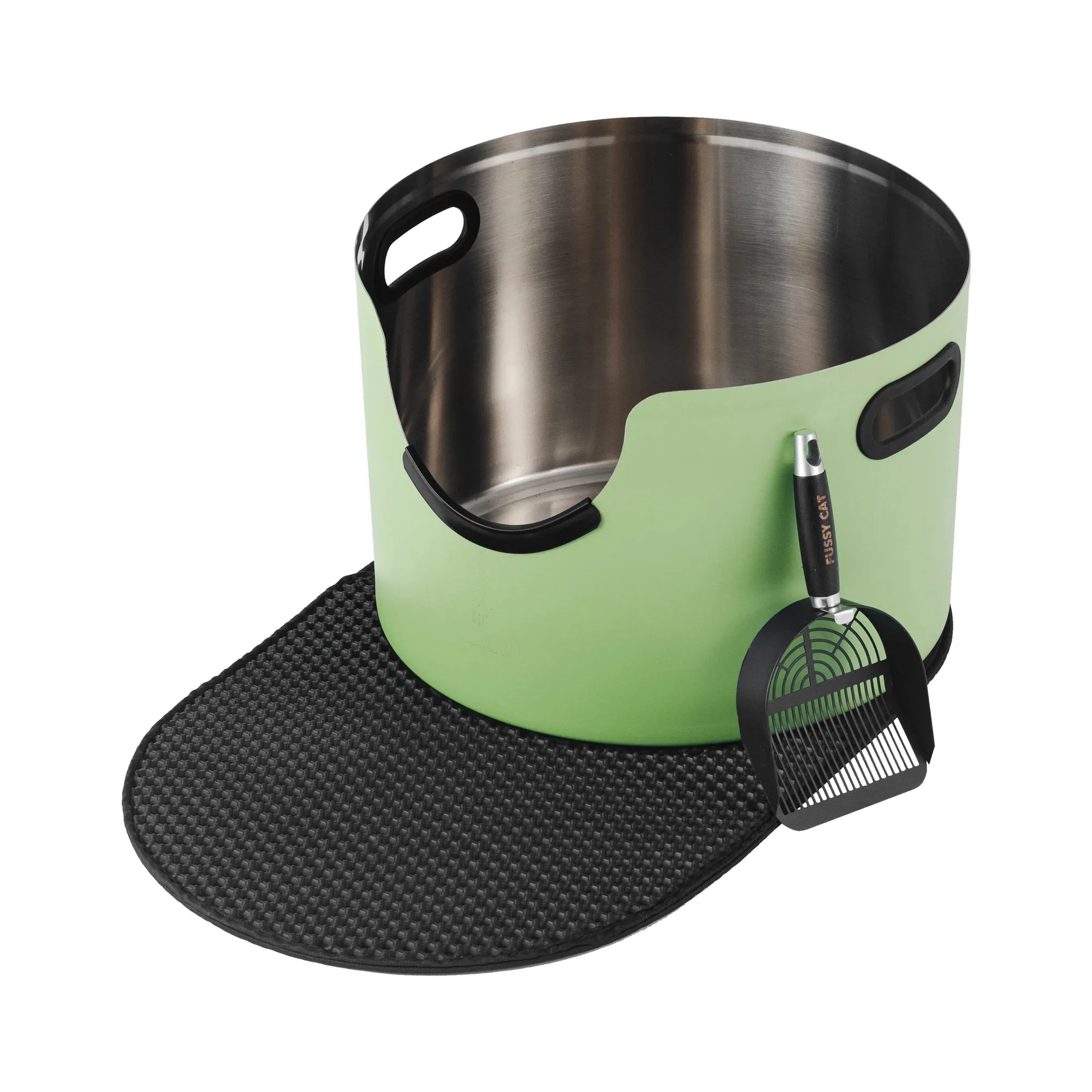
- Fussy Cat - The Green Litter Box, 48 Litres. With Litter Mat & Scoop.: Fussy Cat - The Green Litter Box, 48 Litres. With Litter Mat & Scoop. Premium stainless steel, powder coated in green, described as odour-resistant, and supplied complete with a custom-made litter mat and scoop. Stainless steel does not absorb urine into scratches the way plastic does, so it removes one recurring odor source. The 48-litre capacity also suits cats that need room to turn, and the included mat and scoop mean you are not buying accessories separately.
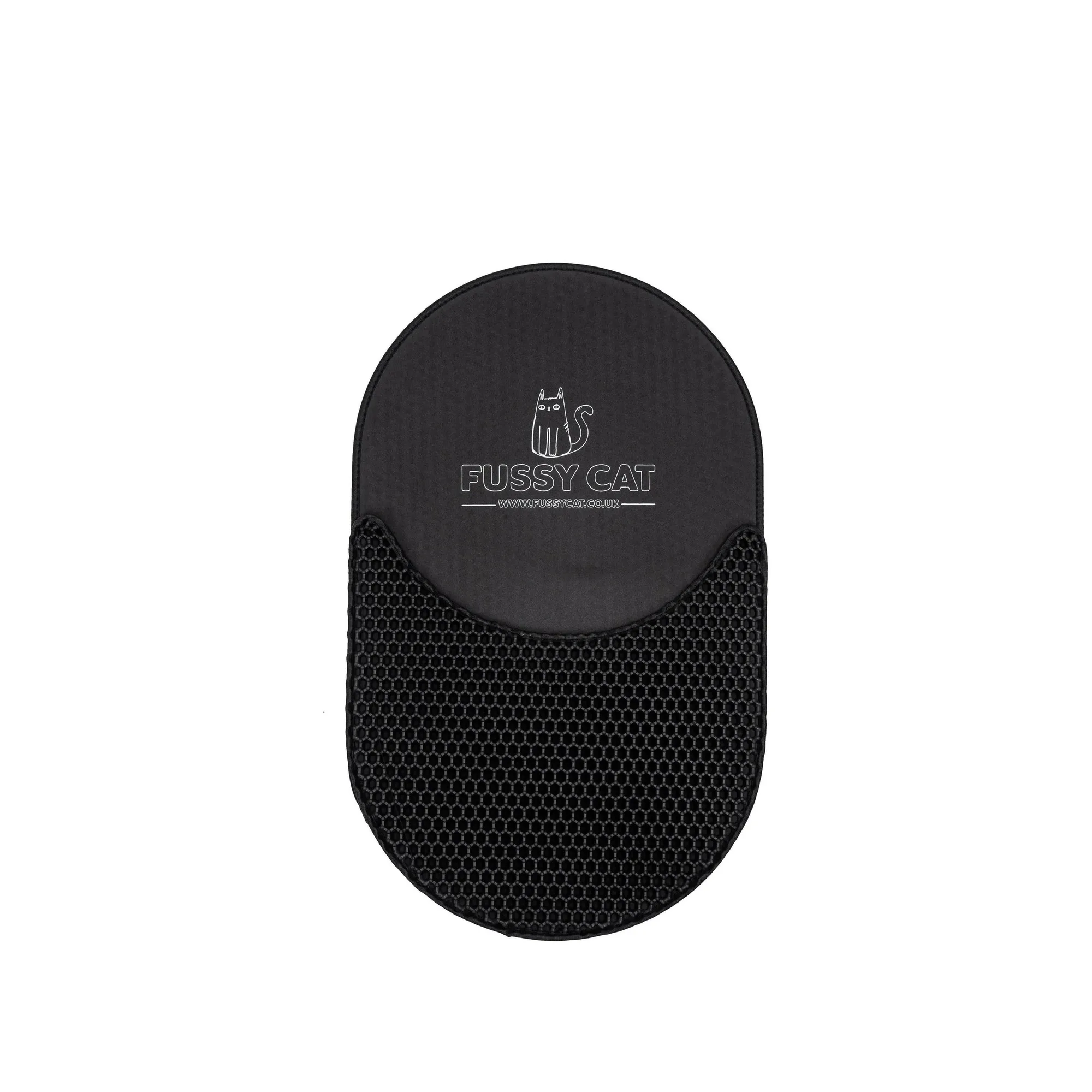
- Litter Mat for the Round 60cm Fussy Cat Litter Box: Litter Mat for the Round 60cm Fussy Cat Litter Box. Dimensions: 90 x 60cm (LxW). Litter box and scoop are not included, and the mat may not include the printed logo. A mat catches tracked litter before it spreads, which reduces the scattered granules that hold smell around the box. Check your box size first, since this mat is made for the 60cm round box.
- Catit Cat Litter Scoop, Grey – Durable, Easy-Clean Plastic Scoop for All Litter Types: Catit Cat Litter Scoop, Grey. Oversized holes enable easy sifting while still retaining debris, a flat end allows flat, hanging, or standing storage, and it suits all litter types. Dimensions 8cm x 16cm x 32cm, weight 103 g. Oversized holes let you lift whole clumps instead of breaking them apart, which is what keeps a clumping litter odor control routine working. The flat end means it stores without leaving a soiled scoop on the floor.