Quick answer
Place the tray in a quiet, low-traffic spot away from food and water. Use an uncovered tray with 2–3 inches of unscented clumping litter, scoop daily, and wash weekly with mild soap. Add a scratcher and treats nearby to build positive associations.
Choose the right tray and litter
Size matters more than style. Your cat should be able to turn around comfortably, so pick a tray at least 1.5 times their body length. Uncovered trays suit most cats, but if yours stands to urinate, a high-sided tray or one with a removable rim helps contain spray. Litter type is personal: most cats prefer fine, unscented clumping litter because it mimics sand and is easy to dig. Avoid strong scents and silica dust if your cat sneezes after use. Depth should be 2–3 inches for adults; kittens do better with 1–2 inches.
Placement that prevents problems
Cats need to feel safe while eliminating. Put the tray in a quiet corner, not next to a washing machine or a busy hallway. Keep it away from food and water bowls—cats instinctively avoid soiling near their resources. If you have multiple cats, provide one tray per cat plus one extra, placed in different locations. In multi-story homes, put a tray on each floor. Avoid placing the tray in a closed cabinet unless the door is propped open and the space is well ventilated.
Daily and weekly cleaning routine
Scoop solid waste at least once a day, ideally twice. Clumps should be removed as soon as possible to keep the litter fresh and prevent odour. Once a week, empty the entire tray, wash it with mild unscented soap and warm water, then dry thoroughly before refilling. Avoid harsh chemicals like bleach or ammonia; their smell can deter your cat and may be harmful. If you use litter liners, check them for tears during the weekly clean. Replace litter entirely every 2–4 weeks depending on use, or sooner if it looks dusty or smells despite scooping.
Accessories that support good habits
A litter mat under the tray catches tracked granules and reduces mess. Keep a small scoop and a dedicated waste bag nearby for quick clean-ups. Some cats benefit from a scratching post or pad placed near the tray to redirect scratching behaviour away from furniture. If your cat is new to the home, confine them to one room with the tray, food, water, and a bed until they use the tray consistently. Gradually give more space. For kittens or shy cats, a covered tray may feel too enclosed; start open and only add a hood if your cat seems comfortable.
Step-by-step litter tray setup
- Pick the spot: Choose a quiet, low-traffic area away from food and water. Avoid damp or noisy rooms. Checkpoint: Can your cat access it easily without feeling trapped?
- Fill with litter: Add 2–3 inches of unscented clumping litter. Smooth it out but don't pack it down. Mistake to avoid: Using too little litter makes digging difficult and leads to accidents.
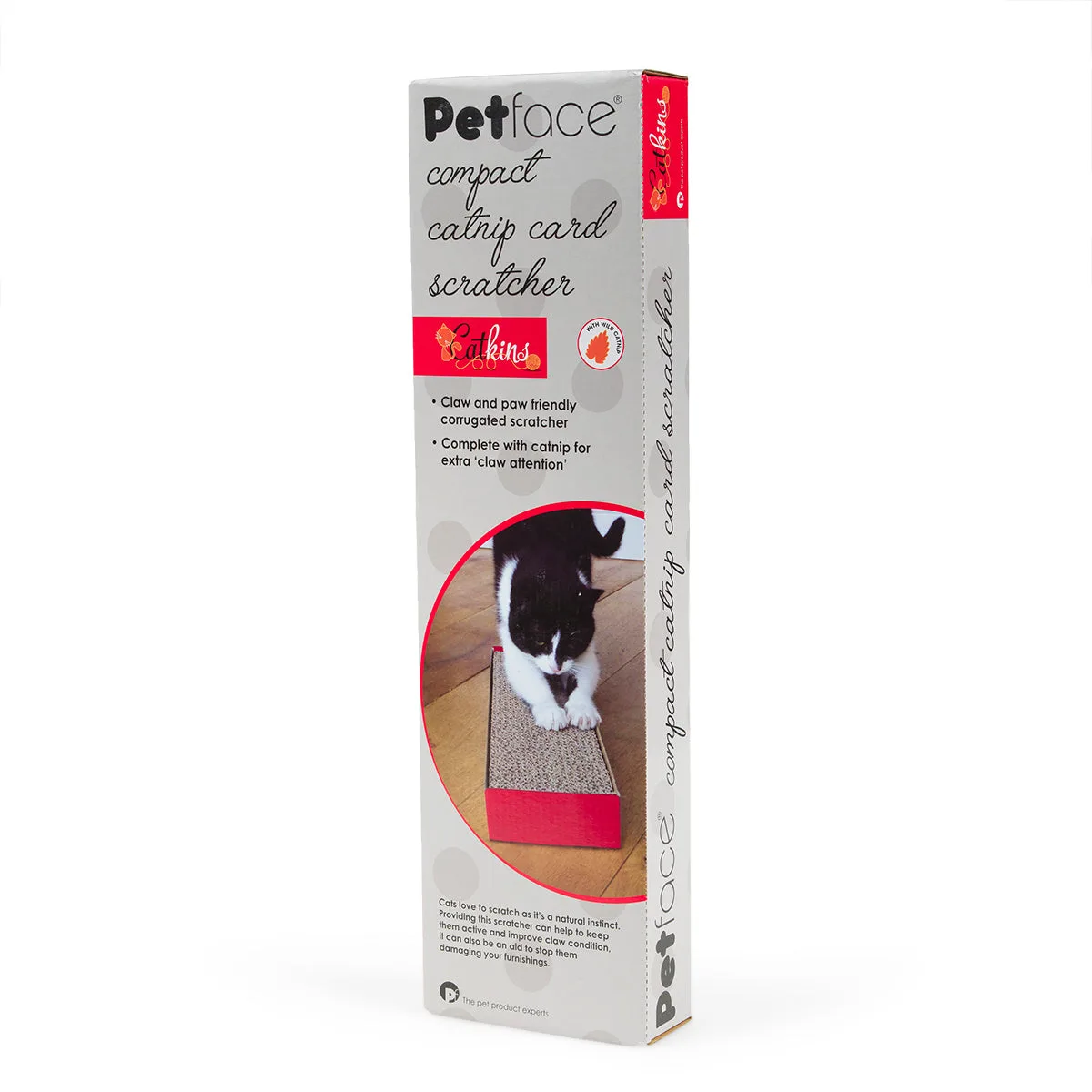
- Place accessories: Put a litter mat under the tray and a scoop nearby. Add a scratcher like the Petface Catkins Compact Catnip Card Cat Scratcher to encourage positive association. Checkpoint: Is the mat large enough to catch tracked litter?
- Introduce your cat: Set your cat in the tray gently after meals or naps. Praise calmly if they use it. Mistake to avoid: Punishing accidents; instead, clean thoroughly and review placement.
- Clean daily and weekly: Scoop at least once daily. Wash the tray weekly with mild soap and warm water, then refill with fresh litter. Checkpoint: Does the tray smell clean after scooping? If not, do a full change.
- Monitor and adjust: Watch for signs of stress like avoiding the tray or eliminating elsewhere. Try moving the tray or changing litter type if problems persist. Next step: If issues continue, consult your vet to rule out medical causes.
Products that help with litter tray setup
- Petface Catkins Compact Catnip Card Cat Scratcher: Petface Catkins Compact Catnip Card Cat Scratcher includes catnip and provides claw maintenance and entertainment. Placing a scratcher near the tray gives your cat an appropriate outlet for scratching and helps keep claws healthy, reducing the chance they scratch the tray or surrounding area.