Quick Answer
They solve different problems, so the real question is which pet you are buying for. A cat scratching post is the better buy if your cat shreds sofas and needs a redirectable outlet, while a luxury plush dog bed is the better buy if your dog needs a calm, draft-free place to settle. If you have both pets, buy both rather than forcing one product to do two jobs.
Durability: What Actually Wears Out First
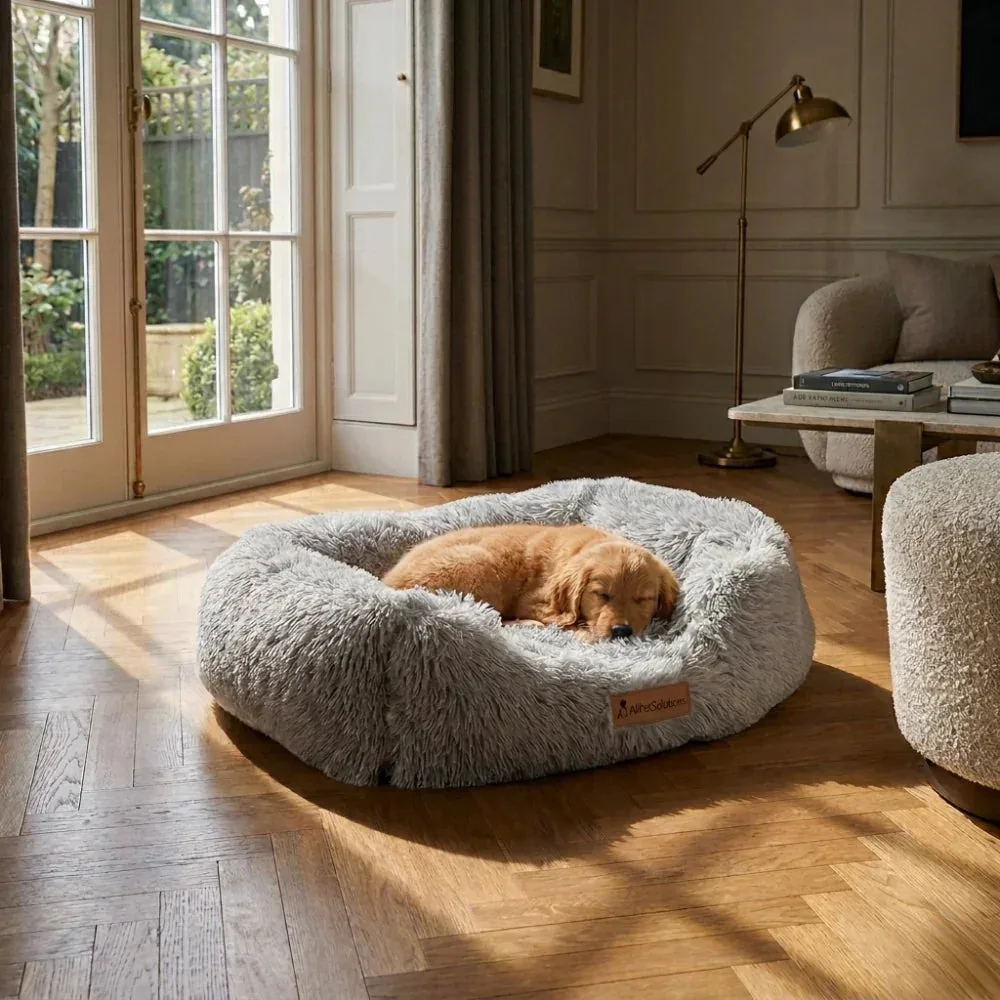
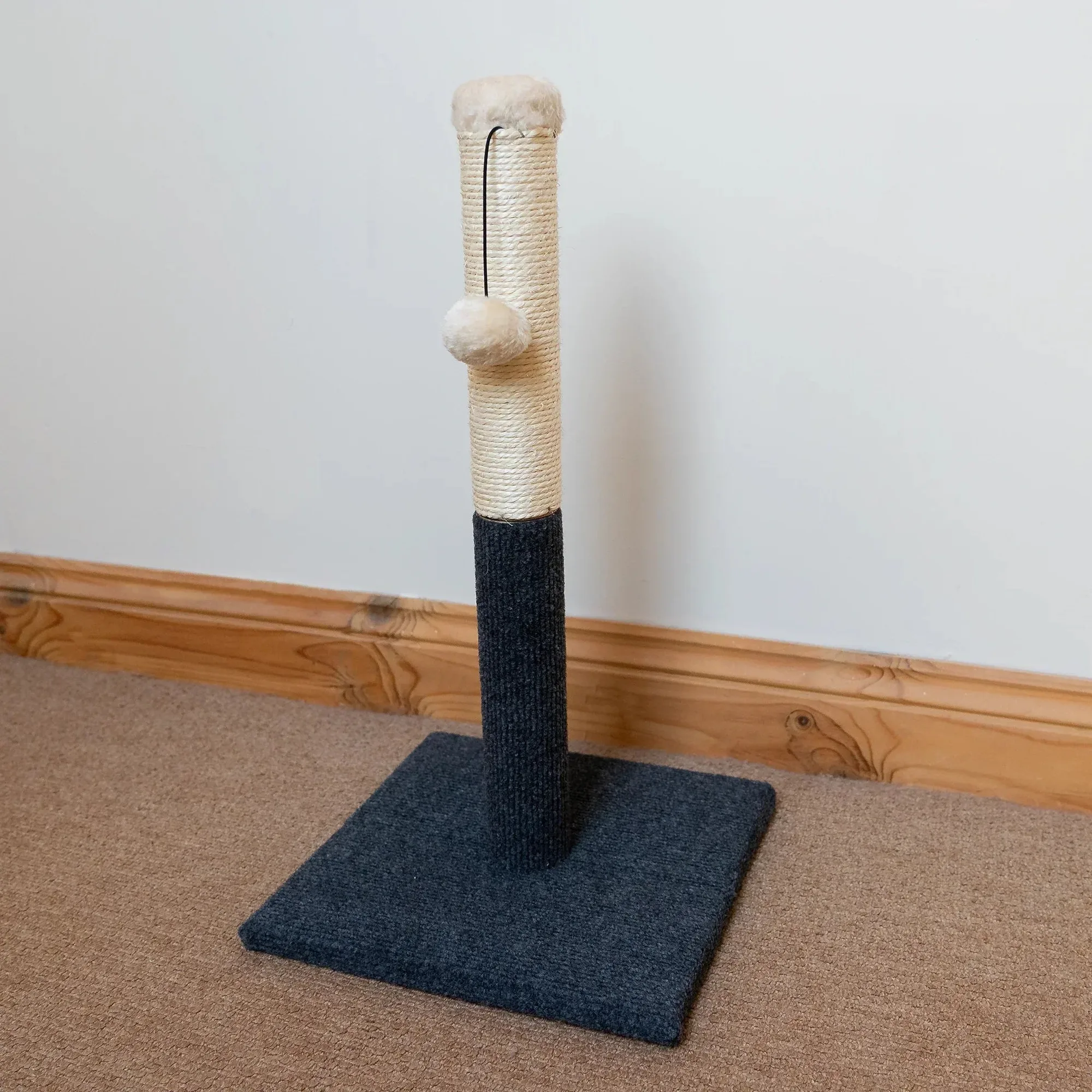
A scratching post is designed to be destroyed slowly, so durability means how long the sisal and base hold up under daily clawing. The AllPetSolutions Cat Scratching Post with Play Ball uses a sisal-wrapped post on a carpeted base, which gives claws something to grip and shed on instead of your sofa arms. A dog bed, by contrast, wears out through compression and washing, not scratching. The AllPetSolutions Luxury Grey Plush Dog Bed with Raised Sides & Non-Slip Base is built around a deep, fluffy pile and high supportive sides, so its lifespan depends on how well the filling recovers after your dog lies in the same spot every night.
Space and Placement: Where Each Piece Fits
Scratching posts are vertical and compact. The 51cm post has a small footprint that fits beside a sofa, in a hallway, or in a bedroom, which matters in flats where floor space is tight. A raised side dog bed takes up floor area instead, and its square corners leave room for dogs who stretch out while the enclosed shape suits dogs who curl up. Measure the floor space you can give up before choosing a size, because a dog bed that is too small gets ignored and one that is too large becomes an obstacle.
Cleaning and Everyday Maintenance
Sisal and carpeted bases are not machine washable in most cases, so a scratching post is usually vacuumed or spot-cleaned and replaced when the sisal frays. A plush dog bed collects hair and odour, so check whether the cover can be removed and washed before you commit. The non-slip dog bed base on the AllPetSolutions plush bed keeps it from sliding on hard floors, which reduces how often you have to reposition it, but it does not make the bed itself easier to clean.
Safety and Behaviour Fit
A dangling ball toy encourages a cat to use the post in the first place, which is the point of the product: redirect scratching before it becomes a habit on furniture. For dogs, the enclosed shape and soft texture of a raised side dog bed give nervous dogs something to burrow into and shelter from draughts. Neither product trains the other species, so do not expect a dog bed to stop a cat from scratching or a scratching post to stop a dog from chewing.
Trade-Offs at a Glance
- Scratching post: cheap redirect, limited lifespan: The sisal-wrapped post is inexpensive and compact, but it is meant to be worn down by claws and will need replacing sooner than a well-made bed. Best value if the goal is protecting furniture, not buying a permanent fixture.
- Plush dog bed: comfort and calm, more floor space: The raised sides and deep pile create a secure sleeping spot, but the bed occupies floor area and the plush surface needs regular cleaning. Best value if your dog needs a dedicated, draught-free place to settle.
- Buying one for the wrong pet: A scratching post does nothing for a dog that chews, and a dog bed does nothing for a cat that scratches. Match the product to the behaviour you are trying to change. Identify the problem behaviour first, then buy the product that addresses it.
Product Facts
- AllPetSolutions Luxury Grey Plush Dog Bed with Raised Sides & Non-Slip Base - S/M/L: Box shape with generous floor space, a deep fluffy plush pile, high raised sides, and a non-slip base. The raised sides and plush pile suit dogs that burrow or seek shelter, while the square shape gives stretching room and the non-slip base keeps the bed in place on hard floors.
- AllPetSolutions Cat Scratching Post with Play Ball - 51cm: Sisal-wrapped post on a durable carpeted base with a dangling ball toy and a small footprint. The sisal gives cats a proper scratching surface, the ball draws them to the post, and the compact size fits beside a sofa, in a hallway, or in a bedroom.
Which Should You Buy?
Best for
- Cat owners whose cat scratches sofa arms, curtains, or carpet and needs a redirectable outlet
- Small homes or flats where a compact, vertical piece of furniture fits better than a floor-level bed
- Dog owners with a nervous or burrowing dog that needs a raised side dog bed with a non-slip dog bed base
Not for
- Dogs that chew furniture, since a scratching post is not a chew toy
- Cats that need a large climbing structure rather than a single compact post
- Owners looking for one product to serve both a cat and a dog