Quick answer
The most effective dental cat treats use a specific texture or formulation that mechanically scrapes plaque or chemically reduces tartar. Look for treats with an expanded, abrasive texture or a dual crunch-and-cream structure, and always check that the treat is low in calories to avoid weight gain.
Texture matters more than flavor
When it comes to dental health, the physical action of chewing is key. Treats with a crunchy, expanded texture—like those designed to resist quick biting—can help scrape plaque off teeth as your cat eats. This is why many dental-specific treats have a porous, slightly abrasive surface rather than a smooth, hard one.
A dual-textured treat (crunchy outside, soft center) can also encourage longer chewing, giving the abrasive shell more contact time with teeth. However, if your cat tends to gulp treats whole without chewing, even the best texture won't help much.
Calorie control is part of dental care
Dental treats are meant to be given daily, so their calorie count adds up quickly. A treat that exceeds 2–3 kcal per piece can easily lead to weight gain if you follow the recommended feeding amount. Overweight cats are more prone to periodontal disease, so a low-calorie dental treat is actually a health double-win.
Some dental treats also include added vitamins and minerals to support overall health, but the primary job is still plaque reduction. Don't let a long ingredient list distract you from the main goal: effective cleaning without excess calories.
Scientifically proven vs. marketing claims
Not every treat labeled 'dental' has clinical evidence behind it. Look for products that mention specific studies or proven mechanisms—for example, a treat that is 'scientifically proven to reduce tartar buildup' is more trustworthy than one that simply says 'helps clean teeth.'
The absence of a clinical claim doesn't mean a treat is useless, but it does mean you're relying on texture alone. For cats with existing dental issues, a treat with proven efficacy is a safer bet.
How to choose dental cat treats: decision rules
- Check for proven efficacy: Look for treats that mention scientific proof of reducing tartar or plaque. Texture alone may help, but proven treats give you confidence.
- Evaluate texture and size: Choose treats with a crunchy, expanded, or dual texture that encourages chewing. Avoid treats that are too small or too soft—they won't provide enough abrasion. If your cat doesn't chew, consider a larger treat that forces chewing.
- Count calories per treat: Aim for treats under 3 kcal each. Check the feeding guideline on the package—if it says more than 10 treats per day, the treat is likely very low calorie and safe for daily use. Weigh your cat monthly to ensure dental treats aren't causing weight gain.
- Match to your cat's health needs: For cats with kidney disease or urolithiasis, choose a low-protein, low-mineral treat like Specific FT-H. For otherwise healthy cats, a proven dental treat like Whiskas Dentabites is ideal.
Product examples that support dental health
-
Whiskas Dentabites Chicken Cat Treats: Whiskas Dentabites Chicken Cat Treats have a special formulation and expanded texture scientifically proven to reduce tartar buildup. This means the treat actively works to clean teeth during chewing, not just as a snack.
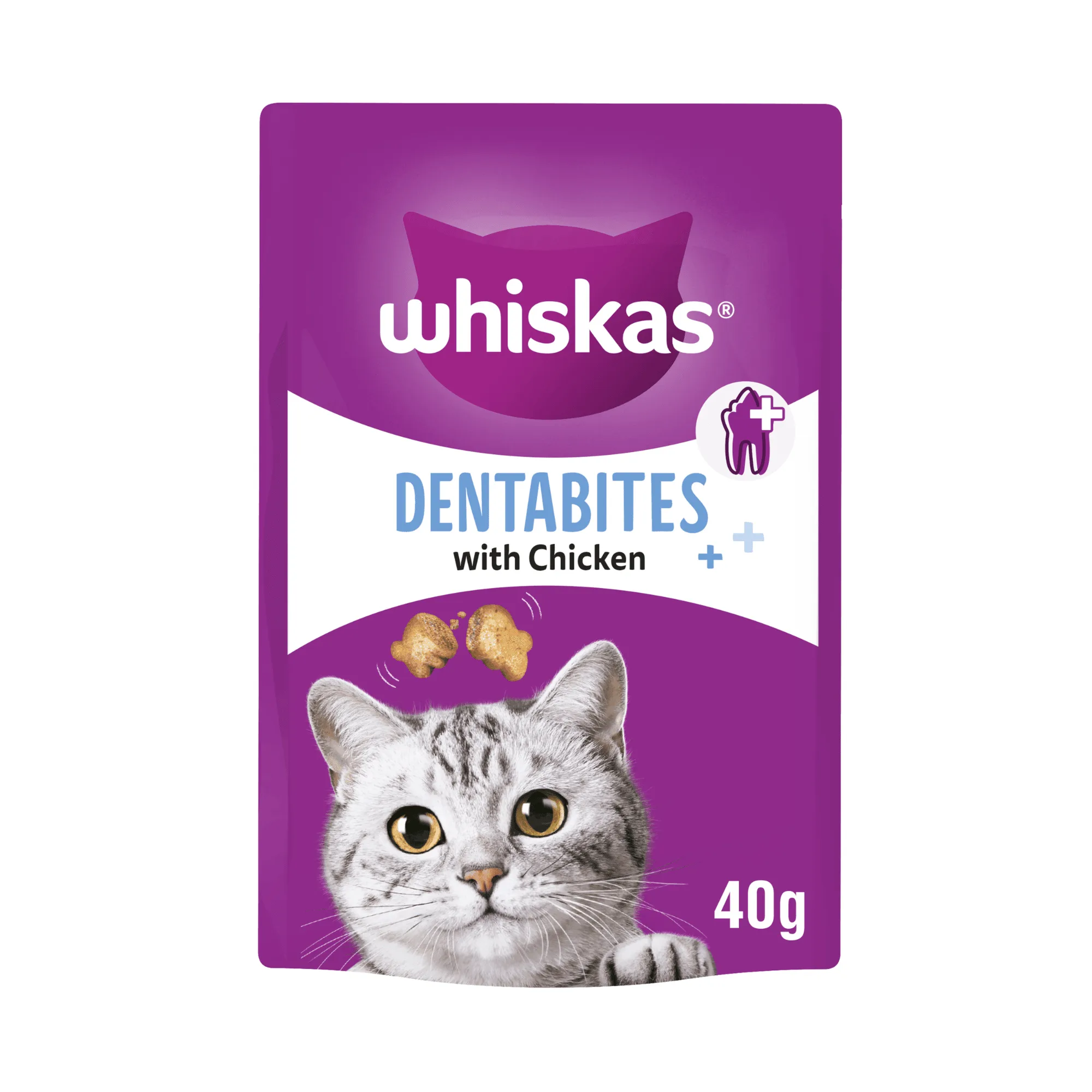
Whiskas Dentabites Chicken Cat Treats
-
Whiskas Temptations Chicken & Cheese Cat Treats: Whiskas Temptations Chicken & Cheese Cat Treats have a crunchy outside and soft center, with each treat under 2 kcal. The dual texture encourages chewing while the low calorie count makes it safe for daily dental maintenance without weight gain.
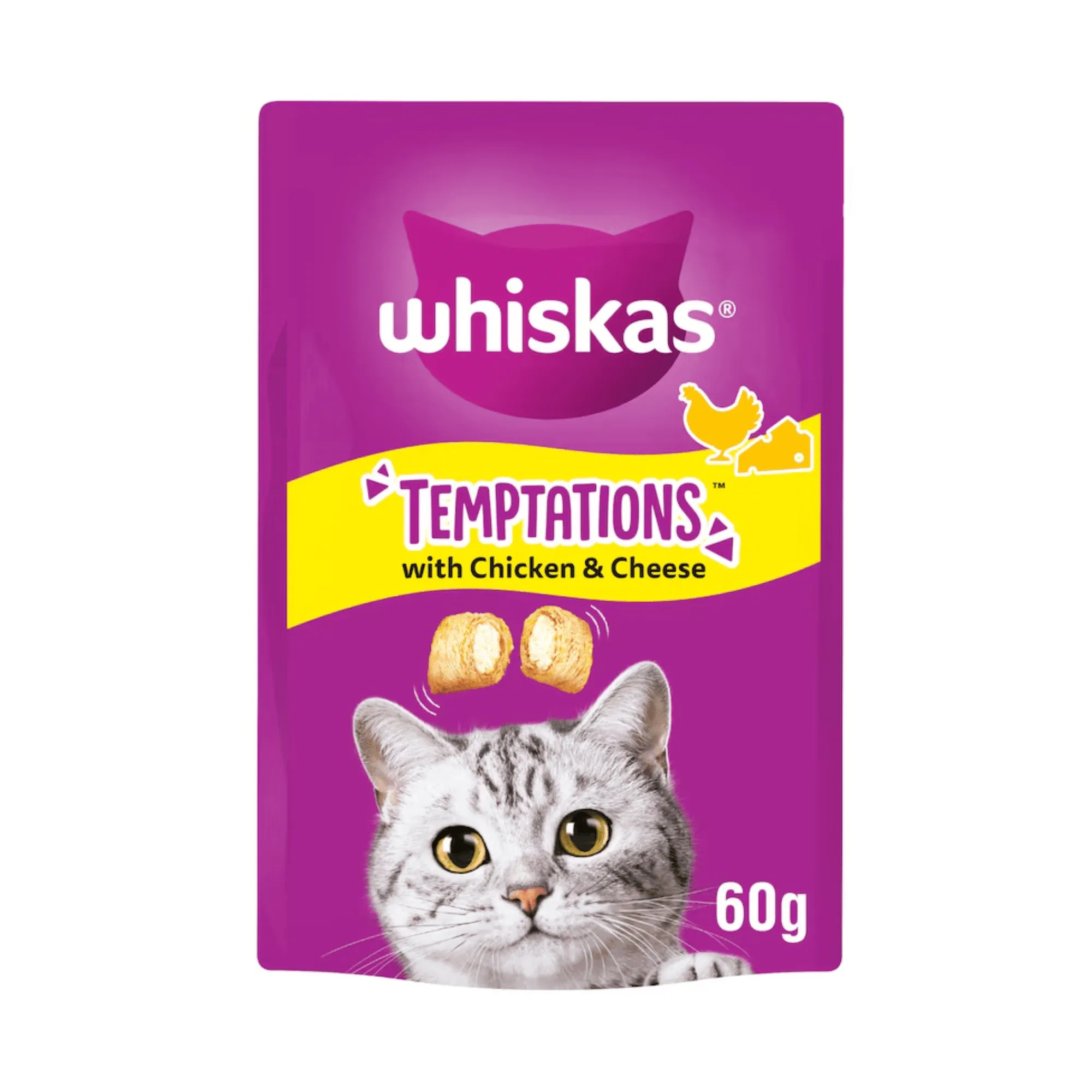
Whiskas Temptations Chicken & Cheese Cat Treats
-
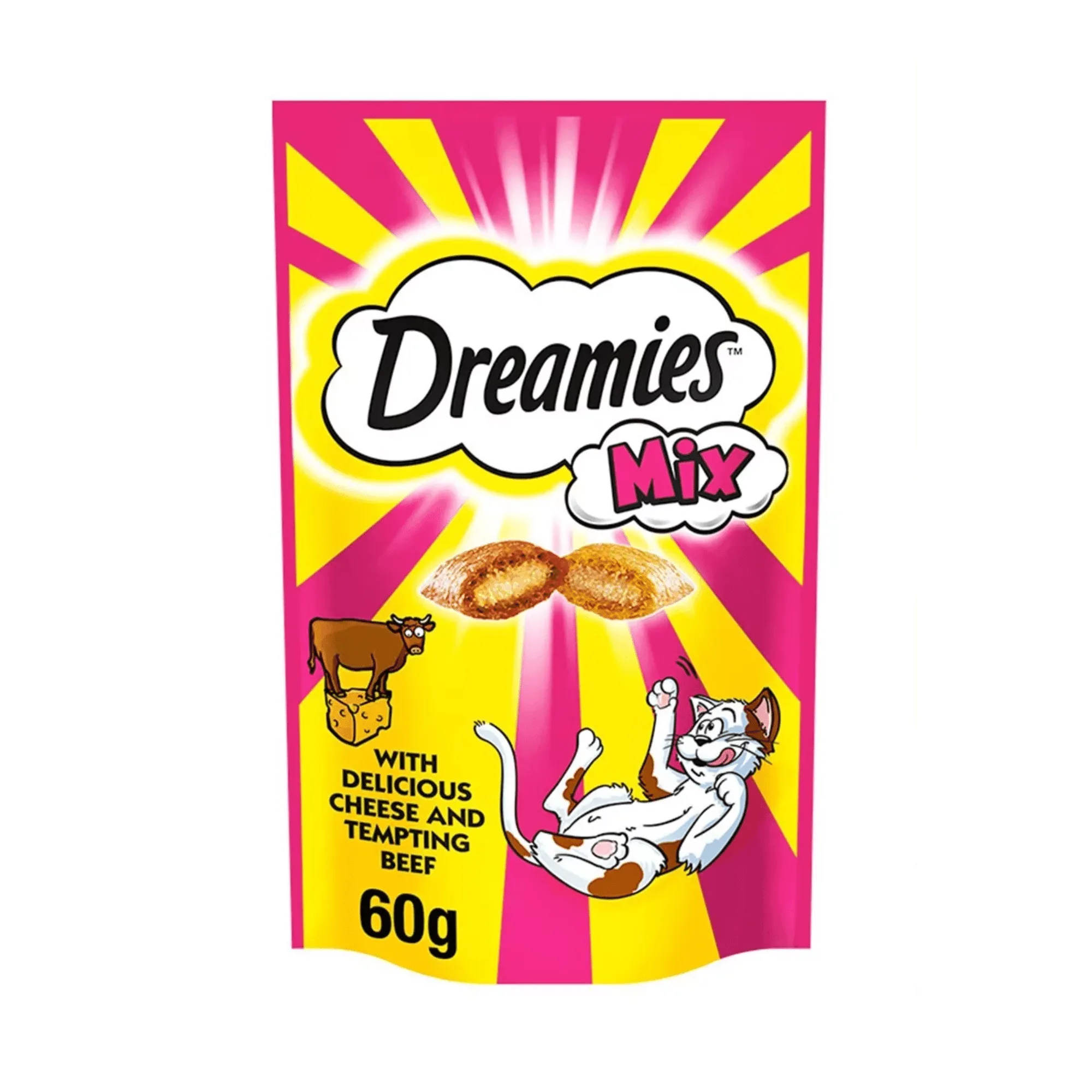
Dreamies Mix Beef and Cheese Cat Treats: Dreamies Mix Beef and Cheese Cat Treats feature a crispy shell and creamy center, with only 2 kcal per treat. The crunchy shell provides mechanical cleaning action, and the low calorie count fits into a daily dental routine.
-
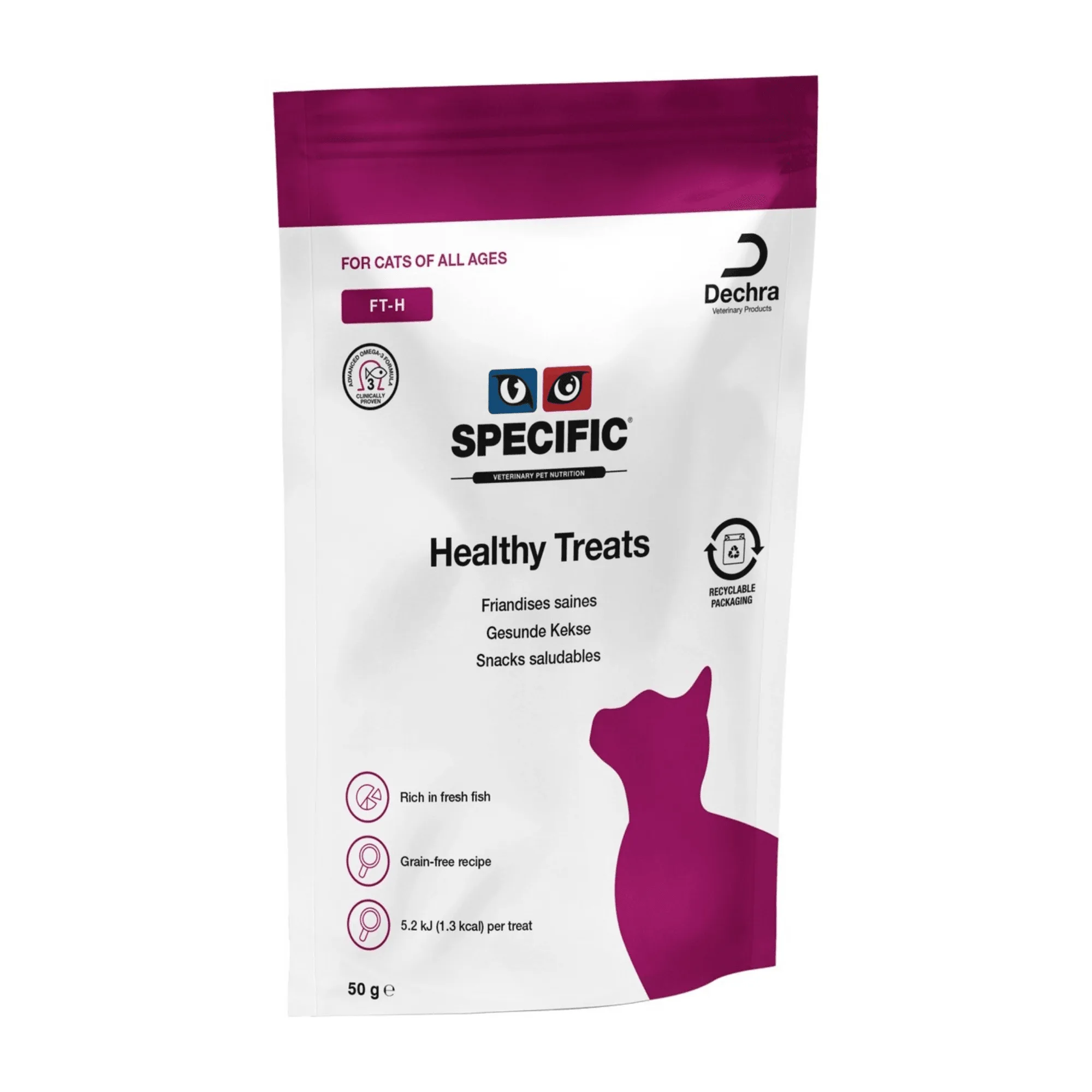
Specific FT-H | Healthy Treats for Cats: Specific FT-H Healthy Treats for Cats are grain-free, low in protein and minerals, and made with sustainable fish. While not specifically dental, their crunchy texture and low mineral content make them suitable for cats with kidney issues who still need oral care.
Which dental treat is right for your cat?
Best for
- Cats who chew their food and need proven plaque reduction
- Owners who want a daily dental routine with low-calorie options
Not ideal for
- Cats who gulp treats without chewing (try dental gels or water additives instead)
- Cats with severe dental disease requiring veterinary treatment