Quick answer
Use Caution Signs as a game night organization tool, not just a party game: assign each player a marker zone, keep the card deck and timer in the lid, and sketch bold symbols instead of detailed drawings. If your group wants deep strategy, choose a different game; if you want fast laughs and tabletop caution signs that double as table markers, this is the right pick.
What Caution Signs is actually for
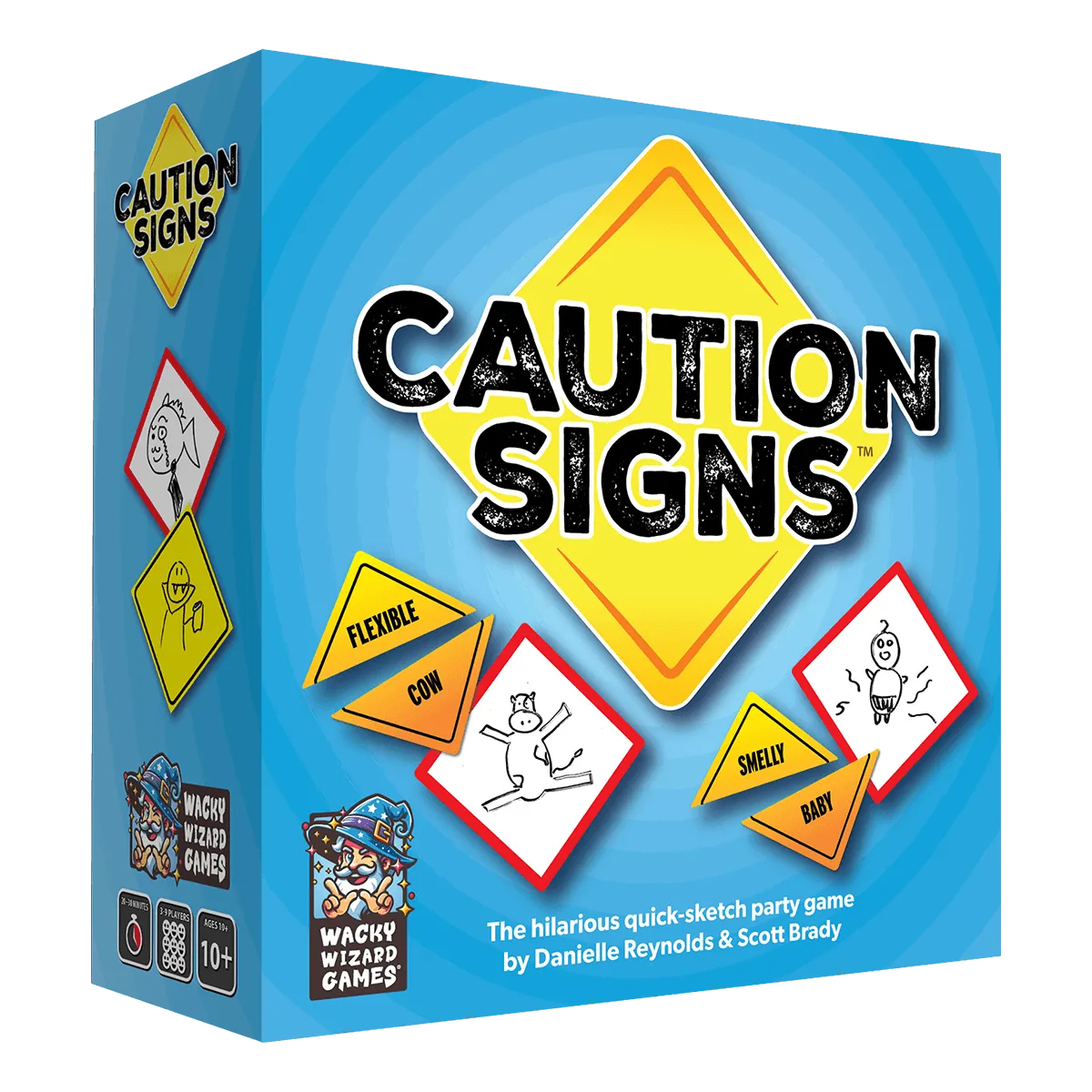
Caution Signs is a fast-paced party game about warning your friends of hazards they didn’t know existed. You have only twenty seconds to sketch a Caution Sign that signals others to be on the lookout. The deck covers situations like a stylish rhino, gassy monkeys, or melting babies, and the catalog notes ten thousand possible card combinations, so no two games play the same way. That speed and variety are why it works as a tabletop caution signs set for game night, not as a strategy board game.
Symptom: clues land too slowly or too vaguely
Players stare at the card, then draw a detailed scene that nobody can read before the timer runs out. The likely cause is treating the sketch like an art project instead of a warning sign. Correct it by drawing one hazard symbol, one arrow, and one word at most. If your group still stalls after two rounds, switch to a different party game; Caution Signs rewards speed, not precision.
Symptom: the table turns into a pile of cards and markers
During a fast party game, cards, pencils, and score pads spread across the table and slow every round. Use Caution Signs as board game table markers: give each player one corner of the table for their sketch pad, and keep the draw deck and timer in the box lid. This keeps game night caution signs visible and stops players from reaching across the table mid-round.
Symptom: new players feel lost in the first round
A new player may not know which symbols read fastest. Run one practice round with the timer off, then play for real. If someone still hesitates, pair them with a returning player for one round only. If the whole group prefers slower, rules-heavy games, stop here and pick a different title rather than forcing Caution Signs into that role.
Diagnose your Caution Signs setup
- Symptom: nobody can read the signs in time: Cause: players draw full scenes instead of one bold hazard symbol. Action: limit each sign to one symbol, one arrow, and one word. If clues still miss after two rounds, the group likely wants a slower deduction game.
- Symptom: the play area is chaos by round three: Cause: no assigned marker zones and no central deck lid. Action: give each player a corner and keep the deck and timer in the box lid. This is the point where board game table markers and game night organization signs do the most work.
- Symptom: new players disengage after one bad round: Cause: jumping straight into timed play. Action: run one untimed practice round, then resume the twenty-second limit. If they still prefer deep strategy, choose another game; Caution Signs is built for fast laughs.
Product facts that matter for game night
- Caution Signs: Caution Signs is a fast-paced party game about warning your friends of hazards they didn’t know existed, with only twenty seconds to sketch a Caution Sign. The twenty-second limit is the core mechanic, so markers and table layout matter more than deep strategy.
- Caution Signs: Ten thousand possible card combinations guarantee that no two games will be remotely alike. You can replay it across multiple game nights without the same hazard repeating, which suits a rotation of party games.
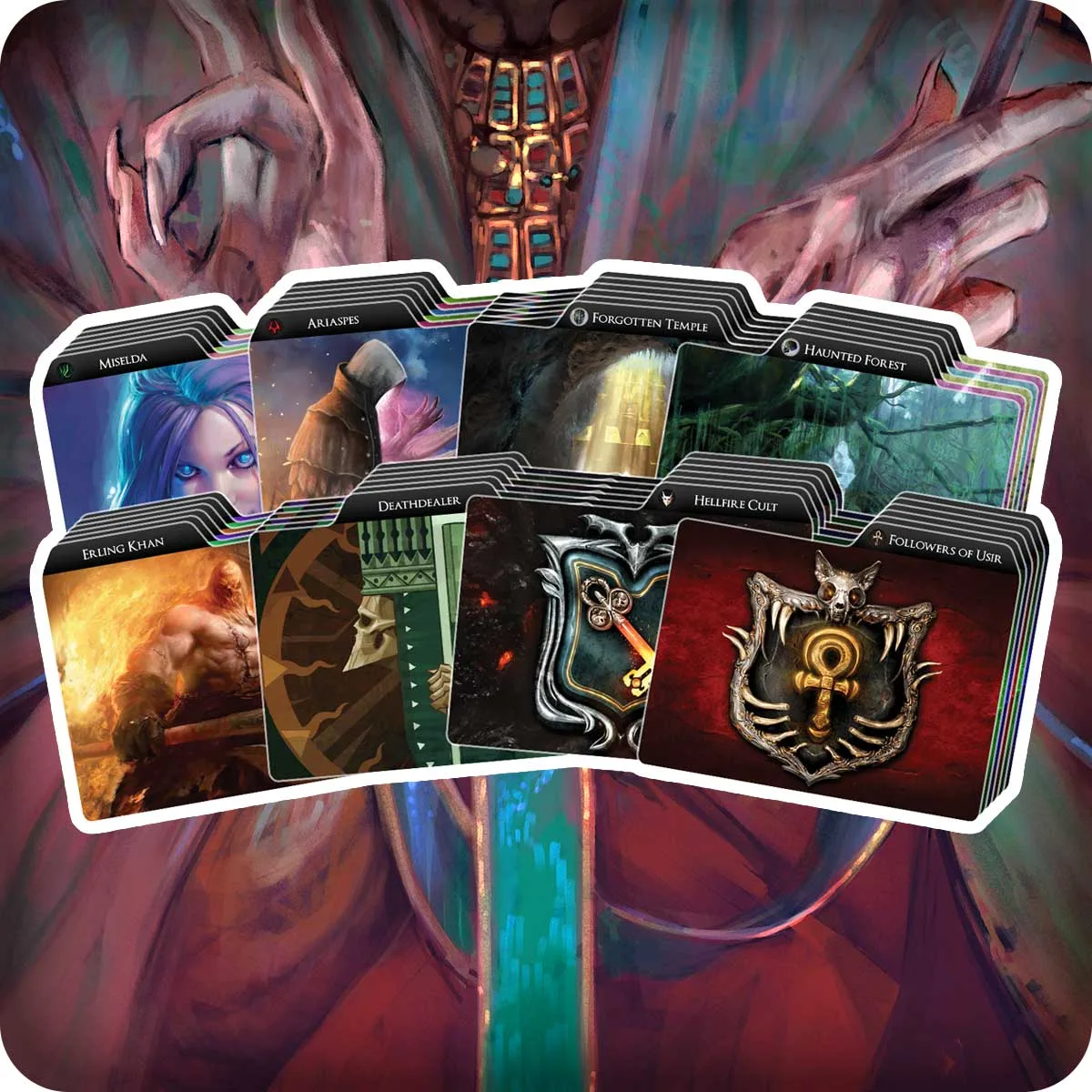
- Sorcerer Card Dividers: Sorcerer Card Dividers are 43 high-quality plastic dividers for organizing decks from the Sorcerer Base Game, Endbringer, and/or expansion packs. If your game shelf is also disorganized, dividers keep card decks separated so party games and strategy games do not mix.