Quick Answer
CFexpress Type B is the fastest memory card you can buy today, but CFast 2.0 offers a strong balance of speed and compatibility for cinema cameras, while CompactFlash remains a reliable, slower option for older DSLRs.
Why Speed Matters More Than Capacity for Pro Work
When you shoot high-bitrate 4K video or rapid burst sequences, card write speed determines whether your camera locks up or keeps recording. A slow card can also drag out file transfers, eating into your editing time. Understanding the speed tier—CFexpress, CFast, or CompactFlash—helps you match the card to your camera's interface and your workflow demands.
CompactFlash: The Legacy Workhorse
CompactFlash cards use a parallel ATA interface that tops out around 160MB/s read and 120MB/s write in real-world use. That's fine for 1080p video and moderate burst shooting, but it can't keep up with modern 4K or high-frame-rate RAW bursts. If your camera only has a CompactFlash slot, you're limited by the format's age—not the card brand.
CFast 2.0: The Cinema Standard
CFast 2.0 cards use a SATA-based interface that delivers read speeds up to 550MB/s and write speeds around 450MB/s. This is enough for most cinema cameras recording ProRes or RAW 4K footage. The SanDisk Extreme Pro 64GB CFast 2.0 card, for example, offers write speeds up to 450MB/s, making it a reliable choice for broadcast and cinema work. The trade-off: CFast slots are rare on still cameras, so it's not a universal upgrade path.
CFexpress Type B: The Speed King
CFexpress Type B uses a PCIe Gen 3 x2 interface, the same physical slot as XQD but far faster. Cards like the SanDisk Extreme Pro CFexpress 128GB hit read speeds up to 1700MB/s and write speeds up to 1400MB/s. That's roughly four times faster than CFast and ten times faster than CompactFlash. The catch: CFexpress cards are expensive and only compatible with newer mirrorless and DSLR cameras that have a CFexpress slot.
Decision Rules: Which Card Speed Do You Need?
- Your camera has a CFexpress Type B slot: Choose a CFexpress Type B card for the fastest burst rates and 4K/6K video. The SanDisk Extreme Pro CFexpress 128GB is a strong option.
- Your camera uses CFast 2.0 (most cinema cameras): Stick with CFast 2.0 cards. The SanDisk Extreme Pro 64GB CFast 2.0 delivers reliable 450MB/s write speeds for 4K ProRes and RAW.
- Your older DSLR only has a CompactFlash slot: CompactFlash is your only option. It's fine for 1080p video and moderate bursts, but expect slower transfer times and higher risk of card failure. Consider upgrading to a camera with CFexpress or CFast if you need faster speeds.
Product Facts
-
SanDisk Extreme Pro CFexpress Card – 128GB: Read speeds up to 1700MB/s and write speeds up to 1400MB/s, far beyond existing SanDisk cards. This speed eliminates buffer lag during high-speed RAW bursts and cuts file transfer time drastically.
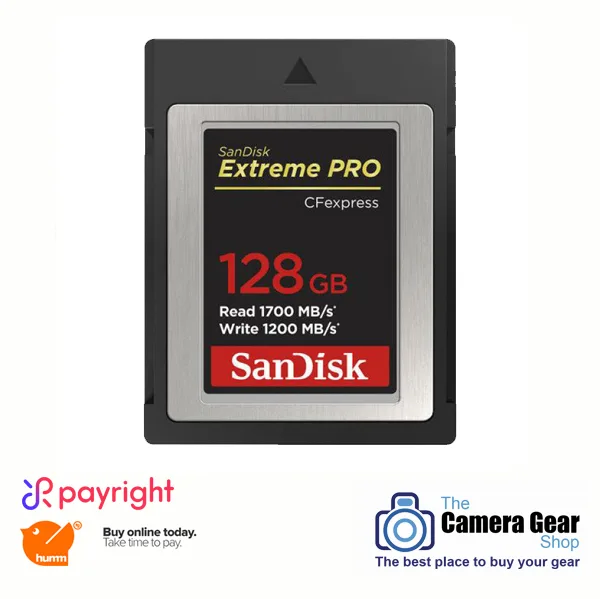
SanDisk Extreme Pro CFexpress Card – 128GB
-
Sandisk Extreme Pro 64GB CFast 2.0 525mb/sec: Write speeds up to 450MB/s, designed for cinema-quality 4K video recording. It reliably records high-bitrate 4K footage without dropped frames, ideal for professional video workflows.
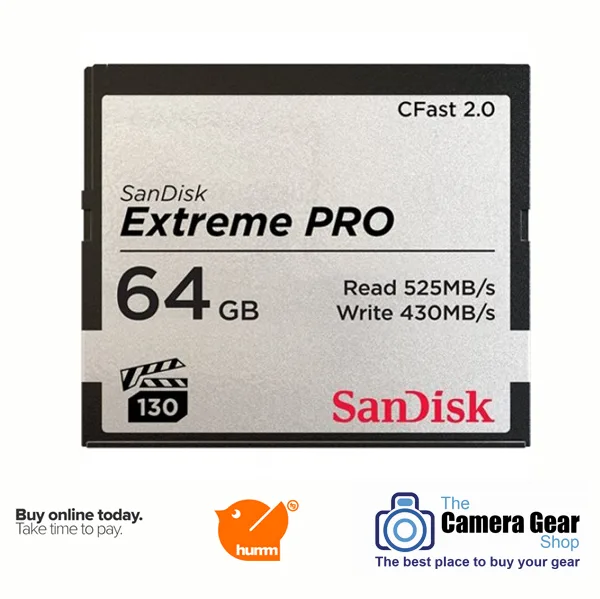
Sandisk Extreme Pro 64GB CFast 2.0 525mb/sec
Which Card Fits Your Workflow?
Best for
- High-speed RAW burst shooters and videographers using cameras with CFexpress slots
- Cinema and broadcast professionals using cameras with CFast 2.0 slots
Not for
- Users with older DSLRs that only accept CompactFlash—you need an adapter or a camera upgrade
- Budget-conscious shooters who don't need 4K or high-speed bursts—a high-end SD card may be cheaper and sufficient