Quick Answer
Use cheesecloth for sewing when you want a lightweight, textured, or semi-sheer fabric. Cut it with sharp scissors or a rotary cutter on a cutting mat, and hand wash or machine wash gently to keep the weave intact.
Why Choose Cheesecloth for Sewing?
Cheesecloth is a 100% natural cotton fabric with a loose, open weave. That structure makes it ideal for projects where you want a soft drape, a rustic look, or a bit of transparency. It is also easy to cut and shape, which is handy when you are working on a small project or a prototype.
The trade-off is that the loose weave can fray or stretch while you sew. You will need to handle it more gently than a tightly woven cotton and finish edges if the item will be washed often.
Care and Washing Considerations
Because cheesecloth is lightweight and loosely woven, it can shrink or distort in a hot dryer. Washing in cold water and air drying helps preserve the weave and keeps the fabric from pulling out of shape.
If you are using cheesecloth for a costume or a decorative item that will not be laundered, you can skip the finishing steps. For anything that will see regular use, a simple zigzag stitch or a rolled hem along the edges will help it last longer.
How to Cut Cheesecloth for Sewing
- Prepare your workspace: Lay the cheesecloth flat on a clean, hard surface. Smooth out wrinkles with your hands. Avoid pulling or stretching the fabric, as the loose weave can distort easily. A wrinkle-free surface prevents uneven cuts.
- Mark your cutting line: Use a fabric marker or chalk to draw the cutting line. For straight edges, use a ruler or a quilter's square. For curved shapes, use a pattern or a flexible curve. Avoid using pins that leave large holes, as they can permanently mark the cheesecloth. Test your marker on a scrap piece first to ensure it does not bleed through.
- Cut with sharp scissors or a rotary cutter: Use sharp fabric scissors for small, detailed cuts, or a rotary cutter with a cutting mat for long, straight lines. Cut slowly and steadily, following the marked line. Do not lift the fabric while cutting, as this can cause the layers to shift. Dull blades will fray the edges more, so keep your tools sharp.
- Finish the cut edges: If the cut edges will be visible or the fabric will be washed, finish them with a zigzag stitch, a serger, or a narrow rolled hem. For a raw, rustic look, you can leave the edges unfinished, but expect some fraying over time. Test a small sample to see how much fraying occurs before committing to a raw edge.
Cheesecloth Options
-
36" Cheesecloth, Beige, 6 yd: This Dritz Cheesecloth comes in a 6-yard length and is made from 100% natural cotton with a lightweight, loosely woven structure. The 6-yard size is a good starting point for small sewing projects, like sample swatches, doll clothes, or decorative accents, without committing to a large roll.
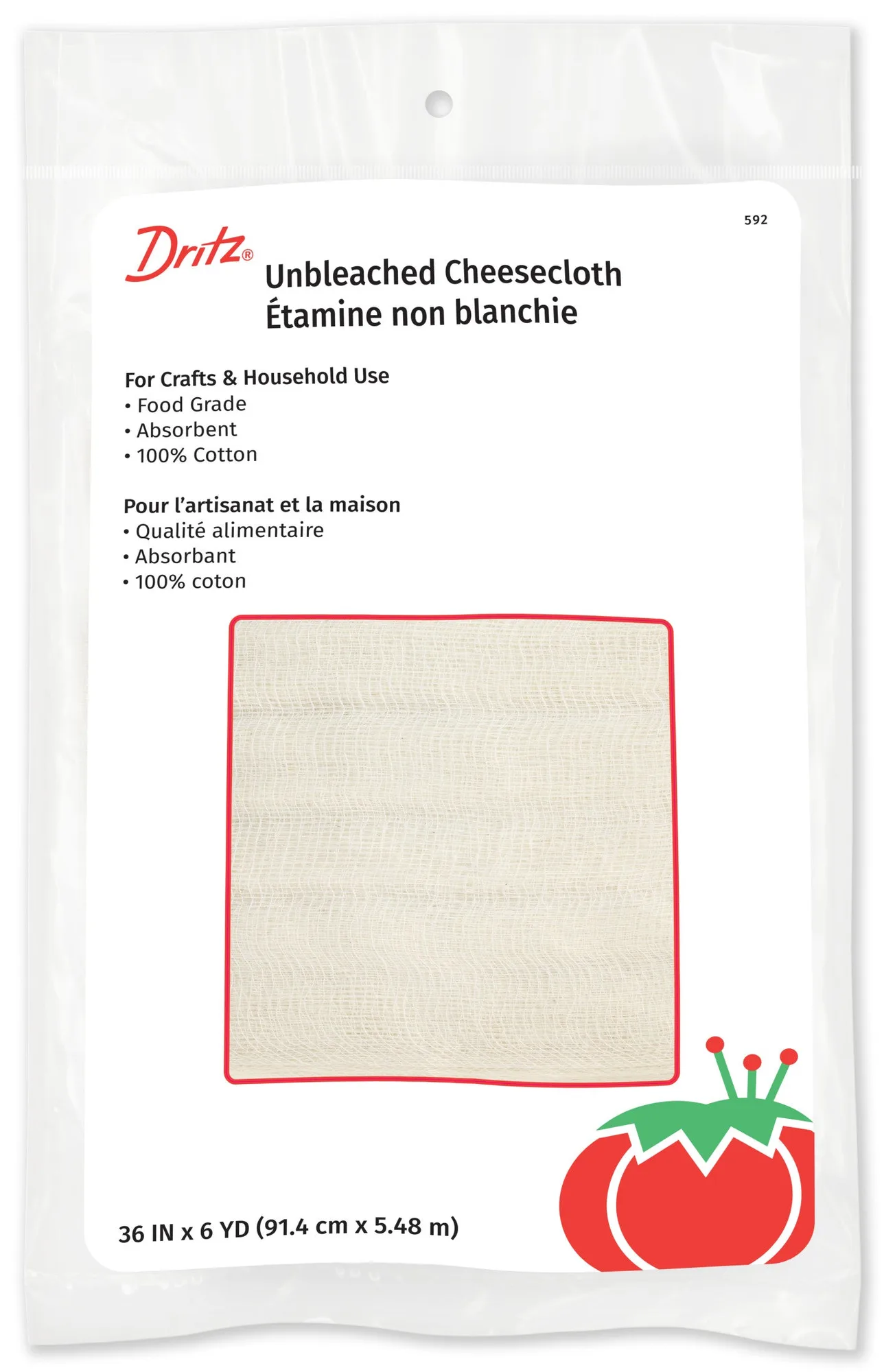
36" Cheesecloth, Beige, 6 yd
-
36" Cheesecloth, 80 yd: This Dritz Cheesecloth provides an 80-yard roll of the same 100% cotton, lightweight, and loosely woven material. The larger roll is more economical for big projects, like layered costumes or table runners, and gives you plenty of fabric to practice cutting and sewing techniques.
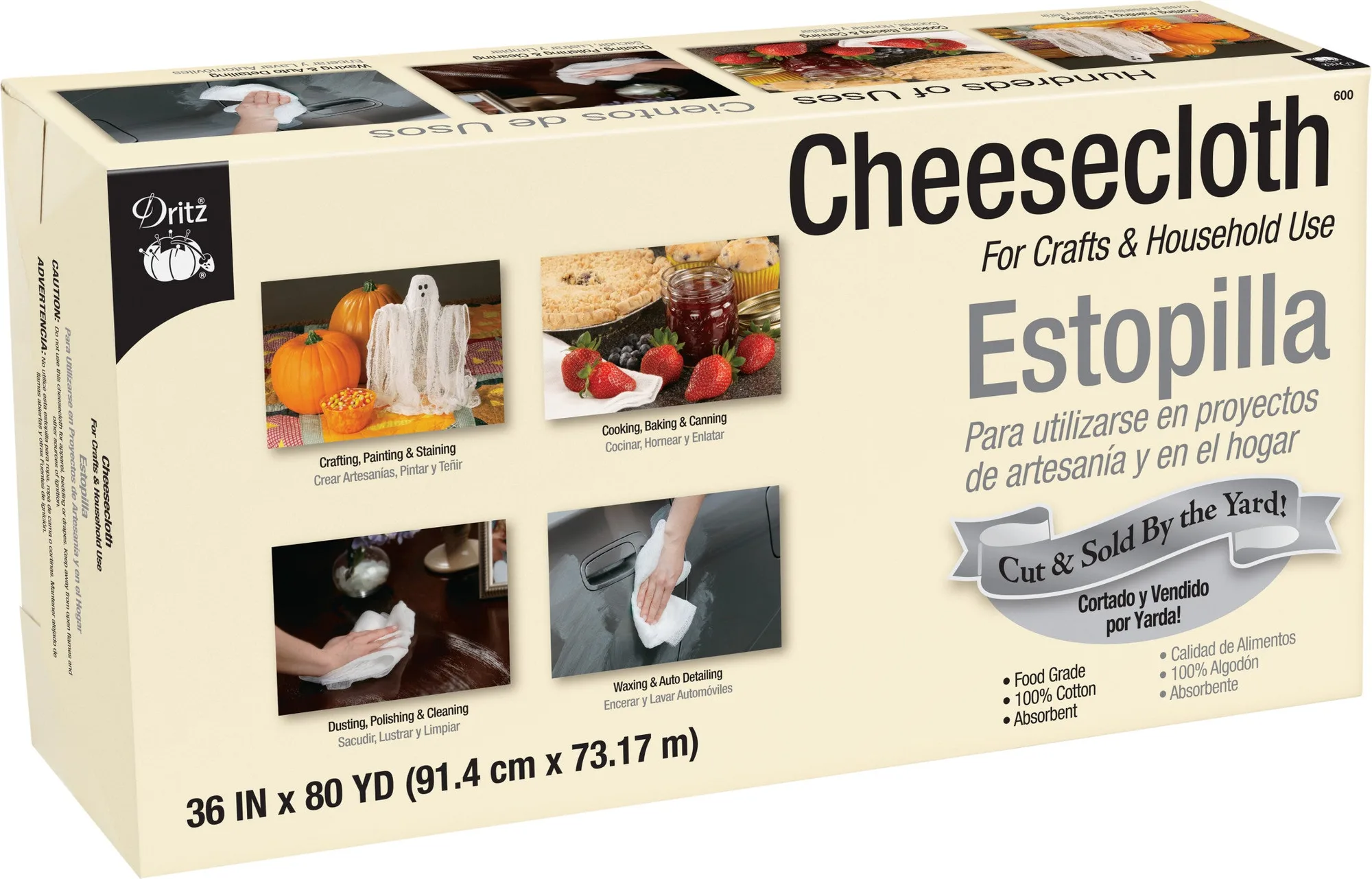
36" Cheesecloth, 80 yd