Quick Answer
Choose a coop that gives each chicken at least 3-4 square feet of indoor space and 8-10 square feet of run space, with predator-proof features like a solar-powered auto door. For most backyard flocks, a raised coop with an integrated run offers the best balance of safety and convenience.
Why Coop Size Matters More Than You Think
Cramped coops lead to stress, feather pecking, and reduced egg production. A good rule of thumb is 3-4 square feet per chicken inside the coop and 8-10 square feet per chicken in the run. But remember, these are minimums—more space is always better, especially if your chickens will spend most of their time indoors during winter or bad weather.
Consider your flock size now and in the future. If you plan to add more chickens, choose a coop with a little extra room. You can always block off part of the run if needed, but you can't easily expand a too-small coop.
Run Space: More Than Just a Fenced Area
The run is where your chickens will spend most of their day, so it needs to be spacious enough for them to scratch, forage, and spread their wings. A run that extends underneath a raised coop is a smart design because it gives your birds extra usable space without taking up more ground area.
Look for a run with adequate height so your chickens can stand upright and flap their wings. Also, consider the floor material—wire mesh flooring can be easier to clean but harder on their feet, while a solid floor with bedding is more comfortable but requires more maintenance.
Predator Protection: The #1 Priority
Predators like raccoons, foxes, and hawks are a constant threat to backyard flocks. A secure coop should have sturdy construction, a locking door that predators can't manipulate, and a run that is fully enclosed, including the top. A solar-powered auto door is a game-changer because it ensures your chickens are safely locked up at night, even if you're not home.
Check the gauge of the wire mesh—smaller openings are better to keep out weasels and snakes. Also, make sure the coop is elevated or has a solid floor to prevent predators from digging underneath.
Decision Rules for Choosing a Chicken Coop
- Flock Size: Count your chickens (or planned flock). For 4-6 chickens, look for a coop with at least 16-24 sq. ft. of indoor space. For 6+ chickens, consider a larger coop or plan for supplemental space. If you're just starting, begin with 4-6 chickens and choose a coop that can handle that size comfortably.
- Run Space: Aim for 8-10 sq. ft. of run space per chicken. If your run is smaller, plan to let your chickens free-range under supervision or provide additional enrichment. Measure your backyard to ensure the coop's footprint fits your available space.
- Predator Protection: Choose a coop with a solar-powered auto door, sturdy wire mesh (at least 19-gauge), and a fully enclosed run. Elevate the coop or ensure a solid floor to prevent digging predators. Check that the auto door has a timer or light sensor for reliable operation.
- Maintenance & Cleaning: Consider how easy it is to access the coop for cleaning and egg collection. Look for features like a removable dropping tray or a large access door. A coop that's hard to clean will quickly become a chore you dread.
- Climate & Weather: Ensure the coop has proper ventilation to prevent moisture buildup, but also provides shelter from wind and rain. In hot climates, choose a coop with good airflow; in cold climates, consider insulation. Think about your local weather patterns when evaluating coop design.
Top Chicken Coop Picks
-
Rustic Roots Chicken Coop: This raised coop houses up to 6 chickens and includes a spacious 48 sq. ft. run that extends underneath. The larger run gives your flock more room to roam and reduces the need for free-ranging, which is ideal for busy owners.
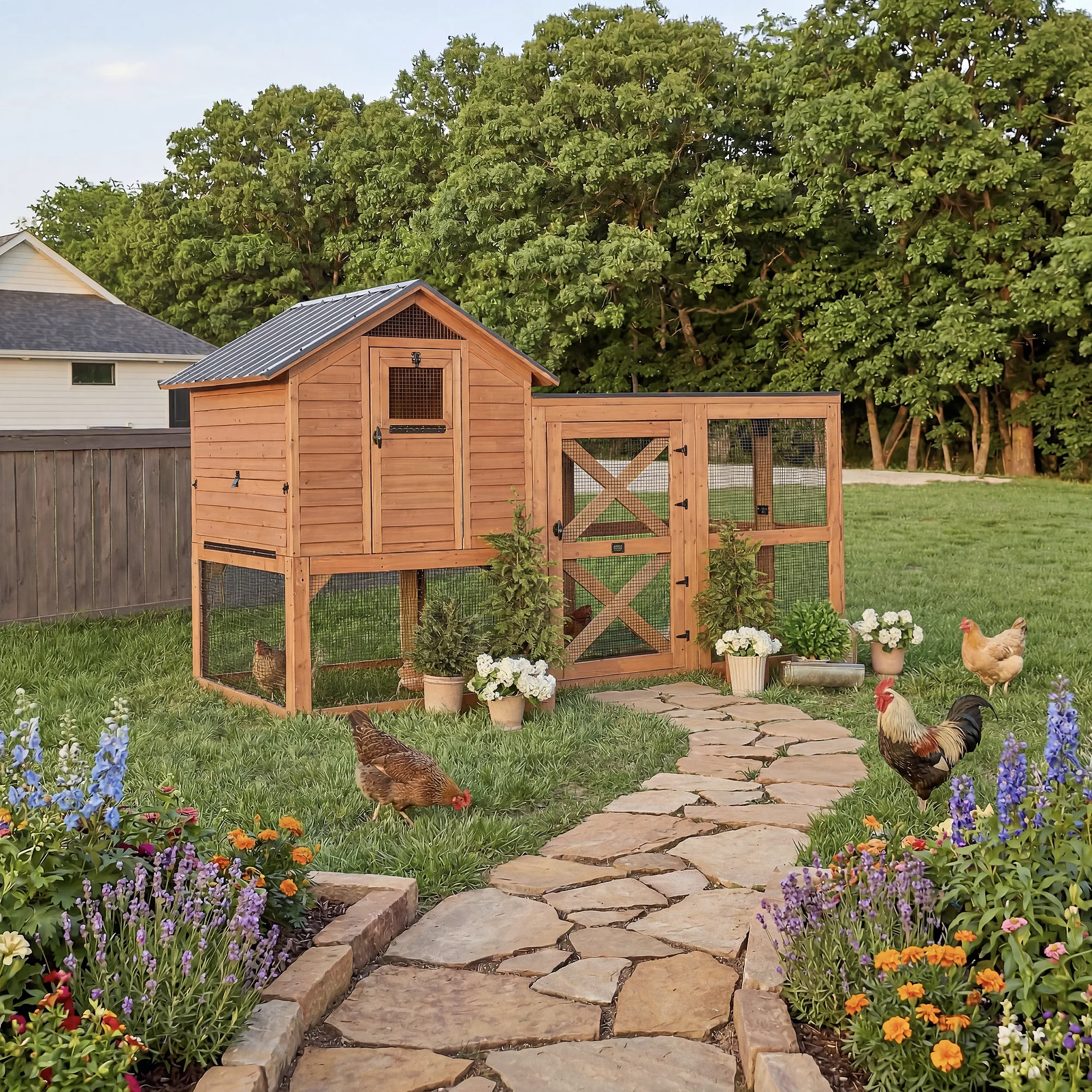
Rustic Roots Chicken Coop
-
Sweetwater Chicken Coop - Brown: This elevated coop houses 4-6 chickens and includes a 24 sq. ft. run underneath, with a solar-powered auto door. The solar-powered door adds convenience and security, ensuring your chickens are safe at night without daily manual locking.
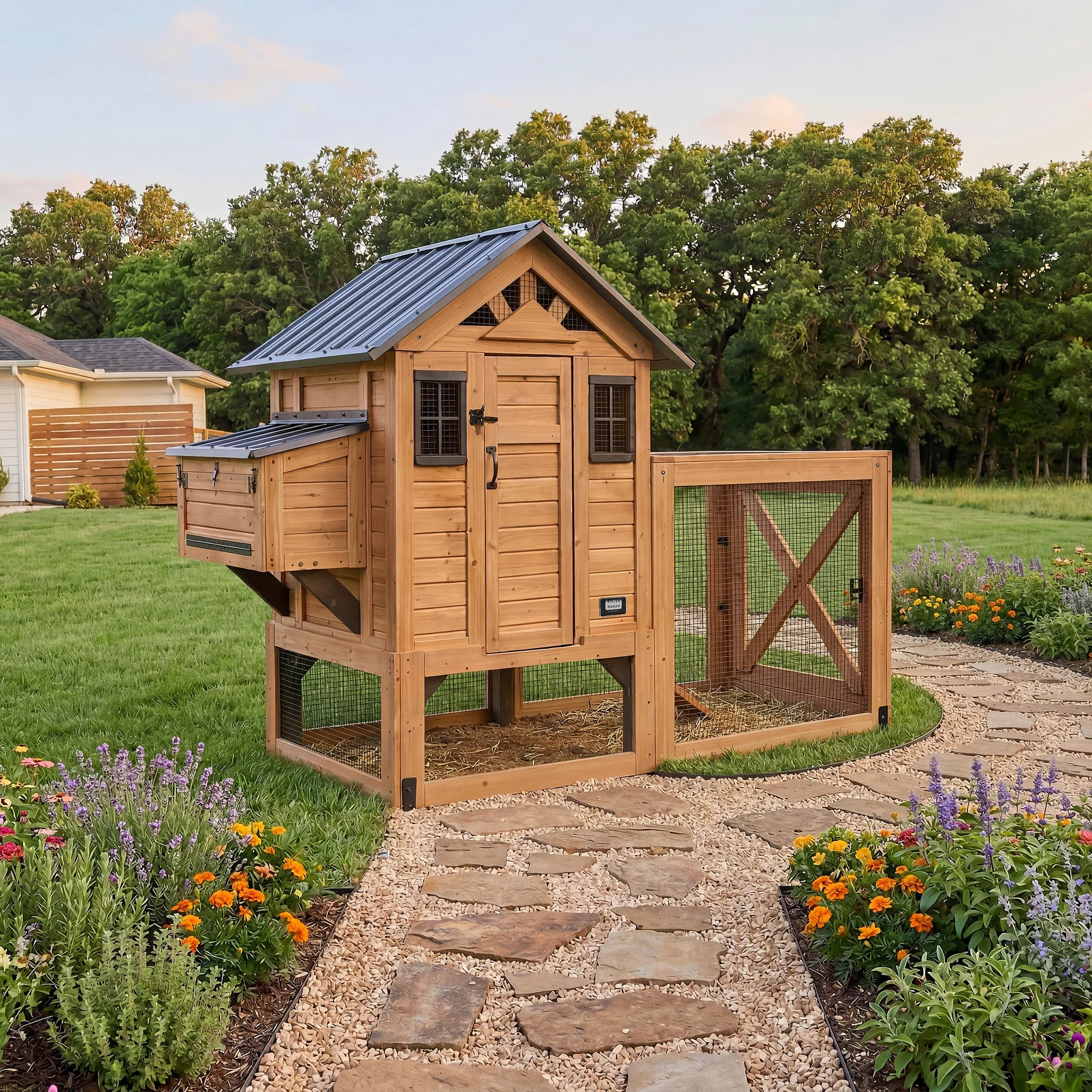
Sweetwater Chicken Coop - Brown
Which Coop Should You Choose?
Best For
- Small to medium flocks (4-6 chickens) that need a secure, low-maintenance coop with a built-in run
- Backyard chicken keepers who want the convenience of a solar-powered auto door for peace of mind
Not For
- Large flocks (8+ chickens) that need more space than a single pre-built coop can provide
- Those who want a coop without a run and plan to let their chickens free-range all day