Quick Answer
Chicken grit and oyster shell serve different purposes: grit aids digestion by grinding food in the gizzard, while oyster shell provides calcium for strong eggshells. Offer grit to all chickens, but only provide oyster shell to laying hens—and keep them in separate feeders.
Why Chickens Need Both—But at Different Times
Chickens don't have teeth, so they rely on grit to break down whole grains, seeds, and fibrous treats in their gizzard. Grit is made of insoluble crushed rock that stays in the gizzard, helping grind food for better nutrient absorption. Without grit, birds on whole-grain diets can struggle to digest feed properly.
Oyster shell, on the other hand, is a soluble calcium source. Laying hens draw heavily on calcium to form eggshells, and if they don't get enough from their diet, they may produce thin-shelled eggs or even suffer health issues. Oyster shell is not a digestive aid—it's a mineral supplement.
The Trade-Off: One Feeder or Two?
If you mix grit and oyster shell in the same feeder, chickens may consume too much calcium or too little grit, depending on their needs. Roosters and non-laying hens don't need oyster shell, and excess calcium can harm their kidneys. The safest approach is to offer grit free-choice to the whole flock and provide oyster shell only to layers, in a separate container.
Grit vs Oyster Shell: Decision Rules
- Chick grit (under 6 weeks): Offer fine chick grit to young chicks once they start eating solid food or treats. It supports their developing gizzard and digestion. Check that the grit size matches the birds' age—chick grit is finer than grower grit.
- Grower grit (6+ weeks): Switch to larger grower grit as chickens mature. Provide it free-choice in a separate feeder so birds can consume as needed. If you feed pellets or crumbles rather than whole grains, grit is less critical but still beneficial for treats.
- Oyster shell (laying hens only): Offer oyster shell free-choice to laying hens in a separate feeder from grit. This lets them self-regulate calcium intake without overconsumption. Roosters, pullets, and non-laying hens should not have access to oyster shell.
Product Facts
-
Grower/Grown-Up Chicken Grit (6+ Weeks): Grower/Grown-Up Chicken Grit is made of insoluble crushed rock that remains in the bird's gizzard to help with digestion and grind food as it passes through. This grit is suitable for chickens over 6 weeks old that eat whole grains or fibrous treats, ensuring they get maximum nutrition from their feed.
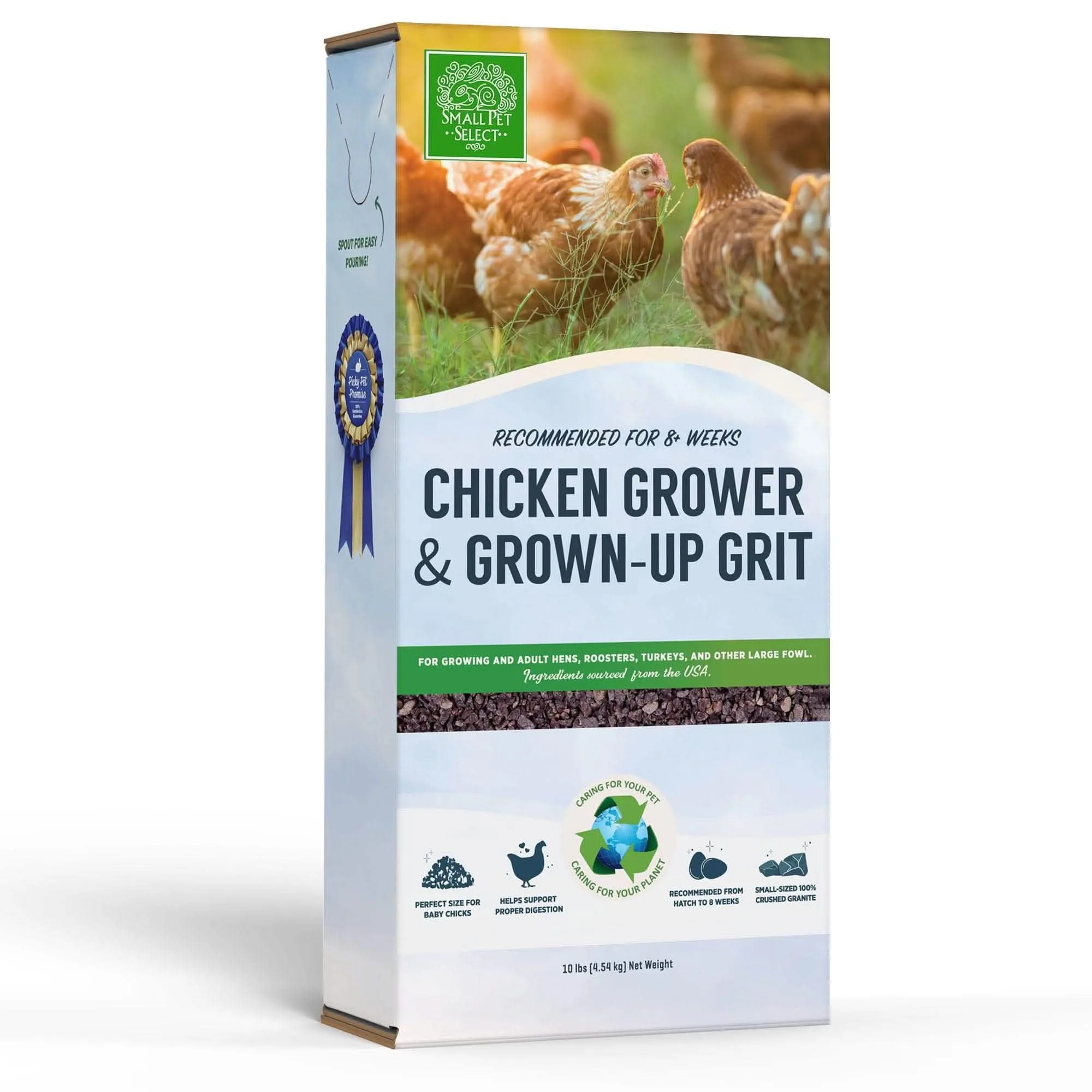
Grower/Grown-Up Chicken Grit (6+ Weeks)
-
Chick Feeder Grit: Chick Feeder Grit is designed for young chicks to support their digestion and keep their gizzards working properly, even from the earliest weeks. Starting chicks on appropriate-sized grit early helps them process starter feed and treats efficiently, promoting healthy growth.
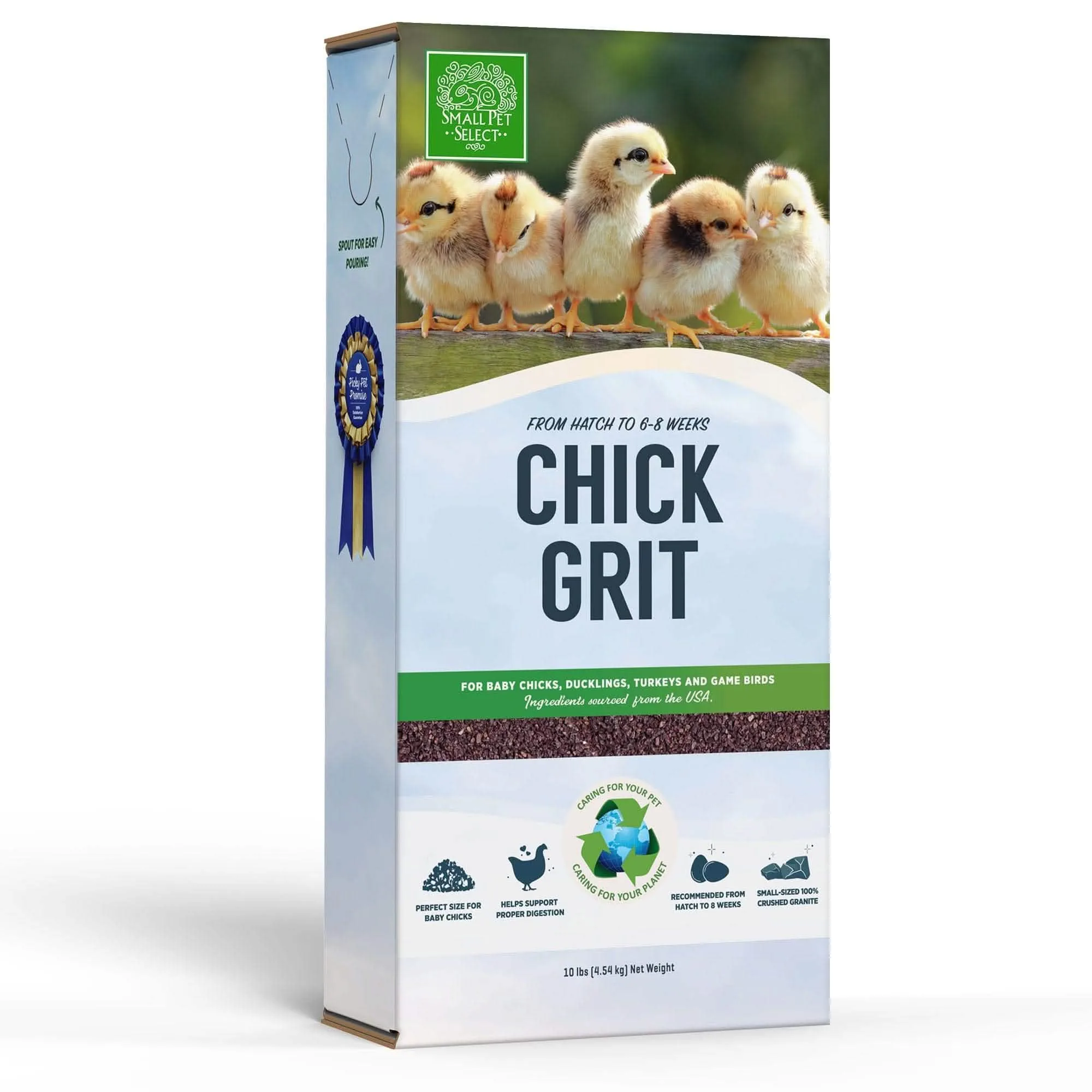
Chick Feeder Grit
Which Should You Choose?
Best for
- Flock owners feeding whole grains or fibrous treats who need to support digestion
- Keepers with laying hens that need supplemental calcium for strong eggshells
Not for
- Chickens on a complete pelleted diet that already contains adequate calcium—extra oyster shell can cause imbalances
- Roosters or non-laying hens, which don't need oyster shell and may suffer from excess calcium