Quick answer
Focus on your available floor space, preferred seating position, and whether you want a fully assembled rig out of the box. The Trak Racer TR80 and Alpine TRX are two excellent pre-built options that suit different priorities.
Space and footprint matter more than you think
A sim racing cockpit takes up real room. Measure your space before you pick a model. The TR80 has a traditional open-frame design that fits into most dedicated corners. The Alpine TRX uses a hybrid frame that may feel more compact but still needs clearance for your legs and arms.
If you plan to add motion later, leave extra space around the rig. The TR80's 80mm profile gives you more mounting points for actuators. The TRX is optimized for static use and may require adapters for motion systems.
Pre-built vs. DIY assembly
Both the TR80 and Alpine TRX arrive fully assembled and tested. That means no weekend spent tightening bolts or routing cables. The TR80 ships in 2-4 weeks, while the Alpine TRX takes 3-4 weeks. If you want to race immediately after delivery, either works.
The trade-off is customization. Pre-built rigs lock in certain component choices. If you plan to swap out the seat or pedal mount later, the TR80's modular 80mm profile gives you more flexibility. The Alpine TRX is more integrated, so changes take more effort.
Performance and realism expectations
Both rigs are built to handle high-torque direct drive wheels and load cell pedals without noticeable flex. The Alpine TRX benefits from its engineering partnership with the Alpine F1 Team and is used by the Alpine Academy—so it's proven at a competitive level.
The TR80 is a workhorse for serious sim racers who want a stiff frame at a lower price point. It lacks the F1 branding but delivers the same rigidity for most setups. If you race GT or open-wheel equally, the TR80's neutral seating position adapts better.
Decision rules for choosing your sim racing cockpit
- Measure your space first: Note the length, width, and height of your intended area. The TR80 needs about 140 x 70 cm of floor space. The Alpine TRX is slightly more compact but still requires similar clearance for the seat slider and pedal tray.
- Decide on assembly preference: If you want to race immediately, choose a plug-and-play model like either the TR80 or Alpine TRX. If you enjoy building and customizing, consider a kit version instead. Pre-built rigs save time but limit initial component choices.
- Match the rig to your driving style: For open-wheel or formula-style seating, the Alpine TRX's lower seating position feels more authentic. For GT, touring, or mixed use, the TR80's adjustable seating angle is more versatile.
- Plan for future upgrades: If you might add motion, a direct drive wheel upgrade, or a different seat, choose the TR80 for its modular 80mm profile. The Alpine TRX is less flexible for major changes. Think about your upgrade path in the next 12 months.
Product facts
-
Spec 2: TR80: The TR80 Plug & Play is a pre-built, fully assembled rig delivered in 2-4 weeks with high-quality components and expert pre-configuration. You get a race-ready rig without assembly time, and the 80mm profile allows future upgrades like motion or custom seating.
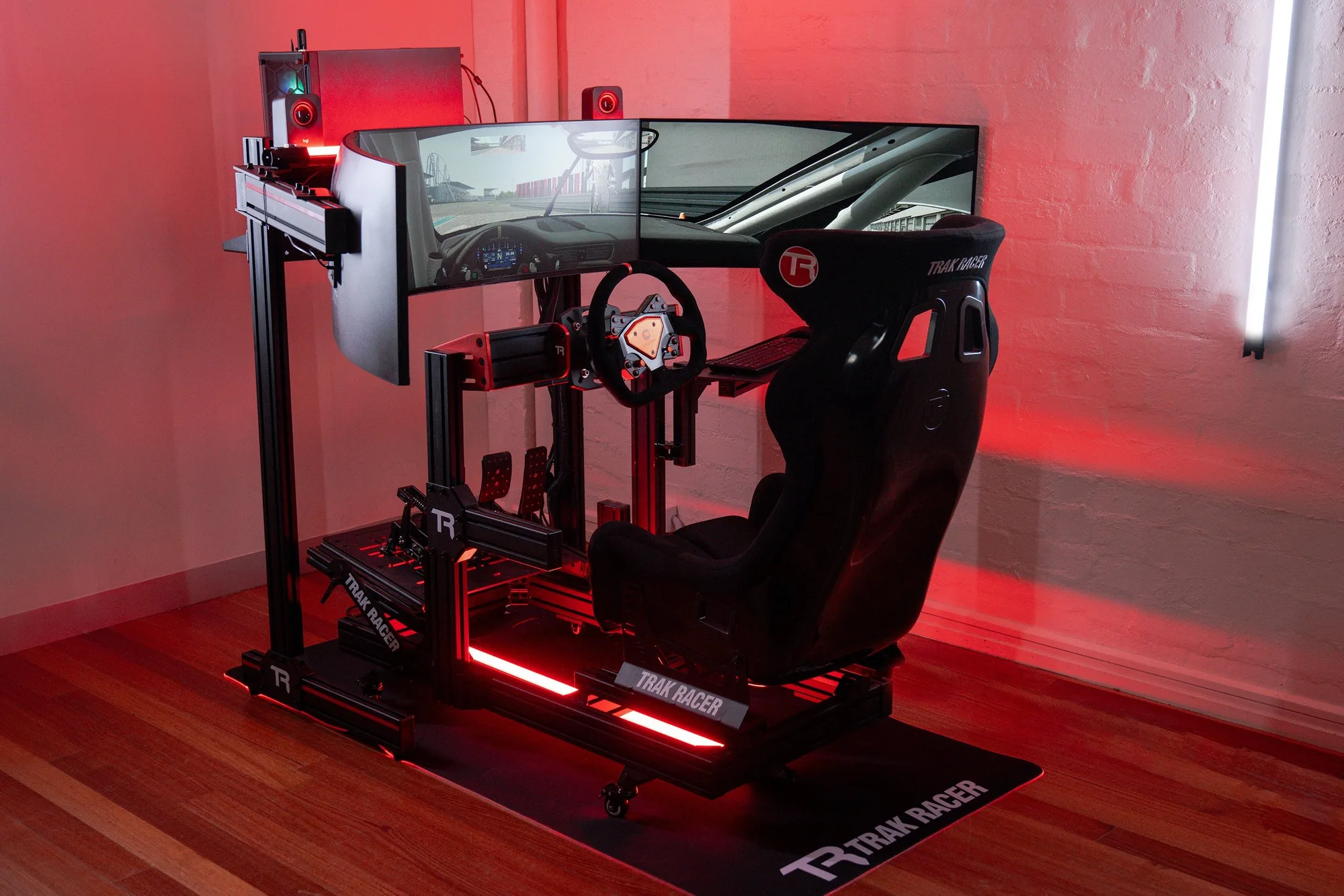
Spec 2: TR80
-
Spec 3 Alpine Racing TRX: The Alpine TRX Plug & Play is engineered in collaboration with Alpine F1 Team and used by the Alpine Academy for elite performance. If you want a rig with proven competitive pedigree and a more integrated design, this is a strong choice for serious sim racers.
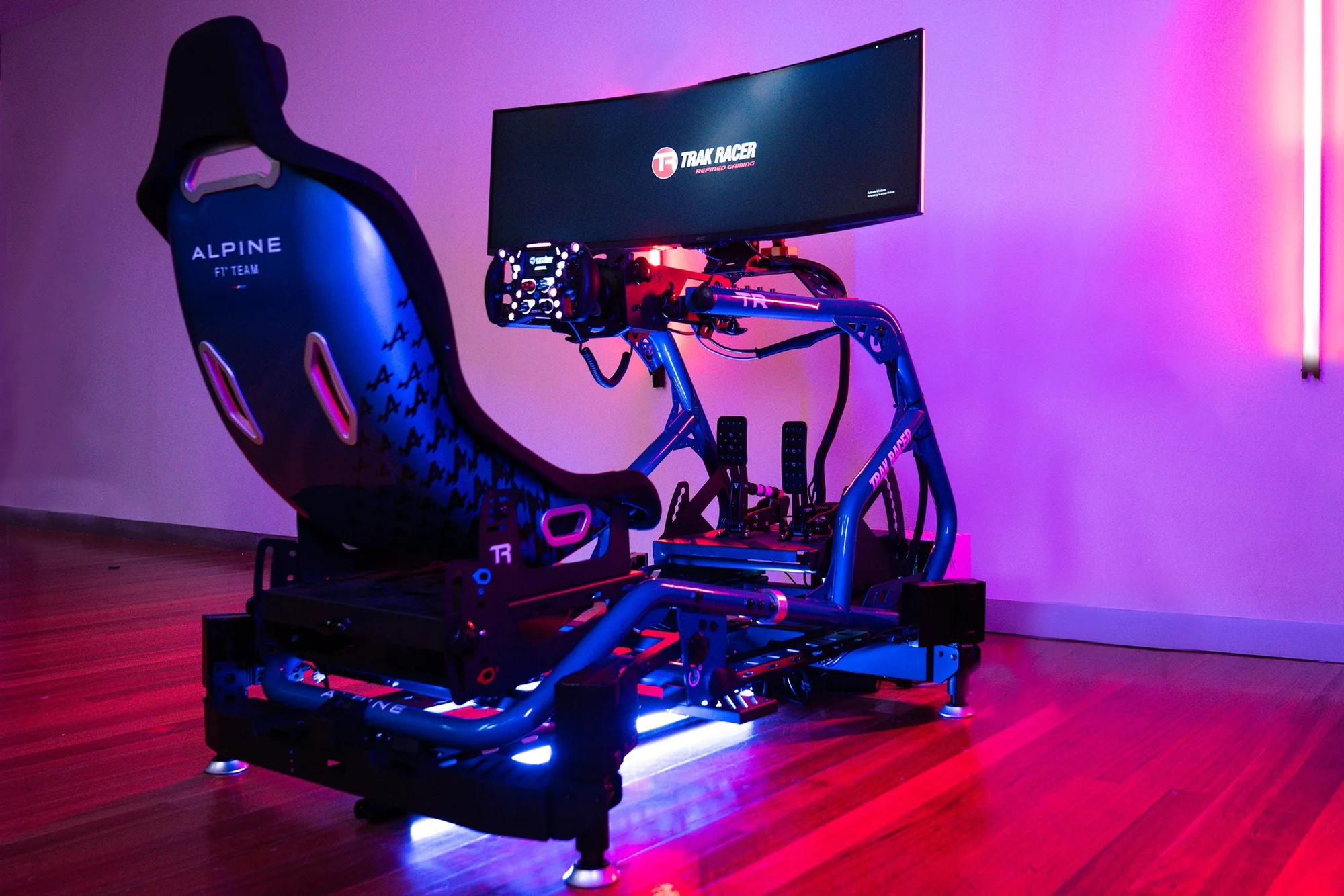
Spec 3 Alpine Racing TRX
Who should choose which rig?
Best for
- Racers who want a pre-built, no-assembly rig with room to customize and upgrade later
- Sim racers who value a proven, competition-grade design from an F1 team partnership
Not for
- Budget-conscious buyers looking for a sub-$1000 cockpit
- Racers who want to build their rig from scratch with individual parts