Quick answer
Choose a bread board when you want a decorative, multi-purpose serveware piece for bread, cheese, or charcuterie—not for heavy chopping. The Vintage English Bread Board, Scalloped Lazy Susan is a great example of a board that combines tradition with everyday function.
Bread board vs cutting board: what's the difference?
A bread board is designed for serving and light slicing, not for heavy-duty chopping or cutting raw meat. Historically, bread boards were used in English cottages as a centerpiece for gathering around the table. Today, they work best for bread, cheese, charcuterie, or as a decorative tray. A cutting board, by contrast, is thicker, often made of hardwood like maple or walnut, and meant to withstand knife marks and daily meal prep.
If you plan to chop vegetables or slice raw meat regularly, stick with a dedicated cutting board. If you want a piece that transitions from countertop to table for serving, a bread board is the better choice.
When a scalloped lazy susan adds value
A scalloped lazy susan like the Vintage English Bread Board combines the classic bread board shape with a rotating function. This is especially useful for shared dining—guests can spin the board to reach different cheeses, dips, or bread slices without passing it around. The scalloped edge also gives it a vintage, decorative look that suits farmhouse or cottage-style kitchens.
Keep in mind that a lazy susan adds height and a spinning base, so it takes up more counter space than a flat board. If your kitchen is small or you prefer a minimalist look, a flat bread board may be a better fit.
Wooden board care: what to expect
All wooden boards require some care to stay in good condition. Avoid soaking them in water or putting them in the dishwasher. Instead, hand wash with mild soap and dry immediately. Periodically apply a food-safe mineral oil or beeswax conditioner to prevent drying and cracking.
Bread boards with a scalloped edge or lazy susan base may have small crevices where crumbs can collect. Use a soft brush to clean those areas. With proper care, a well-made wooden board can last for decades.
Decision rules for choosing a bread board
- Rule 1: Match the board to your primary use: If you need a board for serving bread, cheese, or charcuterie at the table, choose a bread board. If you need a board for heavy chopping or raw meat prep, choose a cutting board. A bread board is not a replacement for a cutting board.
- Rule 2: Consider the size and shape: Measure your counter or table space. A scalloped lazy susan requires more room than a flat board. Round boards work well for shared dining, while rectangular boards are better for tight spaces. Check dimensions before buying to ensure the board fits your space.
- Rule 3: Decide on the rotating function: A lazy susan adds convenience for passing food, but it also adds height and a moving part. If you rarely host or have limited counter space, a flat bread board may be simpler and more practical. Consider how often you entertain guests.
Featured product
-
Vintage English Bread Board, Scalloped Lazy Susan: Rooted in centuries of culinary tradition, our English Bread Boards are inspired by serving pieces that originated in the late 1800s to early 1900s in the cottages and farmhouses of the English countryside. This board brings a piece of history to your table, making it ideal for those who appreciate vintage-inspired serveware with a story.
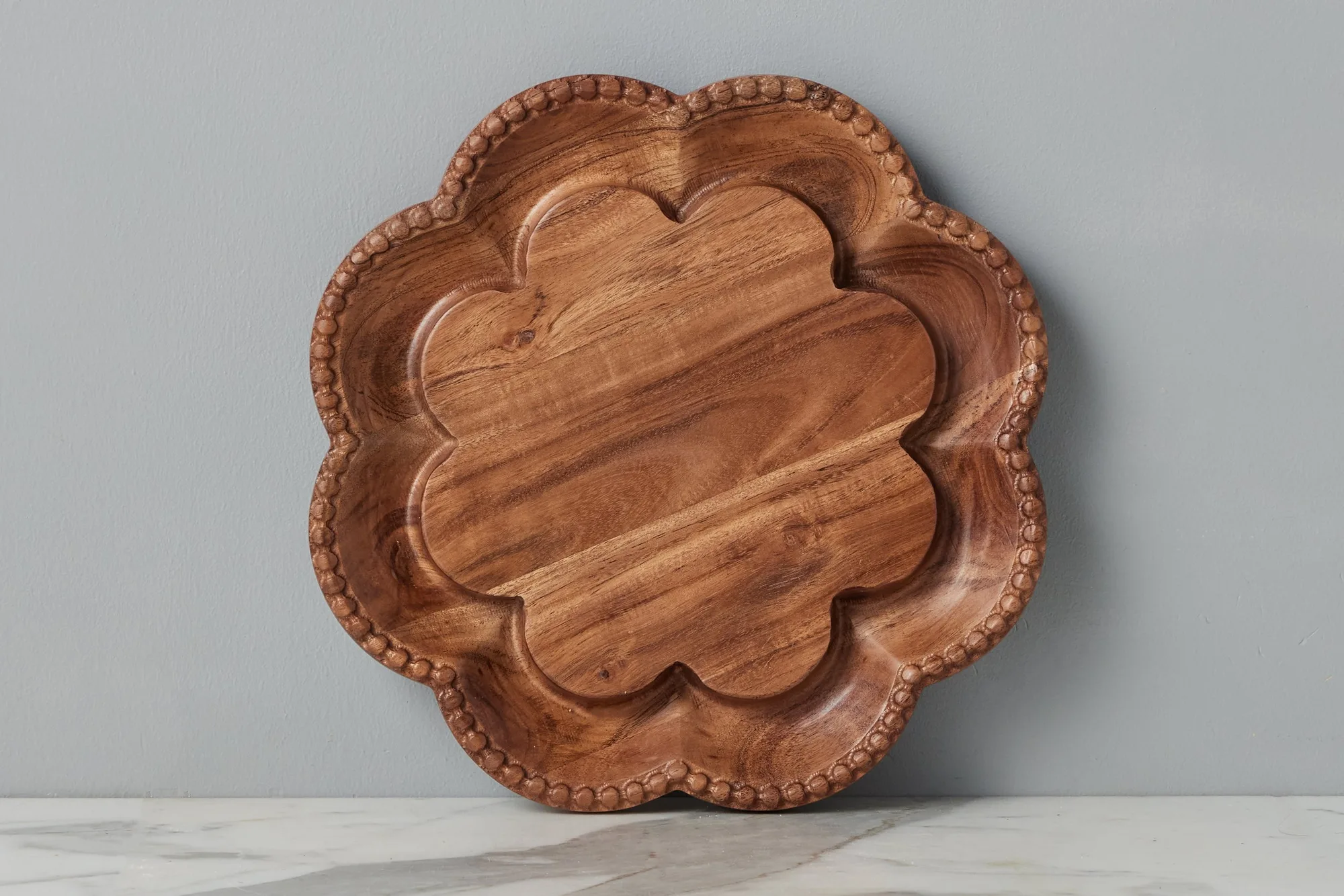
Vintage English Bread Board, Scalloped Lazy Susan
Who should buy this
Best for
- Home cooks who want a decorative, multi-purpose serveware piece for bread, cheese, or charcuterie
- Those who appreciate vintage-inspired kitchen items with a historical story
Not for
- Anyone who needs a heavy-duty cutting board for daily chopping or raw meat prep
- Minimalist kitchens where a rotating lazy susan would feel bulky or unnecessary