Quick Answer
For most toddlers, start with a 2-piece puzzle set around age 2, then move to a 60-piece floor puzzle around age 4–5 when they can handle more pieces and longer focus.
Why Piece Count Matters More Than Age
The biggest difference between a 2-piece and a 60-piece puzzle is not just the number of pieces—it's the type of thinking required. A 2-piece puzzle asks a toddler to match two halves of a familiar image, building basic shape recognition and hand-eye coordination. A 60-piece puzzle asks a child to sort, group, and test hypotheses, which requires more developed fine motor skills and patience.
Age is a useful starting point, but your child's puzzle experience and interest level matter just as much. A 3-year-old who has mastered 2-piece sets may be ready for a 60-piece floor puzzle, while a 5-year-old who rarely sits still might need more practice with simpler puzzles first.
Trade-Off: Simplicity vs. Engagement
2-piece puzzles are quick wins. They give a toddler a feeling of success in under a minute, which builds confidence and encourages repeat play. But they can become boring quickly once the child masters the matching pattern.
60-piece puzzles offer a longer, more immersive activity. They can keep a child engaged for 20–30 minutes and become a family activity. The downside is frustration risk: if the child isn't ready, they may give up and lose interest in puzzles altogether.
The right choice depends on where your child is on the learning curve, not just their birthday.
Decision Rules for Choosing a First Puzzle
- Age 18–24 months: Choose a 2-piece puzzle set with large, chunky pieces and simple images. Let your toddler explore freely without expecting correct placement. Look for puzzles with colored edges to support early color recognition.
- Age 2–3 years: Start with a 2-piece puzzle set and gradually introduce more sets. Once your child can complete several 2-piece puzzles independently, they are ready to try a 60-piece puzzle with help. Watch for signs of readiness: matching pieces without trial-and-error and staying focused for 5+ minutes.
- Age 4–5 years: Move to a 60-piece floor puzzle if your child shows interest and can handle 20–30 minutes of focused play. Choose a theme they love, like dinosaurs, to boost motivation. If frustration appears, step back to a smaller puzzle and build up slowly.
- Skill level: beginner vs. experienced: For a first-ever puzzle, always start with 2-piece. For a child who has done 2-piece puzzles and wants more challenge, a 60-piece puzzle is the next logical step. Don't skip levels: mastery at each stage builds the confidence needed for harder puzzles.
Product Facts
-
Let's Begin 2-Piece Box Puzzle - Vehicles: Each Let's Begin 2-Piece Box Puzzle set holds ten 2-piece puzzles, each about 4" x 6" when completed, with colored edging on the front to help toddlers match pieces and learn first colors. The colored edging gives a clear visual cue, so a toddler can start matching by color before recognizing the picture, which is perfect for a very first puzzle.
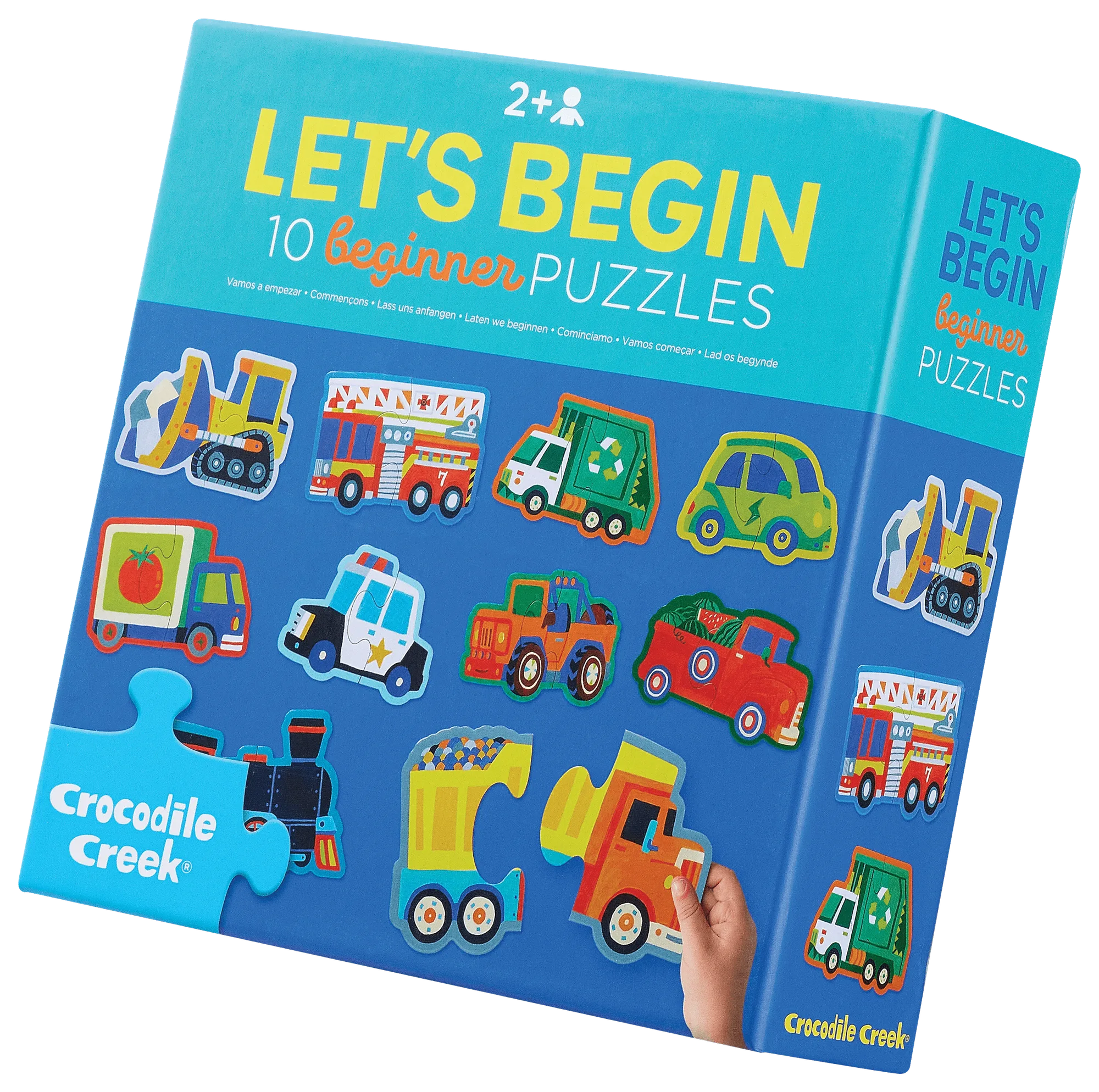
Let's Begin 2-Piece Box Puzzle - Vehicles
-
60 Pc Above & Below - Dinosaur World: The Dinosaur World 60-piece floor puzzle features an Above & Below theme with flying reptiles like Pteranodons above and ground dinosaurs like T-Rex and Stegosaurus below. The two-zone design gives kids a built-in sorting strategy (sky vs. land), which reduces frustration and makes the 60-piece step more approachable.
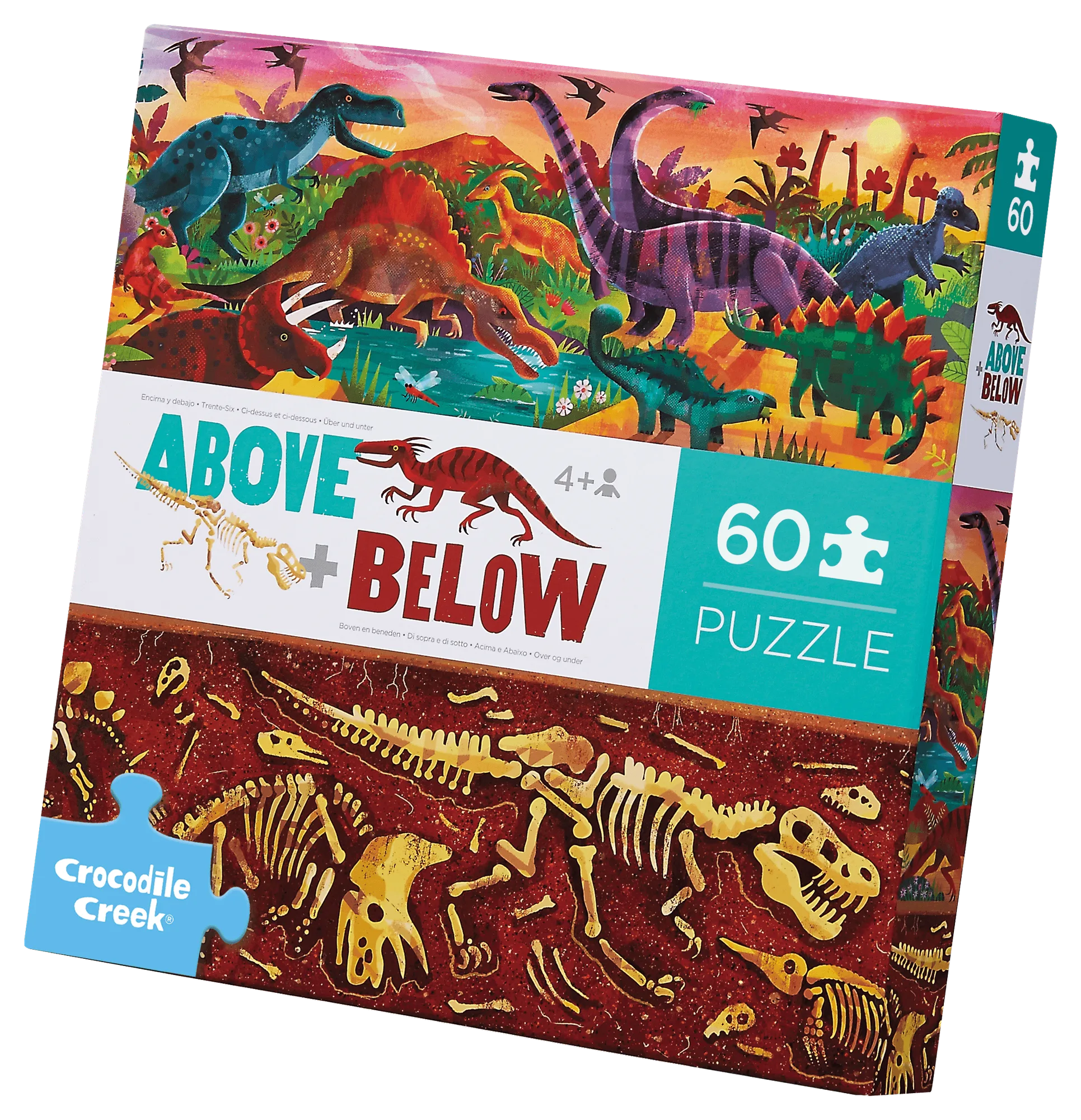
60 Pc Above & Below - Dinosaur World
Which Puzzle Fits Your Child?
Best for
- 2-piece puzzles: toddlers aged 18 months to 3 years who are just starting to explore puzzles
- 60-piece puzzles: kids aged 4–6 who have mastered simpler puzzles and enjoy longer, themed activities
Not for
- 2-piece puzzles: older kids or those who already handle 20+ piece puzzles easily
- 60-piece puzzles: toddlers under 3 or kids who get easily frustrated by multi-step tasks