Quick answer
For most studio strobes and LED panels, a heavy duty light stand with a spring cushion provides the best stability and safety. A compact stand works well for lighter fixtures and location work.
Height vs. portability trade-off
A taller stand gives you more flexibility in positioning your light, but it also adds weight and reduces portability. An 8-foot stand is a solid all-around choice for studio work, while a 7-foot stand is easier to pack for location shoots.
The number of sections in the center rod affects collapsed length. A 4-section stand folds shorter than a 3-section stand, which matters if you need to fit the stand into a small case or backpack.
Spring cushion: a safety feature worth having
A spring cushion at the top of the stand absorbs shock when you mount a heavy strobe or LED fixture. Without it, the sudden weight can damage the stud or the fixture's mounting bracket. If you work with heavier lights, a spring-cushioned stand reduces that risk.
Material and build quality
Anodized aluminum is the standard for light stands because it resists corrosion and keeps weight low. Industrial-grade anodized aluminum, as used in the Fotodiox FX-806 and Compact 7ft stands, offers a good balance of durability and affordability.
The 5/8" stud with 1/4"-20 thread is the universal mount for most strobes and LED lights. Any stand with that stud will fit standard light modifiers and fixtures.
How to choose your light stand
- Match height to your ceiling: Measure your studio ceiling height and subtract 2 feet for the light fixture and modifier. An 8-foot stand works in most standard rooms; a 7-foot stand suits lower ceilings or tabletop work.
- Check the load capacity: Heavy studio strobes and large LED panels need a stand rated for at least 10-15 lbs. A spring cushion adds a margin of safety. Compact stands are fine for speedlights, small LEDs, or reflectors.
- Consider section count for portability: More sections mean a shorter collapsed length but also more joints that can loosen over time. A 3-section stand is simpler and often more rigid; a 4-section stand packs smaller. If you travel frequently, a 4-section stand saves space. If you mostly shoot in one studio, a 3-section stand is simpler.
Product highlights
-
Fotodiox Heavy Duty Studio Light Stand FX-806, 8.25 ft. Stand with Spring Cushion for Studio Strobe, Lighting Fixtures: 8' 5" max height with spring cushion, 3-section center rod, industrial-grade anodized aluminum The spring cushion protects your strobe or LED fixture from shock during mounting, and the extra height gives you more flexibility in positioning the light.
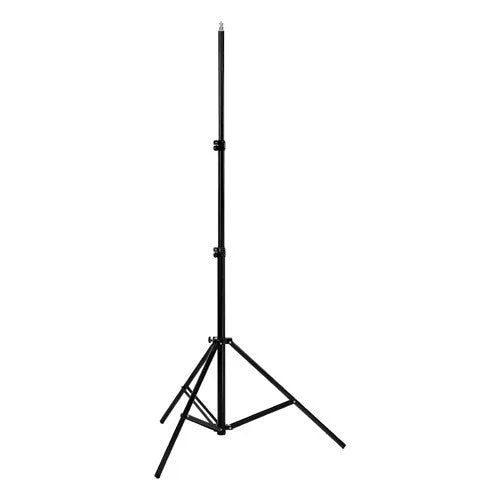
Fotodiox Heavy Duty Studio Light Stand FX-806, 8.25 ft. Stand with Spring Cushion for Studio Strobe, Lighting Fixtures
-
Fotodiox Compact 7ft Light Stands - 7' Lightstand for Studio Strobe and Lighting Fixtures: ~7' max height, 4-section center rod, lightweight anodized aluminum construction The 4-section rod collapses shorter for easy transport, making this stand a practical choice for location shoots where weight and packed size matter.
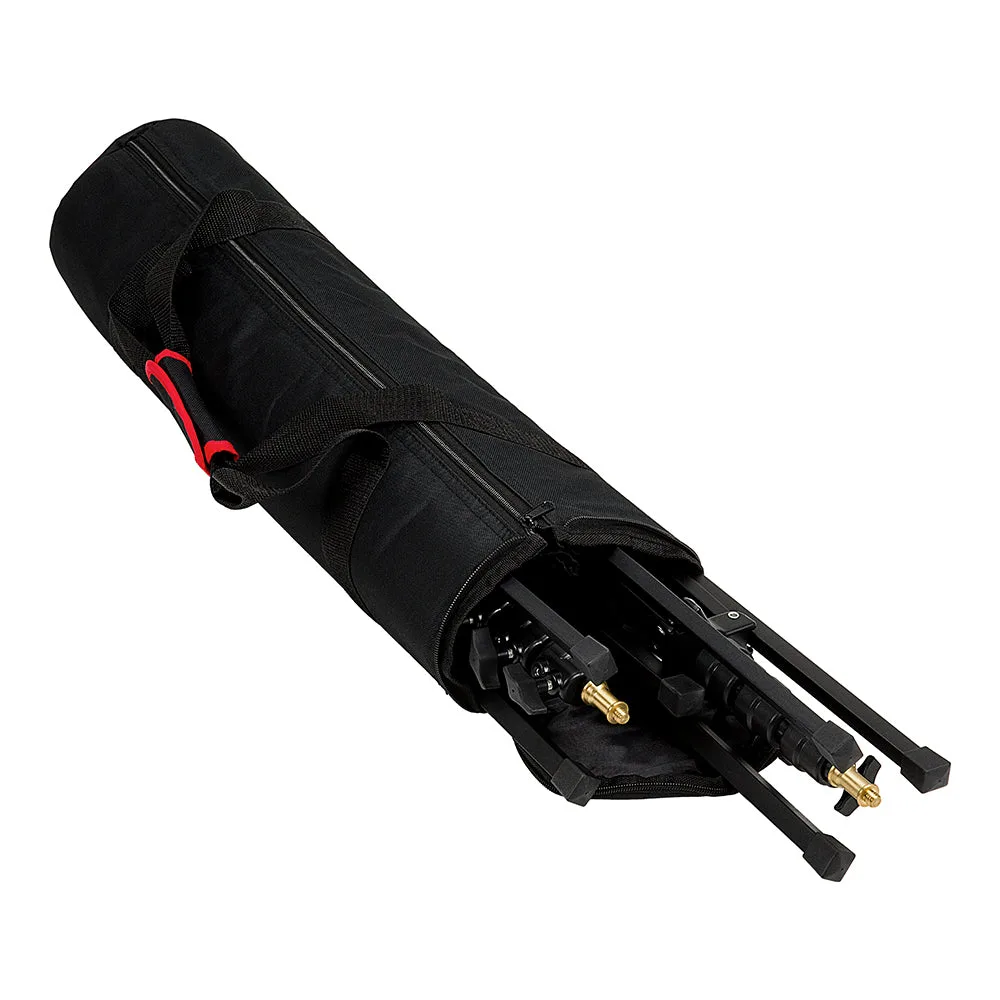
Fotodiox Compact 7ft Light Stands - 7' Lightstand for Studio Strobe and Lighting Fixtures
Which stand fits your setup?
Best for
- Studio strobes and heavy LED panels needing a stable, tall stand with a spring cushion
- Photographers who want a reliable all-around stand for both studio and location work
Not for
- Ultra-light travel kits where every ounce matters—consider a compact stand or a smaller option
- Very low tabletop or macro setups where a mini stand or boom arm would be more practical