Quick answer
For everyday use, prioritize a steak knife set with a high-hardness stainless steel blade (58+ HRC), a comfortable, secure handle, and full tang construction. Damascus steel offers exceptional edge retention and corrosion resistance, making it a strong choice for frequent home cooks.
Blade steel matters for daily sharpness
Most steak knives use either German stainless (softer, easier to sharpen) or Japanese high-carbon stainless (harder, holds edge longer). For everyday use where you won't hone before every meal, a harder steel like the 67-layer Damascus used in some sets keeps cutting smoothly through multiple meals. The trade-off: harder steel can be more brittle and harder to sharpen at home without a proper system.
Handle comfort and balance
A steak knife should feel balanced in your hand, not blade-heavy. Look for handles that fill the palm without slipping when wet. Pakkawood (resin-impregnated hardwood) offers a warm, non-slip grip that resists moisture better than bare wood. Full tang construction adds weight and stability, reducing hand fatigue during a full meal.
Edge retention and sharpening
No steak knife stays razor-sharp forever. Damascus steel blades with a high layer count (like 67 layers) typically hold their edge longer than monosteel blades, meaning fewer sharpening sessions. However, they require a diamond or ceramic sharpener designed for hard steel. If you prefer minimal maintenance, choose a set that comes with a sharpening guide or consider professional sharpening.
Decision rules for choosing a steak knife set
- Blade material: Choose high-carbon stainless or Damascus steel (58+ HRC) for daily use. Avoid soft stainless if you want edge retention beyond a few meals. Check the HRC rating; 58-62 is ideal for steak knives.
- Handle construction: Full tang with riveted or molded handles offers durability and balance. Pakkawood or textured synthetic handles provide better grip than smooth wood or plastic. Test the handle shape in your hand if possible; a too-thin handle causes fatigue.
- Edge geometry: A thin, acute edge (15-20 degrees per side) cuts meat with less pressure. Serrated edges work well on crusty bread but can tear tender steak; plain or semi-serrated edges are more versatile. For steak only, a plain edge is easier to sharpen and glides cleaner.
- Set size and storage: An 8-piece set (6 steak knives + 2 extras or a sharpening steel) is practical for most households. Look for a storage block or sheath to protect edges. If you entertain often, consider a 12-piece set.
Product spotlight
-
Damascus Steel Steak Knife Set, 8-pc (Espresso): Our 8-piece steak knife set is forged from 67 layers of Japanese Damascus steel for unbeatable sharpness, gliding through any protein. The high layer count means the blade stays sharp through many meals, reducing the need for frequent honing or sharpening.
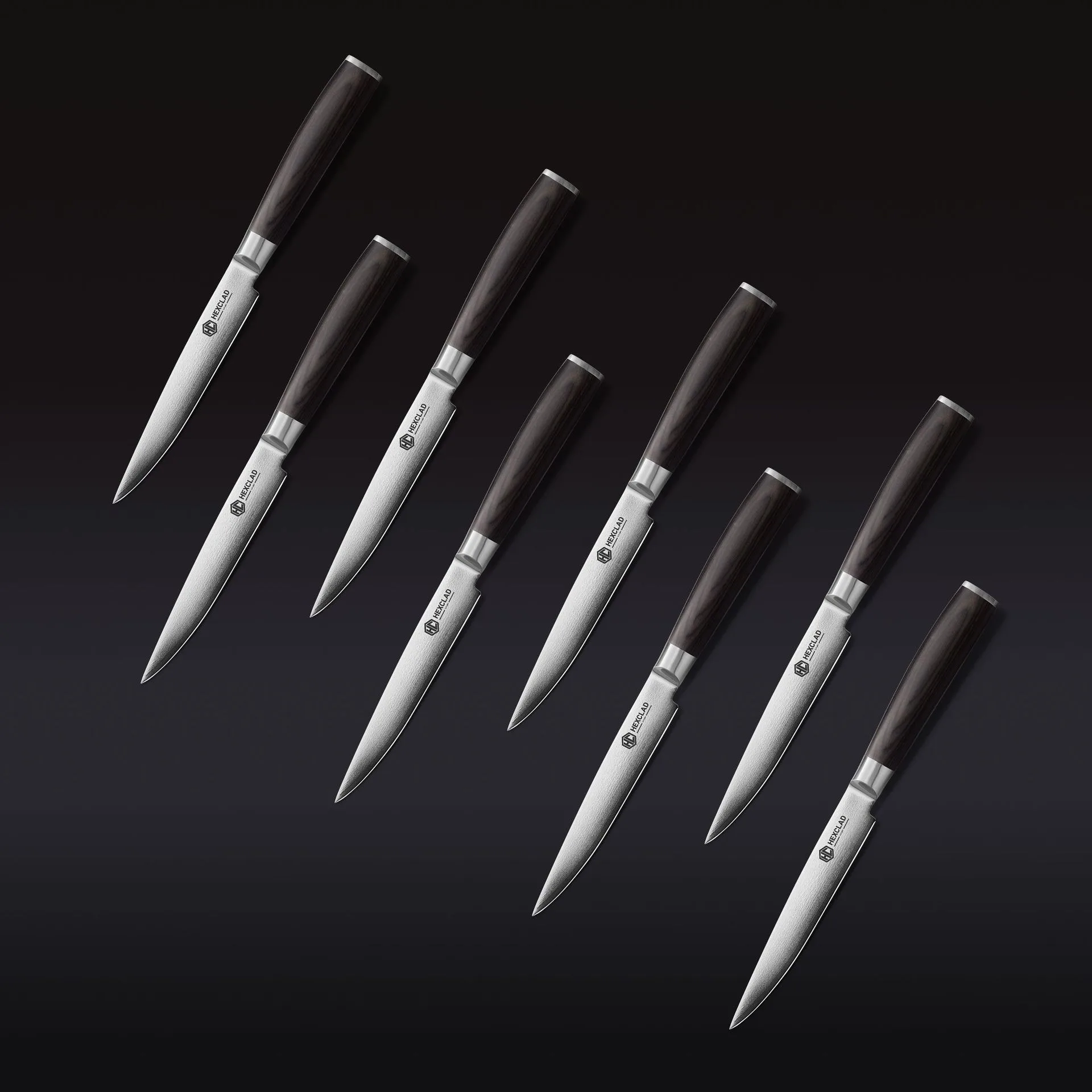
Damascus Steel Steak Knife Set, 8-pc (Espresso)
-
Damascus Steel Steak Knife Set, 8-pc (Espresso): Unique espresso pakkawood handles elevate table settings. Pakkawood resists moisture and provides a secure, comfortable grip even when hands are slightly greasy or wet.
Who should buy this type of set
Best for
- Home cooks who eat steak at least once a week and want a knife that stays sharp without constant maintenance
- Anyone who appreciates the look and feel of a well-balanced, full-tang knife on the dinner table
Not ideal for
- Budget shoppers who need the cheapest option (Damascus steel sets cost more upfront)
- Users who prefer serrated blades for cutting crusty bread or tomatoes at the same meal